When hot words related to food such as "sterilized cucumbers, exploding watermelons, lean meat powder, dyed steamed buns, beef extract, recycled bread, fake wine, gutter oil, and sulfur-fumigated ginger" enter our sight, food safety issues have become a focus of public and government attention. Food is the paramount necessity for the people, and safety is the first priority for food. Those toxic foods have quietly entered our stomachs and bodies through our mouths, and food safety issues have become a lingering nightmare in our hearts.
Beef
In terms of color, beef is redder, with fat that is white or milky-yellow, and the overall color is slightly darker than pork, while fresh pork is relatively lighter; in terms of smell, pork has a unique sweet smell, while beef has a slight fishy smell; in terms of touch, beef is firmer, while pork is softer.
Bean Sprouts
The ones that are slender and have roots are more natural. Bean sprouts soaked with illegal additives like urea are generally short and thick, without roots. Due to high water content, they look very plump and shiny. When these sprouts are heated, substances like ammonia and nitrogen in the urea will evaporate, giving off a distinct urine-like smell. Bean sprouts soaked in clean water are generally slender, have roots, and are darker in color.
Sautéed Bean Sprouts
Cucumber
Naturally ripened cucumbers, due to sufficient sunlight, have deep, bright skin patterns, withered flowers at the top, and short, thick spines on the body; artificially ripened cucumbers have tender skin color, light stripes, bright flowers, and thin, long spines. Cucumbers with too many drugs may even grow a small soybean-sized tumor at the top.
Meat
In terms of color, beef is redder, with fat that is white or milky-yellow, and the overall color is slightly darker than pork, while fresh pork is relatively lighter; in terms of smell, pork has a unique sweet smell, while beef has a slight fishy smell; in terms of touch, beef is firmer, while pork is softer.
Chives
It is difficult to identify toxic chives by appearance. The more high-toxic pesticides are used for "root drenching," the better the chives grow, with leaves that are lush green and look very beautiful. When buying, be cautious of chives that are dark, blackish, and dark green, with overly large leaves.
Mushrooms
Normal mushrooms will have some brownish spots with a slight yellow tint; bleached mushrooms have a bright white surface without spots and a washed look; touch, normal mushrooms feel slightly dry and rough, while mushrooms containing fluorescent whitening agents feel smooth and moist, with a powdery substance on the surface; smell, normal mushrooms have a natural fresh aroma, while bleached mushrooms have a pungent smell.
Green Pea and Roe Stew
Green Peas
Fresh green peas have a very uniform skin color, smell fruity, and have a light sweetness when chewed; fake green peas have a thicker, smoother skin, uneven dyeing, a strange chemical smell, and a dry feeling in the mouth.
Honey
Honey will crystallize, which is an inherent property of honey. The quality of honey is not related to its clarity; in fact, the more transparent and clear it is, the more likely it is to be "fake honey," because pure honey has a matte finish, while fructose-based products are very clear.
Dried Chili Peppers
Normal dried chili peppers are somewhat dark in color. After being fumigated with sulfur, the color is overly bright, shiny, with a bright orange and semi-transparent feel, and a sulfur smell can be detected upon close inspection.
Goji Berries
Natural goji berries are relatively dry, sour with a hint of sweetness, and slightly dark in color with a hint of earthiness. Goji berries fumigated with sulfur feel sticky to the touch, with an exceptionally bright red and shiny color.
Chinese Yam, Lily, and Goji Berry Soup
Sichuan Peppercorns
Genuine Sichuan peppercorns are mostly purplish-red or dark red with low luster, and most of the surface has openings; the fruits are large and uniform. "Fake peppercorns" have a brighter red color, appearing oily and translucent. Because they are often of poor quality, the grains are small, the surface has no openings, and the shell, when crushed, reveals small black particles.
Daylilies
Normal daylilies are somewhat dark in color. Especially this year, new daylilies will not be available until summer, so the stock will be yellowish-brown, which is normal. Daylilies fumigated with sulfur are yellowish-white, looking very clean and plump, but without the fresh aroma of daylilies.
Silver Ear Fungus
Normal silver ear fungus is its natural yellowish color. After being fumigated with sulfur, the color becomes exceptionally white.
Sesame Seeds
Three tricks to identify "dyed" sesame seeds. First, look at the color: dyed ones are black, shiny, and spotless; undyed ones have varying shades of color and may contain some white sesame seeds. Second, smell the aroma: undyed ones have a sesame fragrance, while dyed ones are not fragrant and may have an ink-like smell.
Sesame Thin Wafer Cookies
Watermelon
Tap: Injected watermelons make a "dull" sound when tapped, not crisp and bright; Look: Naturally ripened watermelon seeds are black and full. Injected watermelon seeds are generally small and white; Taste: Injected watermelons have uneven sweetness, often with a stronger sweetness near the stem and much less sweetness further away.
Fish
Fresh fish should have clear, slightly protruding eyes, bright red gills without dirt, and the fish body and flesh should be firm and shiny. Generally, when buying fish, you can smell it first. If it has been coated with silver powder, it will have a pungent oily smell. The skin of a hairtail is very thin; it can be stuck off with a gentle touch of the hand.
 Sesame chip biscuits
 Green beans and fish roe pot
 Huaishan lily wolfberry
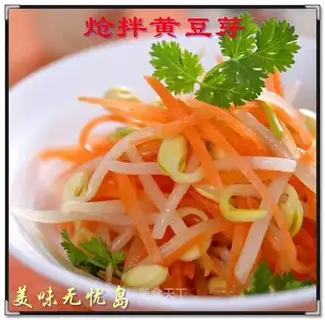 Stir soybean sprouts in a stir-fried manner