As the saying goes: "Nourish in autumn and winter, and you'll be strong enough to fight a tiger in spring." Some people believe that everyone benefits from this seasonal nourishment, with greater nourishment bringing greater benefits and lesser nourishment bringing lesser rewards. In reality, however, common ailments we often suffer from, such as constipation, insomnia, and catching colds easily, can actually be caused by over-nourishment!
Once winter arrives, "taking health preservation and nourishment to the extreme" becomes a social trend. People combine medicinal supplements with dietary ones, steeping ginseng, deer antler, and astragalus in tea and soups. The herbal and health supplement sections in pharmacies and department stores see a surge in visitors. Restaurants heavily promote medicinal health meals, and at home, people often indulge in mutton hot pots or old duck soup for nourishment. Some even believe that nourishing in winter simply means eating and drinking extravagantly.
But what follows is that some people develop symptoms like mouth ulcers, "internal heat" (a concept in Traditional Chinese Medicine), bloating, constipation, and insomnia.
Although winter nourishment is a major feature of TCM health preservation, it is not necessary for everyone to supplement during this season. It is crucial to avoid falling into the误区 (myth/misconception) of indiscriminate nourishment.
Considering the current standard of living in our country, the target for winter nourishment should be middle-aged and elderly people who are physically weak; those who are overworked or in a sub-health state; and groups such as those who have been long-term ill, post-surgery, or recovering from a serious illness. Young, strong, and healthy individuals who adapt well to cold do not need to supplement.
Stewed Mutton with Vegetables
Myth 1: Indiscriminate Nourishment Without Considering Region
Our country is vast with diverse geographical environments and different lifestyles. Although it is winter in all regions, the climate in the northwest is vastly different from that in the southeast coastal areas. Therefore, Professor Wang Fawei says, one must never indulge in indiscriminate nourishment without considering the region.
In the cold winters of the northwest and northeast, it is advisable to use strongly warming and heating foods, such as mutton, dog meat, and deer meat. Supplements like ginseng wine and deer antler ginseng wine are also beneficial for strengthening the body and resisting cold by aiding yang energy.
In the areas south of the Yangtze River, although winter has arrived, the temperature is much milder than in the north. Nourishment should be light and sweet-warm, such as chicken, duck, and goose.
People in the regions south of the Yangtze River who consume too much mutton, dog meat, or deer meat are prone to "dry-heat" and "fire-agitation," leading to symptoms like a sore throat, mouth sores, and nosebleeds. In areas with less rainfall and a relatively dry climate, it is best to use such foods sparingly. Instead, one should opt for dry-moisturizing and fluid-generating products such as lilies, water chestnuts, lotus root, and pears.
Myth 2: Indiscriminate Nourishment Without Distinguishing Between Old and Young
Because there are differences between men and women, and between the old and the young, the approach to "nourishment" in winter also varies. For instance, the physiological functions of the elderly decline, and most have a weak constitution, so appropriate and moderate "nourishment" can enhance their resistance and benefit their health.
However, children have vigorous physiological functions. Healthy children with normal development, or those who are still recovering from an illness, should not "nourish." This is especially true for sweet-warm and warm-heat substances like mutton, dog meat, deer meat, sparrow meat, and sparrow eggs, which are suitable only for adults. Even if a child has a weak constitution, they should avoid or eat very little of these foods; otherwise, it will be more harmful than beneficial.
For example: A 9-year-old child, who had been weak and sickly since childhood, ate an excessive amount of meat noodles. Subsequently, he lost his appetite, became increasingly thin, and his family suspected malnutrition. They gave him royal jelly, milk, and eggs, and often supplemented his nutrition with chicken soup stewed with ginseng and astragalus. The more he was "nourished," the worse his condition became, leading to a complete loss of appetite, a sallow complexion, bad breath, and abdominal pain and bloating. A TCM diagnosis identified "food stagnation" and "disharmony of the spleen and stomach," and after regulating these, the symptoms disappeared.
Therefore, teenagers (including children), due to their stage of physical growth and development, should focus on balanced dietary nutrition and regulation. Generally, they should not use medicinal supplements.
Cordyceps Flower and Pork Bone Soup with Chinese Yam
Myth 3: Random Nourishment Without Clear Differentiation of Constitution
A person who had long-term poor sleep and daytime fatigue felt they had a poor constitution. They self-administered large doses of ginseng, American ginseng, and a potent ginseng and astragalus paste. The result was increased excitement, irritability, and even worse insomnia. Experts pointed out that this is a classic case of "random nourishment," which is not only useless but actually harmful.
To achieve the desired results from winter "nourishment," it should be applied based on an individual's specific constitution and the properties of the food. TCM classifies food by nature and flavor into categories such as "平和" (平和 - neutral), "温补" (温补 - warming), and "清补" (清补 - cooling).
So-called "neutral" foods are those necessary for maintaining health and life. "Warming" foods can warm the yang, aid the fire, and improve symptoms of aversion to cold, thereby strengthening the constitution. However, for a constitution with "internal yin deficiency and heat," excessive consumption can aggravate the rising of yang and fire, leading to symptoms like a sore throat, toothache, bleeding gums, and constipation. "Cooling" foods, which are cool in nature, can clear "fire." For a constitution with "yang deficiency and cold tendency," excessive consumption can make the body colder, leading to symptoms like diarrhea and abdominal pain.
Therefore, even if you feel your body is weak, you cannot blindly "nourish randomly." There are many types of weakness, and each has specific corresponding formulas, medicines, and foods. A mismatch between the medicine and the condition is not only ineffective but can also have side effects.
Myth 4: Seeking Nourishment Without a Deficiency
An elderly person who usually liked to take some supplements and tonics once caught a cold and had no appetite for several days. Believing they were weak, they self-administered an excessive amount of Korean ginseng. As a result, they were sent to the hospital in a daze, mouth agape, face red and spiritless, with trembling limbs and faint breathing. Fortunately, timely treatment saved them from a critical condition.
Nowadays, due to widespread media coverage, advertisements often exaggerate the miraculous and effective properties of various "supplements." Driven by a desire to nourish, many people seek supplements without having a deficiency.
Health supplements are neither food nor medicine. In other countries, they are called "functional foods." They cannot target a specific disease, nor can they make you healthier than you already are. They can only bring your sub-health state back to a normal level of health.
Teaseed Oil Stewed Mutton
As for the belief that the more expensive a supplement, the more effective it is, expensive supplements often contain costly Chinese herbs like ginseng, Cordyceps sinensis, saffron, bird's nest, bear's paw, and royal jelly. However, without targeted use, they generally do not show special effects.
There is no such thing as a tonic that cures illness when you are sick and keeps you healthy when you are not.
Throughout history, there have been countless cases of disaster caused by indiscriminately seeking tonics, violating the principle of "nourish only when there is a deficiency." For example, ginseng, known in TCM as a great tonic for "qi," a tranquilizer for the mind, and a benefit to the lungs and spleen, is considered the ultimate among tonics. For those with heart failure, shock, bleeding, a weak constitution, or impotence, ginseng can indeed have a miraculous effect. However, if used for the wrong condition, it can cause mild discomfort or, in severe cases, be fatal.
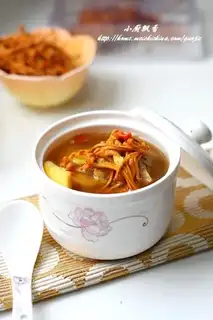 It's herb soup
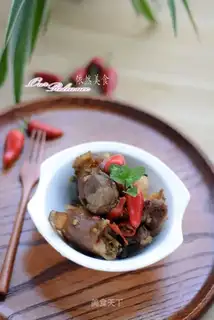 Teaseed oil and lamb stew
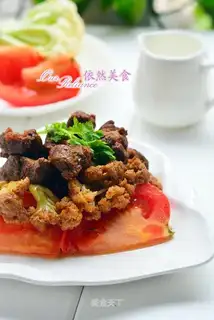 A lot of vegetables and lamb