As the weather gets hotter, what methods do you all use to cool down? Many people might have already stuffed their refrigerators with cold drinks, but of course, this isn't a healthy way to beat the heat. Eating overly cold food can cause strong stimulation to the stomach and intestines, leading to discomfort. Follow the editor to learn about which cooling soups for the summer should not be consumed indiscriminately.
Lychee and Tremella Mung Bean Soup
The Benefits of Mung Bean Soup
1. Clearing Heat
If there is excess heat in the body, it's easy for one to suffer from "heatiness" (shanghuo). Summer temperatures are already high, and when the body's internal heat cannot be dissipated, it can cause symptoms like canker sores and constipation, making a person very irritable. Drinking mung bean soup can have a heat-clearing effect, and the benefit is noticeable even without eating the beans themselves, as the soup is already very effective.
The skin of the mung bean has heat-clearing properties. Therefore, if your main goal is to clear heat, you shouldn't cook the soup for too long. Boiling it over high heat for about 10 minutes is sufficient.
2. Detoxification
We live in an environment where it's impossible to be unaffected by external factors. For example, poor air quality means inhaling many harmful gases that form toxins in the body. From a dietary perspective, eating a lot of indigestible food creates waste in the body, which can also release toxins over time. These are reasons why the body needs to detoxify.
Drinking mung bean soup can help with detoxification. This is because the tannins in mung beans can coagulate the protoplasm of microorganisms and exhibit certain activity, providing an antibacterial effect. Substances like flavonoids also have certain antiviral properties. Therefore, drinking mung bean soup can help detoxify and boost immunity.
3. Cooling Down
Since the Tang Dynasty, doctors have discovered that mung beans have a cooling effect. This is because mung beans are "cold-natured" (hanxing) and have a diuretic effect. Therefore, eating more mung beans or drinking mung bean soup can quickly lower the body's temperature. If the midsummer heat becomes extreme, you can also cook mung beans with honeysuckle for a better effect. A 3:1 ratio of mung beans to honeysuckle, cooked with enough water, will do. This is much healthier than eating cold drinks.
2. People with Poor Digestion
The elderly, infants, and other individuals with weak constitutions should also avoid drinking too much mung bean soup. Their digestive systems are weaker, and the protein in mung beans is a large molecule that needs to be broken down into smaller molecules to be absorbed by the body. Therefore, people with poor digestion may experience discomfort like bloating and diarrhea from drinking too much mung bean soup because it's difficult to digest.
3. People Taking Medication
People who are on medication are also not suitable for drinking mung bean soup. If the medication contains minerals, they can bind with the active ingredients in mung beans to form precipitates, significantly reducing the drug's efficacy. If you are taking traditional Chinese medicine, it also depends on the nature of the drug. If you are taking a "warming and tonifying" type of medicine to expel cold, drinking mung bean soup will have the opposite effect. On the other hand, if you are taking medicine to clear heat and cool the blood, drinking mung bean soup can be helpful.
Things to Note When Drinking Mung Bean Soup
1. Don't Drink It Every Day
Although every day in summer is hot, mung bean soup should not be consumed daily. Moderation is key, especially for a "cold-natured" food like mung bean soup. Daily consumption will inevitably affect your body's constitution. If you are not one of the groups mentioned above who should avoid it, you can drink it 2-3 times a week, one bowl at a time. For young children, the amount must be reduced, and they can only have the same portion as adults after the age of 6.
Mung Bean and Coix Seed Soup
2. Don't Drink Mung Bean Soup Cooked in an Iron Pot
Many active ingredients in mung beans are in the skin. The flavonoids in the skin will interact with iron ions to form substances that are difficult for the body to digest, and the soup will also turn a dark color, affecting the appetite.
3. Don't Drink Iced Mung Bean Soup
Iced mung bean soup is undoubtedly adding "cold" to "cold." It not only irritates the spleen and stomach but also causes blood vessels to constrict, raising blood pressure and potentially triggering serious illnesses like thrombosis.
Conclusion: For thousands of years, we have used mung beans to cool down, often by boiling them into a soup, and the effect is indeed very good. It not only cools you down but also clears internal heat and expels internal toxins. However, some people are not suitable for eating mung beans, such as those with a "cold" body type, people with poor digestion, and those on medication. Additionally, there are some precautions to take when drinking mung bean soup that everyone should try to avoid.
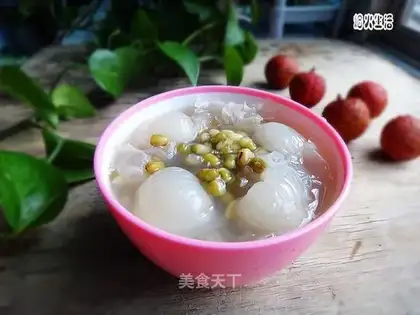 Silver-eared green bean soup