Anti-cancer Vegetable Rankings, Anti-cancer Vegetables That Knowledgeable Doctors Rush to Eat. Our current technological progress, but the development comes at the expense of the environment, so随之而来的是环境污染、赖以生存的食品和饮水及空气遭受污染,现在癌症的发病率高于以前。
Our current technological progress, but the development comes at the expense of the environment, so随之而来的是环境污染、赖以生存的食品和饮水及空气遭受污染,现在癌症的发病率高于以前,我们除了从点滴改善环境以外,就是食补了。
【Northeast】 Wild Vegetable Dumplings
1 Eating dandelion is good for the liver
Dandelion, also known as Pu Gong Ying, many people have seen it in the wild. Its pollen contains vitamin linoleic acid, and its leaves and stems contain choline, amino acids, and trace elements.
The main functions of dandelion are to clear heat and detoxify, reduce swelling, and promote urination. It has a broad-spectrum antibacterial effect and can also stimulate the body's immune function, achieving the effects of promoting bile flow and protecting the liver. It can be eaten raw after blanching, stir-fried, or made into a soup, such as mixing shredded jellyfish with dandelion, or stir-frying dandelion with shredded pork; it can also be mixed with green tea, licorice, and honey to make a cup of dandelion green tea that can clear heat and detoxify and reduce swelling.
2 Bitter vegetable can inhibit leukemia
The scientific name of bitter vegetable is Q Ma Cai or Ju Mai Cai. Its stem is yellowish-white; the leaves are round-lanceolate, green on the surface and gray-green on the back; the flowers are bright yellow, ligulate. Dried bitter vegetable is rich in elements such as potassium, calcium, magnesium, phosphorus, sodium, iron, manganese, zinc, and copper.
Bitter vegetable can clear heat and dry dampness, reduce swelling and promote pus discharge, invigorate blood circulation and detoxify, cool blood and stop bleeding. The ethanol extract of bitter vegetable, concentrated by water decoction, has an inhibitory effect on acute lymphocytic leukemia, acute and chronic granulocytic leukemia. Common ways to eat it include mixing it with minced garlic, dressing with sauce, or braising it with pork liver.
3 Fern has a sedative effect
Fern, also known as Er Cai or Long Tou Cai, is relatively common among wild vegetables. When the fern fronds are curled, it indicates they are fresh and tender; when they are old, the leaves will unfurl.
Eating fern can clear heat, lubricate the intestines, lower qi and resolve phlegm, promote urination, and calm the mind. However, dried or salted fern should be soaked in water before eating to rehydrate it. Common ways to eat it include stir-frying it with pork tenderloin, braised pork with fern, or cold-dressed fern.
4 Platycodon anti-ulcer
Platycodon, also known as Ming Ye Cai or He Shang Mao, is what the Korean people call Da La Ji. It can produce small blue flowers at its stem tips. What we usually eat is the root of platycodon, which has the effects of expelling phlegm and relieving cough, relieving pain and reducing fever, sedation, lowering blood sugar, anti-inflammation, anti-ulcer, anti-tumor, and antibacterial.
5 Eat shepherd's purse to nourish deficiency and strengthen the spleen
The flowering period of shepherd's purse is from April to June. In fields and by the roadside, people can often see small white flowers of shepherd's purse dotted around. Its main therapeutic effects are to cool blood and stop bleeding, nourish deficiency and strengthen the spleen, clear heat and promote urination. In spring, tender stems, leaves, or overwintered buds can be picked, blanched, and then eaten cold with sauce, made into soup, used as a filling, or stir-fried. It can also be cooked into a delicious shepherd's purse porridge.
6 Eat more amaranth on hot days
The root of amaranth is generally purple or light purple; its stem rarely has branches, with green or light purple stripes; the leaves are ovate.
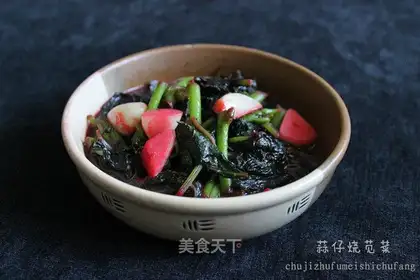
What we usually eat are the tender stems and leaves of amaranth, which have the effects of clearing heat, promoting urination and detoxifying, nourishing yin and moistening dryness. In addition to stir-frying, cold dressing, and making soup, amaranth is also often used as a filling. For example, cold-dressed amaranth, amaranth with shredded chicken, or amaranth dumplings.
Garlic Braised Amaranth
7 Water celery lowers blood pressure
Water celery, also known as watercress or river celery, has a hollow stem, triangular leaves, and white flowers. It mainly grows in humid places, such as riverbanks and paddy fields.
Water celery has the effects of clearing heat and detoxifying, moistening the lungs, strengthening the spleen and harmonizing the stomach, promoting digestion and relieving stagnation, promoting urination, stopping bleeding, lowering blood pressure, anti-hepatitis, anti-arrhythmia, and antibacterial. Common ways we eat it include stir-frying it with pork, water celery and lamb dumplings, or mixing water celery with peanuts.
8 Ci Nen Ya nourishes the kidney and benefits essence
Ci Nen Ya, also known as Ci Long Ya, mainly grows in shrubs and forest clearings. Unlike other wild vegetables, it is not a herbaceous plant but a woody plant. Its bark is gray, covered with large, hard thorns; its flowers are pale yellowish-white; and its fruit is a spherical, black berry.
The part of Ci Nen Ya that is eaten is mainly its tender buds, which can tonify qi, activate blood, expel wind, promote urination, relieve pain, nourish the kidney, and benefit essence.
9 Xiao Gen Suan prevents arteriosclerosis
Xiao Gen Suan, also known as Xie Bai or Li Suan, looks very similar to garlic in its stem and leaves, and also has the taste of onion and garlic. Its effects are to unblock yang and transform qi, open the chest and resolve nodules, and promote qi to relieve stagnation. It is used to treat dysentery and inhibit the increase of lipid peroxides in the blood of patients with hyperlipidemia, preventing atherosclerosis. Main ways to eat it include mixing Xiao Gen Suan with tofu, or making a Xiao Gen Suan and white fungus porridge.
10 Ma Ci Cai can treat diabetes
Ma Ci Cai, also known as Ma Ci Xian or Chang Shou Cai (Longevity Vegetable), is generally reddish-brown with thick, long-obovate leaves, named for its resemblance to a horse's teeth. It contains various nutrients such as protein, fat, thionine, riboflavin, and ascorbic acid. Because it contains a relatively high amount of acidic substances, it tastes slightly sour when eaten.
The medicinal function of Ma Ci Cai is to clear heat and detoxify, and cool blood to stop bleeding. Because it is rich in noradrenaline, it can promote the secretion of insulin from the islets of Langerhans, regulate the body's sugar metabolism process, lower blood sugar concentration, and maintain stable blood sugar, so it has a certain therapeutic effect on diabetes.
In addition, it also contains an unsaturated fatty acid that can inhibit the production of cholesterol and triglycerides, and has a protective effect on the cardiovascular system. There are many ways to eat it: after blanching, it can be stir-fried, cold-dressed, or used as a filling. For example, Ma Ci Cai stir-fried with eggs, steamed Ma Ci Cai buns, or boiled Ma Ci Cai with garlic to clear heat and stop dysentery.
 Garlic cooking
 Red fish