In autumn, chestnuts ripen, and many stalls selling roasted chestnuts appear on the streets. Sugar-roasted chestnuts are also very popular, but it's not advisable to eat too many of them. Let's learn more about them below.
I. The Medicinal and Dietary Effects of Chestnuts
1. Chestnuts have the functions of nourishing the stomach, strengthening the spleen, tonifying the kidneys, and fortifying the muscles and bones. "Compendium of Materia Medica" states: "Chestnuts are sweet in taste and warm in nature, entering the spleen, stomach, and kidney meridians." Sun Simiao of the Tang Dynasty said: "Chestnuts are the fruit of the kidneys; those with kidney ailments should eat them." The "Compendium of Materia Medica" also points out: "Chestnuts treat kidney deficiency, weakness of the waist and legs, can benefit the qi, and strengthen the stomach and intestines." "Someone with internal coldness had a sudden, severe diarrhea, but was cured after eating 20-30 roasted chestnuts." Su Zyou, the younger brother of Su Dongpo, once wrote a poem praising the medicinal effects of chestnuts: "In old age, I've developed ailments of the waist and feet, an old remedy passed down by the mountain elder. When guests arrive, I tell them of the morning and evening ritual, slowly swallowing three mouthfuls of the white jade-like syrup." Eating chestnuts can benefit qi and blood, nourish the stomach, tonify the kidneys, and strengthen the liver and spleen; eating them raw can also treat soreness and pain in the waist and legs, and relax the muscles and activate the collaterals. The high starch content in chestnuts provides high energy, while potassium helps maintain a normal heartbeat, and fiber strengthens the intestines and keeps the excretory system functioning properly.
2. Because chestnuts are rich in soft dietary fiber, diabetics can also enjoy them in moderation. However, raw chestnuts are difficult to digest, and cooked ones can easily cause bloating, so one should not eat too many at a time. It is best to eat chestnuts as a snack between meals or incorporate them into dishes, rather than eating a large amount after a meal, to avoid excessive calorie intake, which is not conducive to maintaining weight. Fresh chestnuts can easily become moldy, and eating moldy chestnuts can cause poisoning, so spoiled chestnuts must not be eaten.
3. Traditional Chinese medicine believes that chestnuts are sweet, warm, and non-toxic, with medicinal effects that strengthen the spleen, supplement the liver, and build strong bones. Regular consumption of raw chestnuts can treat weakness in the waist and legs; the shells and tree bark have an astringent effect; fresh leaves can be used externally to treat skin inflammation; flowers can treat scrofula and diarrhea, and the root can treat hernia. Folk remedies often use chestnuts: eating one or two raw chestnuts in the morning and evening can treat kidney deficiency in the elderly with weak and frequent urination; mashed raw chestnuts applied to the affected area can treat injuries from falls, swelling and pain in the muscles and bones, and also have the effects of relieving pain, stopping bleeding, and absorbing pus.
4. Chestnuts are rich in various nutrients such as starch, protein, fat, and B vitamins, and have long been known as the "king of dried fruits." They can help prevent and treat diseases such as hypertension, coronary heart disease, arteriosclerosis, and osteoporosis.
5. At the same time, regular consumption is beneficial for long-lasting oral sores in children and mouth ulcers in adults. Traditional Chinese medicine believes that chestnuts can strengthen the spleen and stomach, tonify the kidneys and strengthen the muscles, invigorate blood, and stop bleeding. They have a good therapeutic effect on kidney deficiency, so they are also called the "fruit of the kidneys," especially suitable for elderly people with kidney deficiency and loose stools. Regular consumption can strengthen the body and cure diseases.
II. Precautions for Eating Chestnuts
1. People love sugar-roasted chestnuts for their unique sweet and delicious flavor. So, does adding sugar make them sweeter and more fragrant? The skin of a chestnut is very tough. Whether it's solid white sugar or heated syrup, it's hard to get inside the chestnut and instead sticks to the shell. In many parts of our country, chestnuts are roasted without sugar, and they are just as sweet and delicious. Therefore, from a taste perspective, adding sugar to roasted chestnuts is meaningless.
Secondly, from a hygiene standpoint, roasted chestnuts without sugar have a dry exterior, like the skin of roasted melon seeds, so your hands won't get dirty after eating. However, after eating sugar-roasted chestnuts, you'll find your hands are black. Not only do you have to clean the "sugar" off your hands each time, but because of the unique stickiness of the sugar after roasting, it is very likely to cause dust and dirt from the outside to stick to the chestnut flesh and eventually end up in our stomachs.
2. From a food safety perspective, the "sugar" used for roasting chestnuts is repeatedly heated at high temperatures. We cannot be sure if it will produce harmful substances, but it certainly offers no benefits. Moreover, it is difficult for us to distinguish whether the beautiful color on the surface of commercially sold sugar-roasted chestnuts comes from "sugar" or from paraffin. This creates an opportunity for unscrupulous vendors. To make the roasted chestnuts look more attractive and whet consumers' appetites, adding paraffin to sugar-roasted chestnuts is now a well-known practice.
Braised Pork with Chestnuts
Extended Reading: A Complete Guide to Eating Chestnuts
III. Precautions for Eating Chestnuts
1. People with a weak spleen and stomach should not eat chestnuts raw. They should be roasted or stir-fried, or one can make a congee with chestnuts, jujubes, Poria cocos, and rice.
2. Those with bleeding disorders, such as hematemesis or hematochezia, should eat chestnuts raw.
3. Postpartum women and children with constipation should not eat too many chestnuts.
4. Because they contain a high amount of carbohydrates, diabetics should eat chestnuts in moderation.
5. Whether eaten raw, stir-fried, or roasted, chestnuts must be chewed slowly, and the saliva should be swallowed along with them to achieve a better nourishing effect.
In addition, some readers believe that adding sugar can prevent chestnuts from bursting during roasting. However, the sand used when roasting chestnuts is itself meant to ensure even heating and prevent bursting. I have also eaten roasted chestnuts without sugar, and they did not burst either.
Therefore, overall, compared to the advantages of adding sugar to roasted chestnuts, the disadvantages may be greater. So, when it comes to sugar-roasted chestnuts—the disadvantages outweigh the advantages. It's better to roast chestnuts without sugar!
IV. Tips for Selecting Chestnuts
Look at the color. Good chestnuts generally have a dark brown surface with a slight reddish hue. If the shell has changed color, is dull, or has dark spots, it indicates that the fruit has been infested by insects or has spoiled due to heat.
Squeeze the chestnut. If the shell is very hard when you squeeze it, it means the fruit is plump. If the nut is soft, it indicates that the flesh has shriveled or has become soft and mushy from being improperly stored.
Shake them. Hold a chestnut to your ear and shake it. If you can hear a sound, it means the fruit is fresh and the flesh is dry and hard, which means it has been stored for a long time. You should not buy these.
Taste them. When buying chestnuts, you can also taste them. Good chestnuts have pale yellow, firm, finely textured flesh with little moisture, high sweetness, a sticky texture, and a strong aroma. Conversely, they can be hard, tasteless, and have a poor texture.
Chicken Stewed with Chestnuts
You might also like:
How to cook raw chestnuts deliciously? Remember these steps!
5 Taboos on Eating Chestnuts, Pay Attention If You Belong to These Groups!
10 Chestnuts Equal a Bowl of Rice: Five Groups of People Should Not Eat Too Many Chestnuts
Eat chestnuts in winter to nourish the kidneys and stay healthy!
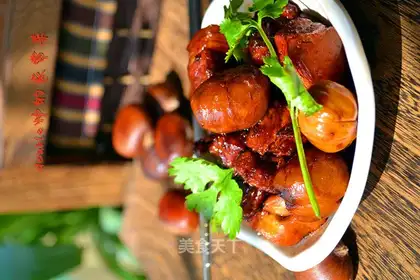 Chestnut red meat
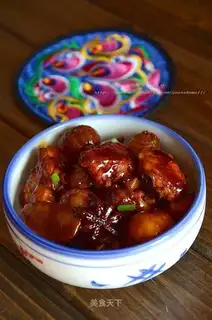 Red chestnut chicken