Dietary therapy is the simplest way to maintain health. Some wild vegetables may look unassuming, but they have excellent health benefits. For example, the wild vegetables below are very good for your health.
Wild Vegetables for Health
1. Dandelion is good for the liver
Dandelion, also known as Pu Gong Ying, is a plant many people have seen in the wild. Its pollen contains vitamins and linoleic acid, while its stems and leaves contain choline, amino acids, and trace elements. The main functions of dandelion are clearing heat and detoxifying, reducing swelling, and promoting urination. It has a broad-spectrum antibacterial effect and can stimulate the body's immune function, achieving the effects of promoting bile secretion and protecting the liver. It can be eaten after blanching, stir-fried, or used in soups. For example, you can make a jellyfish skin and dandelion salad, stir-fry dandelion with shredded pork, or mix it with green tea, licorice, and honey to make a cup of dandelion green tea that clears heat and detoxifies and reduces swelling.
2. Amaranth clears heat and promotes urination
The root of amaranth is generally purple or light purple, its stem has few branches and may have green or light purple stripes, and its leaves are ovate. We usually eat the younger stems and leaves of amaranth, which have the effects of clearing heat and promoting urination, detoxifying, nourishing yin, and moistening dryness. In addition to stir-frying, cold-dressing, and making soups, amaranth is also often used as a filling.
3. Sow thistle can inhibit leukemia
The scientific name of sow thistle is Sonchus oleraceous or Sonchus arvensis. Dried sow thistle is rich in elements such as potassium, calcium, magnesium, phosphorus, sodium, iron, manganese, zinc, and copper. Sow thistle can clear heat and drain dampness, reduce swelling and discharge pus, resolve stasis and detoxify, cool the blood and stop bleeding. The ethanol extract of sow thistle, concentrated by water decoction, has an inhibitory effect on acute lymphocytic leukemia, as well as acute and chronic granulocytic leukemia. Common ways to eat it include garlic-mashed sow thistle salad, sauce-dressed sow thistle, and sow thistle stir-fried with pork liver.
Clear Soup with Amaranth
Extended Reading: A Complete Guide to Eating Amaranth
4. Shepherd's purse supplements deficiency and strengthens the spleen
The flowering period of shepherd's purse is from April to June. In fields and by the roadsides, people can often see small, white, star-like shepherd's purse flowers. Its main therapeutic effects are cooling the blood to stop bleeding, supplementing deficiency and strengthening the spleen, clearing heat and promoting urination. In spring, pick the young stems and leaves or overwintered buds of shepherd's purse. After blanching, they can be eaten cold-dressed, dipped in sauce, used in soups, as a filling, or stir-fried. You can also cook them into a delicious shepherd's purse porridge.
5. Platycodon can prevent ulcers
Platycodon is also known as Ming Ye Cai or He Shang Mao. It is what Korean people call Doraji. Its branch tips can produce small blue flowers. What we usually eat is the root of platycodon, which has the effects of resolving phlegm and relieving cough, reducing fever and sedating, lowering blood sugar, anti-inflammation, preventing ulcers, anti-tumor, and antibacterial.
Shepherd's purse stir-fried with eggs
Extended Reading: A Complete Guide to Eating Shepherd's purse
You may also like:
Top 10 Anti-Cancer Wild Vegetables: Great Value and Great Benefits!
Wild Vegetables Are Nutritious: Be Cautious If You Don't Know What They Are
Wild Vegetables as Medicine: Fresh and Delicious
5 Ways to Eat Pollution-Free, Additive-Free Wild Vegetables
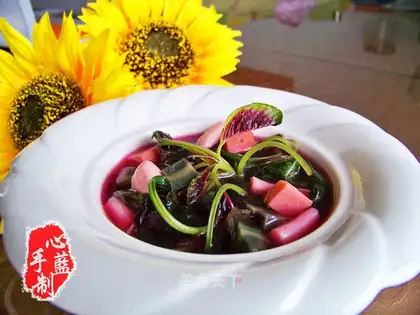 Serve with amaranth in soup
 Scratch