Introduction: Many people don't understand: why are there so many varieties of olive oil in the supermarket, yet olive oil is particularly expensive? What makes olive oil so good? The answer is: the nutritional value of all cooking oils depends on the ratio of fatty acids they contain.
Olive oil is a natural fruit juice extracted from fresh, unripe or ripe olives through a physical cold-pressing process. It is the only woody vegetable oil in the world that is consumed by humans in its natural state. The greatest nutritional advantage of olive oil is its high content of monounsaturated fatty acids—oleic acid. Oleic acid is a representative of the n-9 series of fatty acids. This type of fatty acid has been proven to be highly beneficial for preventing cardiovascular and cerebrovascular diseases, as it can lower blood cholesterol, triglycerides, and bad cholesterol (LDL), while raising good cholesterol (HDL).
Pineapple Upside-Down Cake
Besides being rich in oleic acid, the nutritional value of olive oil is also reflected in its content of other nutrients, such as carotene, B vitamins, vitamin C, vitamin E, vitamin K, phytosterols, and chlorogenic acid. Although different cooking oils have their own unique characteristics and strengths, olive oil can still take the lead when judged by its overall nutritional value.
So, the question arises: since olive oil is so excellent, can we combine it with other cooking oils to complement each other, and in doing so, obtain the different fatty acids from multiple oils just by using one? The answer is: not necessarily. The reason may not be that the other oils mixed with olive oil are of low value, but rather that the labels of blended oils do not inform consumers about the proportion of the base oils or the ratio of fatty acids in the blend.
Korean-style Spaghetti
Some cooking oils, such as soybean oil and palm oil, are relatively inexpensive. Manufacturers could easily blend a large amount of these cheap oils with a small amount of expensive olive oil to reduce costs. After mixing these oils with lower fatty acid value into olive oil, the content of fatty acids beneficial to the human body is greatly reduced compared to pure olive oil, and its health benefits are also significantly diminished. As the saying goes, "you get what you pay for." If you can buy a blended olive oil for one-fifth the price of pure olive oil of the same quality, then the nutritional value of that blended oil is certainly worth some serious thought.
It's unclear when the saying "olive oil is rich in heat-sensitive unsaturated fatty acids, so it can only be used for cold dishes and is not suitable for stir-frying or deep-frying" began to spread. This is actually a one-sided statement. According to the national standard "GB23347-2009," olive oil is divided into three main categories: virgin olive oil, refined olive oil, and olive pomace oil. In terms of quality, virgin olive oil is the best, followed by refined olive oil, and olive pomace oil is the poorest.
Chiffon Cake
In terms of usage, olive oil is not only for cold dishes. Virgin olive oil, which has a slightly greenish color, is most suitable for cold dishes, fillings, or soups where the heating temperature is not very high. For high-heat cooking methods like stir-frying and pan-frying, it is best to use refined olive oil, which has a yellowish color. Of course, no cooking oil should be heated until it smokes during cooking, and olive oil is no exception. Harmful substances are still produced whether you are using olive oil or any other oil. Regardless of the oil used, consuming less high-temperature fried food remains the main theme of a healthy lifestyle.
Olive Oil Fruit and Vegetable Salad
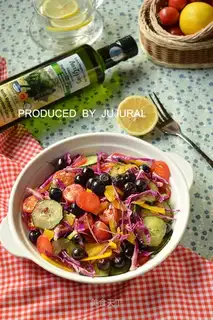 Olive and fruit salad