1. Cold appetizers are appetizing and nutritious
Nutritional research has proven that eating vegetables raw can preserve their maximum nutritional value, as some essential bioactive substances in vegetables change their internal properties and lose their health functions when exposed to temperatures above 55°C. For instance, Vitamin C and B vitamins found in vegetables are easily destroyed by processing and cooking, and eating them raw helps preserve these nutrients.
In addition, vegetables contain an immune substance—an interferon inducer—which has the effect of inhibiting human cell carcinogenesis and resisting viral infections. However, this substance is not heat-resistant, and its effects can only be realized when vegetables are eaten raw. Therefore, in daily life, it is best to eat vegetables raw whenever possible to minimize the loss of nutrients.
Meanwhile, compared to cooking methods like pan-frying, stir-frying, and deep-frying, cold dishes are less greasy, light, and refreshing, which can enhance a person's appetite and stimulate the desire to eat.
Shredded Potato Salad
2. Cold dishes have numerous hidden dangers
On summer dining tables, the dish of sugar-dusted tomatoes is the most popular, not only for its nutrition but also for its sweet and refreshing taste. However, mites are fond of feeding on white sugar, rock sugar, malt sugar, and syrup. They are mostly ingested through food, which can cause illness in people. They can not only lead to diarrhea but also burrow into the intestinal mucosa, forming ulcers. Therefore, some people experience symptoms like diarrhea and abdominal pain after eating sugar-dusted tomatoes, and medications for dysentery or enteritis are ineffective.
From this, it is clear that the hidden dangers in cold dishes are numerous and hard to guard against. It should be noted that due to high summer temperatures, microorganisms multiply rapidly, making it a season when infectious digestive diseases are prone to spread. Because cold dishes are not heated at high temperatures, they are very susceptible to bacterial infection.
Marinated Salad
Furthermore, not all vegetables are suitable for cold dishes. For example, starchy vegetables like potatoes, taro, and Chinese yams must be cooked, as their starch granules will not break down, making them indigestible for the human body. Some legumes, such as kidney beans and edamame, contain toxic proteins and can easily cause food poisoning if eaten raw. Even when used in cold dishes, they must first be thoroughly cooked. Thus, summer cold dishes can be fraught with hidden concerns.
When making cold dishes, pay attention to the following points:
(1) Always select fresh vegetables for cold dishes. Rinse them several times with clean water, making sure to dig out any dirt from grooves and crevices. After washing, blanch the vegetables in boiling water for a few minutes before cutting them. The knife and cutting board used for cold dishes should also be scalded with boiling water for disinfection. Do not use the same knife and board used for raw meat or other unwashed vegetables, as this would negate the previous cleaning and disinfection efforts.
Cold Tofu Shreds
(2) When mixing cold dishes, use clean chopsticks; do not mix with your hands. Generally, you can add some scallions, garlic, ginger, and vinegar to cold dishes, which not only adds flavor but also has a disinfectant effect.
(3) When making cold dishes containing meat, the meat must be cooked thoroughly beforehand. The knife and cutting board for the meat should be separate from those used for raw meat and raw vegetables.
(4) Make only as much cold dish as you intend to eat, and finish it in one sitting. Leftover cold dishes are prone to spoilage.
Onion and Wood Ear Mushroom Salad
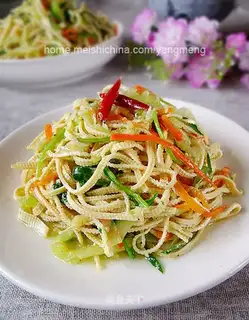 Cold tofu skin
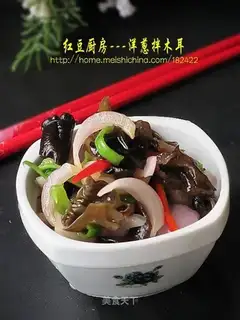 Onion mixed with fungus
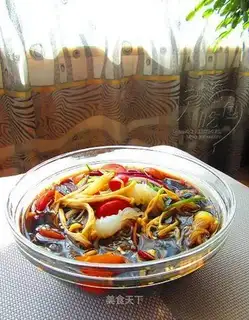 Salad with sauce
 Frozen potatoes