Introduction: Before eating fish, steps like scaling and gutting are essential. Fan Zhihong, an associate professor at the College of Food Science and Nutritional Engineering at China Agricultural University, told reporters from the Life Times that this process, though seemingly simple, involves quite a bit of know-how, and some people might be discarding many of the fish's valuable parts.
Fish Scales. Fish scales are the fish's exoskeleton, rich in nutrients like collagen, calcium, phosphorus, and lecithin, as well as chitosan, a type of dietary fiber. Since collagen converts into soluble gelatin at temperatures between 70°C and 90°C, a common way to eat them is to make fish scale jelly. The specific method is: Scrape off the fish scales and wash them. Place them in a pot full of water, add a little vinegar to keep the water temperature in the 70°C-90°C range, just below boiling, and simmer over low heat. Slowly simmer until the scales melt and the broth becomes thick. Turn off the heat, let it cool, and then refrigerate until it sets into a jelly. When eating, simply mix the fish scale jelly with your favorite seasonings.
Crispy Fried Fish Scales
Fish Bones. Fish bones, commonly known as fish bones or spines, are rich in trace elements like calcium. After being softened, their nutrients are more easily absorbed by the body. Very small fish with bones should be chewed thoroughly; once in the stomach, stomach acid will soften the bones, promoting the release of nutrients like calcium and phosphorus. For larger fish bones, you should suck the marrow, which is the white line in the fish's spine. Additionally, fish bones can be used to make soup with vinegar, simmered over low heat for 2-4 hours. It's worth noting that if you boil fish bones in plain water, they are difficult to soften. Adding more vinegar and stewing them can use the acetic acid to help soften the bones.
Pan-Seared Salmon Bones
Fish Maw. The fish maw is rich in collagen and omega-3 unsaturated fatty acids and may be beneficial for controlling blood lipids. A common preparation method is to wash the fish maw with clean water and then stew it or braised it with the fish.
Fish Liver. The fish liver is where the fish stores many nutrients, such as vitamins A and D, and trace elements like iron. However, it is also high in cholesterol and purines, making it unsuitable for patients with gout. The fish liver is connected to the gallbladder, so be careful not to break it when cleaning. The liver has a detoxification function and can easily accumulate toxins. Before consumption, you should ensure the fish has not been contaminated by environmental pollutants.
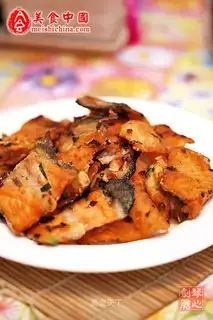 Pan-fried salmon bones
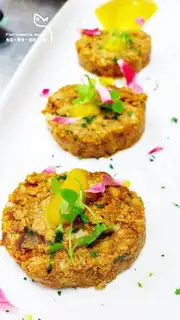 Squid liver
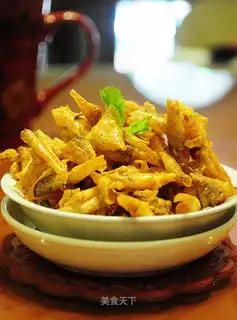 Fry fish