Introduction: Are whole grains the same as coarse grains? Many people probably think so. This is a misconception. True whole grains primarily refer to the seeds of cereal grains, meaning the entire grain kernel, which can be flattened, ground, or milled into flour. Currently, widely recognized whole grains include wheat, barley, rice, oats, rye, corn, sorghum, and millet. A food can be called a whole grain food when whole grain ingredients make up more than 51% of the total grain ingredients.
The DASH diet (also known as the Dietary Approaches to Stop Hypertension diet) is one of the healthy diets currently recognized in the medical community, with whole grains being an important component. For urban populations accustomed to refined white rice and flour, there are very few whole grains on their dining tables.
Five-Grain Jianbing Guozi
Are whole grains the same as coarse grains? Many people probably think so. This is a misconception. True whole grains primarily refer to the seeds of cereal grains, meaning the entire grain kernel, which can be flattened, ground, or milled into flour. Currently, widely recognized whole grains include wheat, barley, rice, oats, rye, corn, sorghum, and millet. A food can be called a whole grain food when whole grain ingredients make up more than 51% of the total grain ingredients.
Five-Grain Soy Milk
Whole grains are excellent anti-cancer foods. For example, the fiber-like substances in the bran and aleurone layer (bran) can serve as food for intestinal bacteria, breaking down to produce short-chain fatty acids (mainly butyrate), which inhibit the proliferation of colon cancer cells. These fiber substances can also promote the growth of beneficial bacteria in the intestines, causing carcinogenic nitrogen to be broken down and utilized. Meanwhile, phytochemicals such as phenols, ferulic acid, and zeaxanthin in them are powerful antioxidants that can combat gene mutations and oxidation, playing a role in cancer prevention and anti-aging.
Five-Grain Mixed Rice
Furthermore, according to the data from the U.S. Whole Grains Council, whole grains can reduce the risk of stroke by 30% to 36%, the risk of type 2 diabetes by 21% to 30%, and the risk of heart disease by 25% to 28%. At the same time, they are also beneficial for weight control.
How should whole grains be eaten? Here are three recommended methods: blend and drink. Place wheat, corn, sorghum, soybeans, and other miscellaneous beans into a soy milk maker to blend. Pour all contents into a bowl and eat and drink it all together, which is simple and convenient; make congee. Soak them in advance for half a day or a day, which makes them easier to cook; additionally, they can be steamed with white rice.
Five-Grain Mixed Congee
 Five grains pancakes and fruits
 Wugu soybean milk
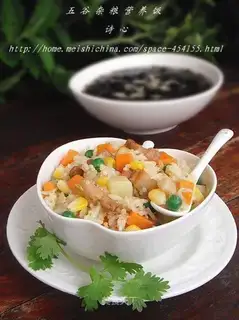 Five grains of groceries
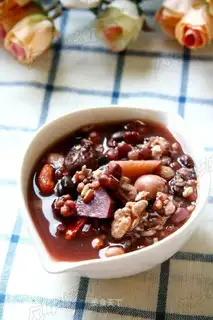 Five grains of porridge