Are fresher fruits tastier? Not necessarily. Some fruits aren't at their best right after being bought or picked. Professor Feng Shuangqing, an expert in fruit and vegetable storage at the College of Food Science and Nutritional Engineering at China Agricultural University, told a reporter from Life Times that this is because some fruits become completely soft as soon as they ripen, making them impossible to transport and store. Therefore, they must be picked in a "rock-hard" state before they are fully ripe to be safely transported to the supermarket. Which fruits should you wait to eat? Life Times tells you.
Kiwi
Press the ends of the kiwi gently with your fingertips. If it no longer feels hard, the pressed area deforms slightly but isn't too soft, this is the best state for eating kiwi. Among fruit farmers, there's a saying about kiwis: "It softens in 3 days, rots in 7, and half will be spoiled in half a month." Therefore, when buying, choose kiwis that are firm and have no mechanical damage. However, a rock-hard kiwi isn't tasty; its sugar content is low, the fruit is sour and astringent, and it can feel harsh on the mouth. This is because the fruit contains a large amount of proteases, which break down the proteins on the tongue and oral mucosa, causing discomfort.
At room temperature, kiwis generally become soft in about 3 days, reaching their best state for consumption. To speed up the ripening process, you can place kiwis with ripe bananas together. The natural ripening gas, "ethylene," released from the ripe fruit will "infect" the kiwi and promote its ripening. If you want to store them for longer, you can put kiwis in the refrigerator's crisper drawer; the low temperature will slow down their ripening process.
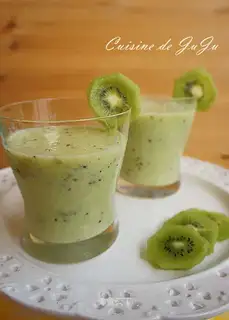
Kiwi Banana Smoothie
South Pear Press the South Pear gently with your finger. If you feel it is elastic and it has a strong, wine-like aroma, this is the best time to eat it. The South Pear has a distinct "post-ripening" characteristic; it needs to undergo more than a week of natural fermentation after being picked to reach its best state. It should be noted that when storing South Pears, do not tie the plastic bag too tightly; leave a "breathing hole" for the fruit to maintain its "vitality." Placing the South Pear in the refrigerator's crisper drawer can slow down the fruit's respiration and keep it fresh. Quick Banana Pie
Persimmon "Soft" and "not astringent" are important signs of a ripe persimmon, but such persimmons are not suitable for harvesting, transportation, and storage. Unripe persimmons contain a large amount of soluble tannins. Tannins have a strong astringent effect; they can stimulate the nerve endings in the mouth, causing an exciting sensation that makes people feel "astringent." If a raw persimmon is isolated from the air, substances like acetaldehyde and acetone will be produced inside. These substances can convert the water-soluble tannins into insoluble ones, making the persimmon non-astringent to eat. Therefore, place raw persimmons in a plastic bag, tie the opening tightly, and after a few days, they will become de-astringent and fragrant and sweet.
Avocado Squeeze the surface of the avocado gently. If it feels elastic and the flesh is firm, it means the avocado is ripe. The more dark brown spots on the green surface, the riper the avocado is. However, if the peel is mostly covered by light and dark brown spots, it's best not to buy it, as it may be overripe and spoiled. If you are not eating it on the same day, it is recommended to buy a relatively unripe avocado. Such a fruit will naturally ripen in 2-3 days at room temperature. A ripe avocado can be stored in the refrigerator for about a week. Avocado Apple Smoothie
 Monkey Peaches shake
 Fast-hand banana pie
 Battery bladefish