Introduction: Most people know that eating vegetables is good for your health, but how many can actually stick to eating enough of them every day? A recent public opinion poll by the World Cancer Research Foundation shows that only one in five Britons can follow nutritionists' recommendations to eat enough of the five major types of vegetables and fruits daily. This survey has left experts from the World Cancer Research Foundation deeply concerned. Insufficient intake of vegetables and fruits has become a major obstacle to a healthy diet for the British people. So, what's the situation with vegetable consumption in China?
Ninety percent of Chinese people eat too few vegetables
Auntie Chen, who lives in the Chaoyang District of Beijing, goes to the morning market to buy vegetables every day. Potatoes, eggplants, cucumbers, and Chinese cabbage, which she is good at cooking, have become common dishes on the dining table for her family of seven. Auntie Chen said that except for breakfast, she basically cooks two or three kinds of vegetables for lunch and dinner for the whole family. "I think it's enough for the whole family to eat a catty or two of vegetables every day. Besides, I don't know how to cook many vegetables, and I usually only eat a few kinds." Another grandfather, Mr. Ma, who has a young grandson, always stir-fries meat and vegetables together. "The child doesn't like to eat vegetables alone, so I have to cook them like this." When asked how many vegetables he eats every day, Mr. Ma said, "Less than a catty of vegetables. The child loves meat, so I try to use more meat."
Almost all Chinese people, like Auntie Chen and Mr. Ma, eat vegetables with every meal, but a survey by the Life Times shows that more than 90% of people eat fewer than 5 types of vegetables on average every day. Among the 3,757 people surveyed, 86% ate 1-3 types of vegetables daily, but only 4.7% ate 5 or more types. In terms of vegetable variety, Chinese cabbage, solanaceous fruits, gourds, and tubers are the most popular. Tomatoes, cucumbers, potatoes, Chinese cabbage, and eggplants are the most frequently eaten vegetables. In terms of cooking methods, stir-frying is the most common, accounting for 65.38%.
"Whether it's the survey data or my observation of people around me, the conclusion is the same: Chinese people still eat too few vegetables, especially in regions north of the Yangtze River," said Professor Ma Liping, Vice Chairman of the Guangxi Nutrition Society. According to the "Chinese Residents' Balanced Dietary Pagoda" recommended by the Chinese Nutrition Society, each person should eat 200-400 grams of fruit and 300-500 grams of vegetables daily. However, many people not only fail to eat enough in quantity but also lack variety in their choices. Ma Liping said that due to planting types and climate, people in most southern regions have access to more varieties of vegetables than in the north, giving them more choices. In areas north of the Yangtze River, such as Shanxi, many places are still at the stage where only potatoes and sweet potatoes are considered vegetables, and leafy greens are very rare.
According to reporters, low vegetable intake is not just a problem in China; it is a global issue. Since 1988, the vegetable and fruit intake of Americans has been on a downward trend. A study shows that the fruit and vegetable intake of American children is far lower than it was 10 years ago; British vegetable consumption has decreased by 30% compared to 60 years ago; in the past 10 years, the average vegetable intake of Italians has decreased by 9%; and even in Japan, known for its healthy diet, vegetable intake has not increased but has decreased in the last 30 years.
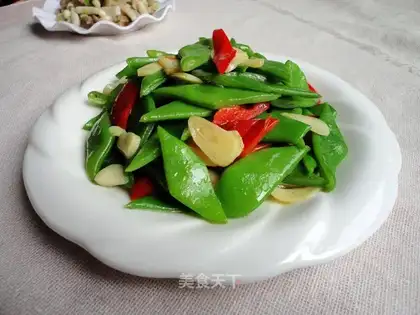
Stir-fried Red Peppers and Green Beans
Five Common Misconceptions About Eating Vegetables
"Although people are more aware of the importance of fruits and vegetables than in the past, there are still many obstacles to truly integrating them into our daily lives," said Kate Mendoza, Head of Education at the World Cancer Research Foundation. Wang Xufeng, Deputy Secretary-General of the China Nutrition Alliance and a National Level 2 Nutritionist, also pointed out that people have many misconceptions about eating vegetables:
Misconception 1: Meat is nutritious, but vegetables are not.
Wang Xufeng said he often hears parents tell their children, "Eat more meat, it's nutritious and helps you grow." This unconsciously equates meat, eggs, and milk with "nutrition" and categorizes vegetables as "non-nutritious" foods. In fact, vegetables are rich in vitamins, inorganic salts, dietary fiber, and many other beneficial substances for human health. If every meal contains more meat than vegetables, it will not only lead to a timely and effective lack of vitamins in the body, affecting growth and development, but may also cause other diseases. For example, insufficient intake of cellulose in vegetables can easily cause constipation and even induce colorectal cancer; compared to people who do not eat vegetables and fruits daily, those who eat 5 or more servings of vegetables and fruits have a 12% lower risk of stroke and heart attack; a US study on vegetables and aging showed that eating more vegetables can also keep the brain young.
Misconception 2: Always eating the same few vegetables at home.
Ma Liping pointed out that there are far more varieties of vegetables than people imagine. In China alone, there are more than 100 types of vegetables that people commonly eat. "But many people are afraid to buy new and unfamiliar vegetables, and over time, vendors only sell a few dozen types," she said. To eat vegetables, one must not only ensure a daily intake of 300-500 grams but also consume a variety of types such as leafy greens, solanaceous fruits, tubers, Chinese cabbage, gourds, and root vegetables. Because the nutrients in each category of vegetables are different—for example, leafy vegetables like spinach, cabbage, and water spinach are rich in B vitamins, vitamin C, and various inorganic salts and have high nutritional value—while carrots and peppers are rich in vitamin C and carotene. Only by eating a wide variety can you achieve a balanced nutritional intake.
Misconception 3: Vegetables are only delicious when stir-fried.
In the survey, more than half of people chose "stir-frying" as their preferred method of cooking vegetables. Ren Lili, Director and Secretary-General of the Shenzhen Nutrition Society and a Director of the Shenzhen Society of Food Science and Technology, pointed out that because many people don't like to eat vegetables, they use incorrect cooking methods like adding more oil or stir-frying for a long time to change the texture. In reality, this causes vitamins and other nutrients in the vegetables to be lost too quickly. For most vegetables, blanching them in water and then serving them cold or stir-frying them quickly over high heat are good methods. Vegetables containing fat-soluble vitamins, like carrots and tomatoes, can have a little more oil, but not too much.
Misconception 4: Replacing vegetables with fruit.
"I didn't eat vegetables today, so eating more fruit is just as good." Many people confuse vegetables and fruits, thinking they belong to the same category. But Ma Liping said that vegetables and fruits are two completely different foods and cannot be completely substituted. The content of vitamins, minerals, and dietary fiber in most vegetables is higher than in fruits, while the pectin and fructose in fruits are also beneficial to the human body.
Misconception 5: Worrying about food incompatibility and pesticide residues.
Wang Xufeng said that many people often ask him whether cucumbers and tomatoes can be eaten together. Many elderly people, influenced by rumors or unscientific propaganda, are afraid of "food incompatibility" and dare not buy and mix too many vegetables. In fact, there is no such thing as completely incompatible foods; it's just that some vegetables require a little attention during cooking. For example, spinach, which contains oxalic acid, should be blanched in boiling water for 1 minute before being eaten with tofu, and then there will be no problem. In addition, some people are also worried about excessive pesticide residues on vegetables. Wang Xufeng said that the pesticides used on vegetables today are generally highly effective, low-toxicity, and low-residue. Most pesticides can be removed through exposure to light and washing, so there is no need to worry too much.
Broccoli with Sausage
Vegetables becoming "prescription drugs" in the US
"Fruits every day, vegetables with every meal." Wang Xufeng said that the most basic principle of eating vegetables is to ensure a daily intake of 300-500 grams per person, preferably of more than 5 types. Ren Lili believes that the more types of roots, stems, leaves, flowers, fruits, and fungi/seaweed consumed daily, the better, especially fungi and seaweed like mushrooms and black fungus, which should be eaten every day if possible. In terms of quantity, about 100 grams of raw vegetables, when cooked, is roughly the size of a tennis ball. Therefore, eating 5 tennis ball-sized portions of cooked vegetables daily is equivalent to consuming 500 grams of raw vegetables. Furthermore, to change people's "bad habit" of not eating enough vegetables, experts around the world are actively brainstorming solutions.
Follow the "rainbow effect" when eating vegetables. The colors of the vegetables you eat every day should be as diverse as a rainbow, and the deeper the color, the higher its nutritional value. For example, the beta-carotene content in broccoli is much higher than in cauliflower, and the iron content in black beans and black fungus is significantly higher than in soybeans and white fungus. Especially purple vegetables rich in anthocyanins, such as eggplant, purple onions, purple cabbage, and purple sweet potatoes, the more you eat, the better.
Mix and match various vegetables. If you really don't know what to eat, you might as well mix the vegetables stored in your refrigerator and stir-fry them quickly over high heat. This can ensure both the variety and quantity of your food.
Let vegetables become "prescription drugs." According to The New York Times, some places in the US have already included spinach and beets in doctors' prescriptions, aiming to combat obesity in low-income families. We could also adopt this method, having doctors advise patients to eat more vegetables when writing prescriptions.
Ranking of the most nutritious vegetables. The Center for Science in the Public Interest in the US scored 85 common vegetables and ranked the top ten most nutritious ones for people's reference when shopping. They are: spinach, kale, radish greens, lettuce, pumpkin, mustard greens, sweet potatoes with skin, broccoli, carrots, and red bell peppers.
But eating more vegetables is not always better. Ren Lili reminds people that those with anemia, poor gastrointestinal function, and children in their growth and development stages should not eat too many vegetables at once. Vegetables with high crude fiber content, such as celery, are difficult to digest in large quantities. A large intake of vegetables at once can hinder the absorption of calcium and zinc in the body, affecting a child's development.
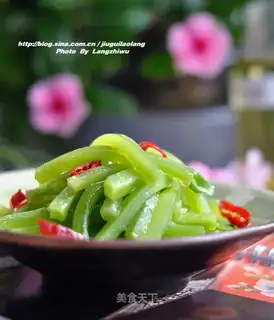
Crispy Lettuce with Chili Oil
 Pretzels
 Paprika
 Blueberry roll