Introduction: Eggplant is a summer and autumn vegetable with many varieties. Eggplant, I believe many people like to eat. It is not only delicious but also nutritious.
Nutrition and Function of Eggplant
Eggplant is rich in nutrition. Every 100 grams contains 2.3 grams of protein, 0.1 grams of fat, 3.1 grams of carbohydrates, 22 milligrams of calcium, 31 milligrams of phosphorus, 0.4 milligrams of iron, 0.04 milligrams of carotene, 0.03 milligrams of thiamine, 0.04 milligrams of riboflavin, 0.5 milligrams of niacin, and 3 milligrams of ascorbic acid. The purple skin of eggplant is also rich in vitamin E and vitamin P. The flesh tissue contains alkaloids, giving it a slightly astringent taste when raw. Traditional Chinese medicine believes that eggplant is sweet in taste and cold in nature, with effects of dispelling blood stasis, reducing swelling and pain, treating chills and fevers, expelling wind and unblocking collaterals, and stopping bleeding. In recent years, modern research has found that eggplant also has many health care and therapeutic effects.
Protecting Cardiovascular Health and Lowering Blood Pressure: Eggplant is rich in vitamin P, a type of flavonoid compound that can soften blood vessels, enhance their elasticity, reduce capillary permeability, and prevent capillary rupture, playing a certain role in preventing bleeding from small blood vessels.
Lowering Cholesterol: Eggplant contains trigonelline and choline, which can combine with excess cholesterol in the small intestine and excrete it to maintain normal blood circulation. Brazilian scientists conducted an experiment on obese rabbits, and the results showed that the cholesterol level in the group that drank eggplant juice decreased by 10% compared to the group that did not. An American magazine, in an article titled "12 Ways to Lower Cholesterol," ranked eating eggplant first. Therefore, patients with hyperlipidemia, hypertension, arteriosclerosis, coronary heart disease, hemoptysis, purpura, and scurvy can greatly benefit from regularly eating eggplant.
Anti-tumor: Animal experiments have shown that eggplant can inhibit the proliferation of digestive tract tumors. This is because eggplant is rich in solanine, which has an inhibition rate of 87.4% on mouse H22 ascites cancer cells, showing significant anti-cancer effects. Data shows that in Greece and Crete on the Mediterranean coast, where local residents consume large amounts of solanaceous vegetables (including eggplant, tomatoes, and peppers) year-round, the incidence of heart disease and cancer is significantly lower than in other European and American countries.
Improving Digestion: Since ancient times, Chinese people have recognized that eggplant has the effect of relaxing the bowels and promoting bowel movements. Modern medicine has proven that eating eggplant can increase the release of acetylcholine, leading to increased digestive juice secretion and enhanced digestive movements.
Other Effects: Eggplant can prevent the absorption of fat, making it a delicious and healthy vegetable for people trying to lose weight. Eggplant and sweet potatoes have long been proven to have a whitening effect on the skin (especially purple eggplant). Other studies have shown that eggplant can enhance the body's resistance to various diseases and has anti-aging functions. Eggplant can clear heat and relieve summer heat, making it particularly suitable for people who are prone to heat rash and sores in the summer.
Braised Eggplant with Chili Sauce
Contraindications for Consumption
Eggplant is generally suitable for all people. However, because eggplant is cool in nature, people with a weak spleen and stomach or asthma should not eat too much. Additionally, eggplant tastes bitter after autumn, so people with loose stools should not eat much of it. It is also best to avoid eating eggplant before surgery, as anesthetics may not be metabolized properly, which can delay the patient's awakening time and affect their recovery speed.
How to Cook Eggplant
Eggplant can be cooked in various ways, suitable for both meat and vegetable dishes. It can be stir-fried, braised, steamed, boiled, deep-fried, served as a cold salad, or used in soups, all of which can create delicious dishes. It is recommended not to peel the eggplant when eating, as its nutritional value lies in the skin, which is rich in B vitamins and vitamin C. Due to the possible use of pesticides in the growing process, it is recommended to wash the eggplant thoroughly with detergent before cooking.
Cold-dressed Eggplant Salad
Storage and Selection of Eggplant
When selecting eggplant, look for a uniform and well-shaped fruit, with appropriate maturity, no cracks, rot, rust spots, or blemishes. The best quality is one with thin skin, few seeds, thick flesh, and a tender texture. Young eggplants have a dull, dark color, thin skin, soft flesh, light weight, and sweet, tender seeds that are not easily separated from the flesh. At the junction of the calyx and the fruit, there is a light-colored ring. The wider and more obvious this ring is, the faster the fruit is growing and the less aged it is. If the ring is not obvious, it means the eggplant's growth had stopped when harvested, and it is already old, affecting its quality. Old eggplants, on the other hand, have a bright color, thick and tight skin, firm flesh, and seeds that are easily separated from the flesh. The seeds are hard and yellow, and the fruit is heavy. Some may have a bitter taste. Old eggplants, especially those from autumn, contain more solanine, which is harmful to the human body and should not be eaten in large quantities.
Braised Eggplant with Bean Sauce
 Potato bread
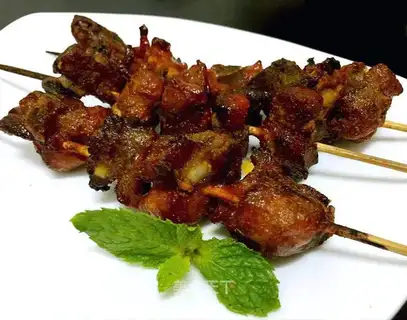 New Orleans roasted ribs
 Barely roasted mackerel