Introduction: Mung bean soup is a must-drink beverage for many people in the summer. Those who have made mung bean soup all agree that it changes color easily. The soup is a vibrant green when first cooked, but turns red shortly after being poured out. What's the difference between the green and red versions? Antioxidant capacity tests show that the red soup has significantly lower antioxidant capacity than the green soup. The redder the color, the lower the antioxidant capacity. Generally, the stronger the antioxidant capacity of the soup, the better its heat-relieving effect. This means that green mung bean soup is more effective for cooling down than red soup. Here are 4 methods to help you cook green mung bean soup.
It's best to cover the pot while cooking. The skin of mung beans contains a large amount of polyphenols, which oxidize into quinones and then polymerize into darker-colored substances upon contact with oxygen. Therefore, you should cover the pot when cooking mung bean soup to minimize the contact area between the beans and oxygen and prevent oxidation.
Cooling Mung Bean Soup
Use purified water to cook, as it is less likely to change color. The Food and Nutrition Research Laboratory at China Agricultural University once used tap water, mineral water, purified water, and distilled water to cook mung bean soup. The results showed that the color of the soup varied depending on the water quality. Distilled water produced the greenest color that remained stable over time. Next were purified water and mineral water. Tap water caused the fastest color change; the soup darkened noticeably almost every minute after being exposed to the air and quickly turned red. Therefore, it's best to use purified water for cooking mung bean soup.
A few drops of lemon juice can help keep the mung bean soup green. Research has found that pH level also greatly affects the color change of the soup. Tap water in northern China is alkaline, and the mung bean soup changes color very quickly after being cooked, with a noticeable color change seen within two minutes of pouring it out. However, when vinegar or lemon juice is added to the tap water, the color change of the resulting soup is minimal. Therefore, if you use tap water to cook mung bean soup, you can add half a spoonful of white vinegar or a few drops of lemon juice to the water. But be careful not to add too much, otherwise the soup will become sour and affect its taste.
Litchi and Tremella Mung Bean Soup
Add the beans when the water is boiling and cook for 8 minutes. The method for cooking mung bean soup is to first bring the water to a boil, then add the mung beans, and continue to simmer on low heat for 8-10 minutes before pouring out the soup. At this point, the soup is a vibrant green, the substances dissolved are mainly the active ingredients from the bean skins, and the oxidation level is the lowest, making its heat-clearing effect the strongest. After pouring out the soup, the remaining beans can be cooked further into mung bean paste or cooked with rice to make mung bean porridge.
Rose and Almond Mung Bean Soup
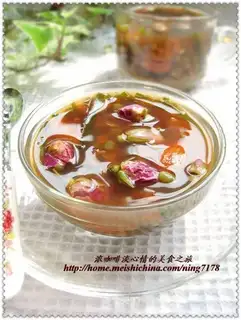 Rose almond and mung bean soup
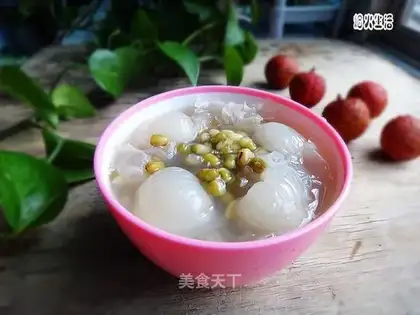 Silver-eared green bean soup
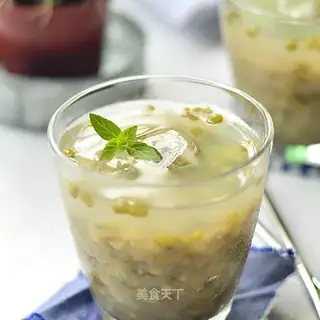 Green bean soup