Rice can satisfy hunger and is a staple food for Chinese people. In fact, besides filling the stomach, rice has many other health benefits, such as aiding digestion and nourishing the kidneys. Below are six types of rice with different health benefits.
1. The most nourishing is japonica rice.
The common rice used daily for cooking is also known as japonica rice or polished rice. It is semi-transparent, oval or elliptical, has a high milling rate, small expansion of the grains, but high stickiness. As a daily staple, japonica rice contains essential nutrients for the human body, such as starch, protein, fat, vitamin B1, niacin, vitamin C, and calcium, iron, etc., providing the necessary nutrition and calories for the body.
It has a history of 2000 years in China to cook congee with japonica rice for health and longevity. The congee oil on the top layer of the japonica rice congee can replenish fluids and essence, which is greatly beneficial for nourishing the body's yin fluids and kidney essence. It is most suitable for patients, postpartum women, and the elderly. Japonica rice has the effects of strengthening the spleen and stomach, tonifying the middle qi, nourishing yin and promoting body fluids, relieving vexation and thirst, and stopping diarrhea. It can be used for conditions such as weakness of the spleen and stomach, vexation and thirst, malnutrition, and post-illness weakness. However, diabetics should be cautious not to eat too much.
2. The most digestible is brown rice.
So-called brown rice is the "light yellow rice" that has had its coarse husk removed during the milling process while retaining the germ and inner bran layer. The protein, fat, and vitamin content in brown rice is higher than in white rice.
The crude fiber molecules in the bran layer help gastrointestinal peristalsis and are effective for digestive diseases such as stomach problems, constipation, and hemorrhoids. Brown rice is more nutritious than white rice, can lower cholesterol, and reduce the risk of heart attacks and strokes. Brown rice is suitable for the general population. However, because brown rice has a coarser texture and is denser, it takes longer to cook. It is recommended to wash it, soak it in cold water overnight before cooking, then cook it in a pressure cooker for more than half an hour, including the soaking water.
Red Brown Rice
3. The best for nourishing the kidneys is black rice.
Black rice is rich in nutrition, containing protein, fat, B vitamins, calcium, phosphorus, iron, zinc, and other substances, with higher nutritional value than ordinary rice. It can significantly increase the content of human hemoglobin and blood pigments, which is beneficial for the health of the cardiovascular system, the development of children's bones and brains, and can promote recovery for postpartum women and those who are weak after illness. Therefore, it is an ideal nutritional health food.
Black rice has the effects of nourishing yin and kidneys, replenishing qi and strengthening the body, strengthening the spleen and whetting the appetite, tonifying the liver and improving eyesight, and nourishing essence and securing leakage. It is a great tonic for anti-aging, beauty, disease prevention, and health strengthening. Regular consumption of black rice has a good tonic effect on chronic patients, people in recovery, and young children. Because black rice is not easy to cook, it should be soaked overnight before cooking. It is not suitable for young children and the elderly with weak digestion.
4. The best for detoxification is glutinous rice.
Glutinous rice, also called Jiangmi, is loved by everyone because of its fragrant, sticky, and smooth texture, and is often used to make snacks. Glutinous rice contains nutrients such as protein, fat, carbohydrates, calcium, phosphorus, iron, vitamin B2, and a large amount of starch.
Purple Sweet Potato and Glutinous Rice Paste
5. The best for beauty is Job's tears.
Job's tears is also known as coix seed or yi yi ren. Job's tears has high nutritional value and is hailed as the "king of world gramineous plants." It is rich in nutrients such as coixenol, coixenolide, sterols, various amino acids including arginine, vitamin B1, carbohydrates, etc. It has the effects of promoting urination to drain dampness, strengthening the spleen to stop diarrhea, and clearing heat and detoxifying. In traditional Chinese medicine, Job's tears is sweet and light in taste, slightly cold in nature, and enters the spleen, stomach, and lung meridians. It has a therapeutic and preventive effect on symptoms such as spleen deficiency and diarrhea, muscle soreness and heaviness, and joint pain.
6. The best for nourishing the stomach is millet.
Millet is also known as Liangmi, Sumi, or Sugu. It is rich in nutrients such as protein, fat, carbohydrates, vitamin B2, niacin, calcium, phosphorus, iron, etc. Because millet is very easily digested and absorbed by the human body, it is called "health rice" by nutrition experts. Millet has the effects of strengthening the spleen and harmonizing the middle, benefiting kidney qi, clearing deficiency heat, promoting urination, and treating vexation and thirst. It is a good nutritional and recuperative food for treating weakness of the spleen and stomach, general debility, damage to essence and blood, postpartum deficiency, and loss of appetite. Because millet is slightly cool in nature, those with qi stagnation or a constitution that is slightly deficient and cold should not eat too much of it.
Pumpkin and Millet Paste
 If it turns back into an egg
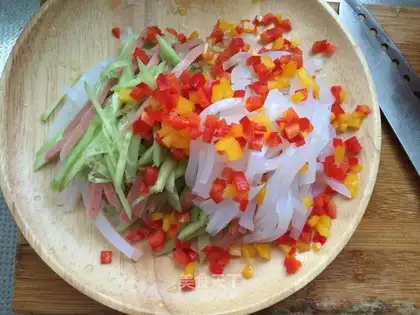 Frozen ham
 ♪ Fresh hands ♪