We all know that too much accumulated fecal matter in the body can easily lead to impaired health, and the best way to expel it is through diet. So, which foods can help eliminate fecal matter?
1. Black Fungus: The "Part-Time Worker" for Intestinal Cleaning
Black fungus is the most outstanding "part-time worker" for intestinal rejuvenation. The plant-based colloids it contains have a strong adsorption capacity, which can quickly adsorb unhealthy substances left in the intestines, such as dust and impurities, and concentrate them for excretion, playing a role in purifying the blood and cleansing the intestines.
2. Konjac Jelly: The "Positive Energy" for Intestinal Lightness
The dietetic konjac jelly contains glucomannan hydrogel fiber, which greatly promotes intestinal peristalsis and reduces the "various stresses" it has to endure daily. Additionally, the dietary fiber in konjac jelly, whose main component is glucomannan, can form a protective film on the intestinal wall, shorten the food's residence time, and eliminate waste from the intestinal wall, effectively keeping the intestines in a state of benign activity.
Spicy Konjac
3. Brown Rice: The "Plumber" for Intestinal Unclogging
Brown rice is rich in B vitamins and vitamin E, which can effectively improve the body's immunity, promote blood circulation, and provide a continuous supply of energy to the intestines. Furthermore, its trace elements such as potassium, magnesium, zinc, iron, and manganese, along with a large amount of dietary fiber, can promote the proliferation of beneficial intestinal bacteria and prevent constipation and colon cancer.
4. Apple: The "Gauge" for Intestinal Detoxification
There is a foreign proverb: "An apple a day keeps the doctor away!" Its most obvious effect on health is promoting intestinal detoxification—the galacturonic acid and pectin it contains reduce toxins in the intestines to a minimum; its soluble fiber effectively increases the excretion of fecal matter, helping you say goodbye to a "pot belly" and ensuring normal intestinal circulation.
5. Peanuts: The "Huarong Pass" for Intestinal Moisturization
A survey study by the School of Public Health at Taiwan Medical University shows that peanuts have a great effect on strengthening the intestines. This is because peanuts enter the spleen meridian, nourishing the stomach and awakening the spleen, and have a lubricating and moistening effect on the bowels. Moreover, its unique substances such as phytic acid and plant sterols also increase the intestinal toughness, continuously enhancing its ability to resist external intrusions.
Red Bean and Peanut Milk
6. Celery: The "Excitement Code" for Happy Intestines
When digested in the intestines, celery can produce lignin, a powerful antioxidant that effectively inhibits the production of carcinogens in the intestines and accelerates the transit time of feces, making the intestines "happy" and maintaining a healthy rhythm of movement.
7. Pork Blood: The "Digestive Enzyme" for Intestinal Detoxification
After being broken down by digestive enzymes, the plasma protein in pork blood produces detoxifying substances. When the intestines absorb metal particles, these substances react with them, shorten their residence time in the body, and ultimately expel them directly, minimizing the harm to the body.
Pork Blood with Minced Meat
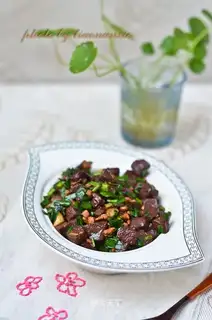 Pork blood
 raisin sesame ricin cake
 ♪ Love breakfast bag ♪