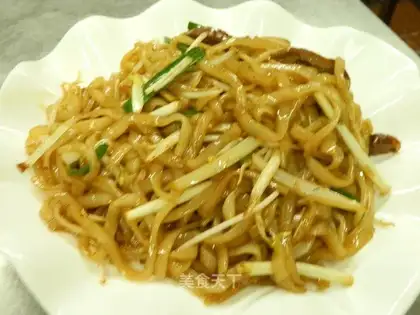
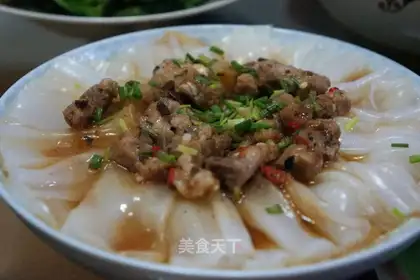
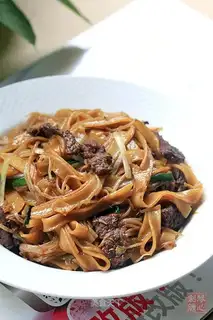
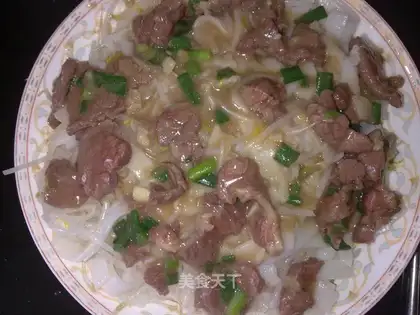
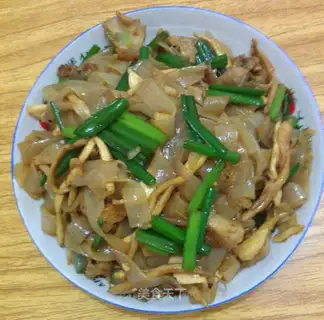
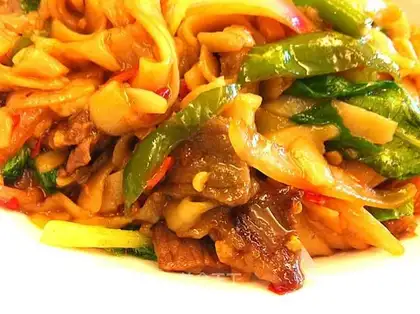
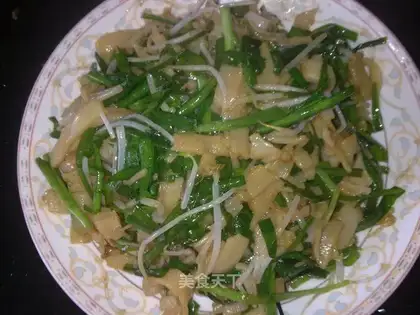
The main material, also known as sand, from the town of Sa River, Guangzhou, is usually made up of dry water powder purchased by supermarkets. In 1938, during Japan’s invasion of China, the Guangzhou cook, Xu Bin, created the dried oxen river (due to the presence of beef chips, known as the ox river) and then became the first person in Guangzhou to sell the dried oxen river. After the Japanese war, the cave-driners took the lead in bringing the dried oxen river to the end of the table。
Dried cattle, classic snacks in cuisine, or food staples. Almost every winehouse and stage must have a dish, and it's also a cook's meal. It's hard to make it. It's hard to ask for it. It's not easy to fix it. First of all, it's called dry. Then the powder can't be too greasy. Looks like oil, but it can't stick on the plate, and second, the powder can't be broken, and certainly it's never going to be possible to keep it as short as possible. And the beef can't get too old, or it'll be a problem. Material used for dried oxen canals, except beef and river powder, is basically made of green bean sprouts, yellow beaks and cuisine. The green bean sprouts are clean enough to eat the powder, while the onions are cut in part and not cut into onions, so the scent doesn't spread. Quincy shared this dish with you today and, of course, the skill of drying cattle。