On the occasion of the recipe exchange event jointly launched by Food World and Teflon Good Cooking Yi, we were lucky to have a very nice pot-Teflon (R) Shengshi Charming Frying Pan with non-stick surfaces. The pot has a unique personality and fashion appearance, crystallization the representative elements of the city, pleasing to the eye, and demonstrating the vitality of the city. It not only conforms to the aesthetics of young people, but also is easy to use the non-stick pot. Without saying much, it's time for my pot to appear next: )
Next is the moment to witness the miracle. To say that the pot is not stick is to it.
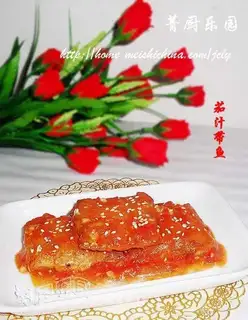
Hairfish in tomato sauce
By RhettWalsh
Recipe Recommendations
- hairtail appropriate amount
- tomato appropriate amount
- soy sauce appropriate amount
- oyster sauce appropriate amount
- cooking wine appropriate amount
- pepper appropriate amount
- ginger appropriate amount
- garlic appropriate amount
- refined salt appropriate amount
- edible oil appropriate amount
- water starch appropriate amount
- sesame appropriate amount
- white granulated sugar appropriate amount
- sweet and sour
- burn
- ten minutes
- ordinary
Steps for Hairfish in tomato sauce
1
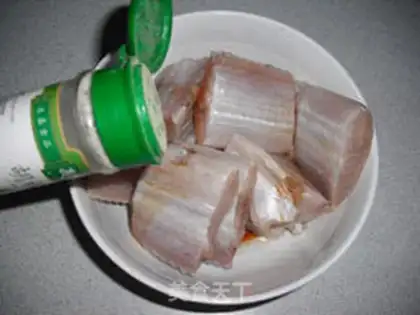
Handle the hairtail well, wash it and cut it into pieces, add appropriate amount of soy sauce, cooking wine, and pepper, mix well and marinate for about 15 minutes.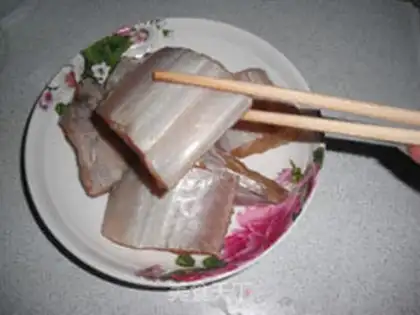
2
After marinate, remove and drain.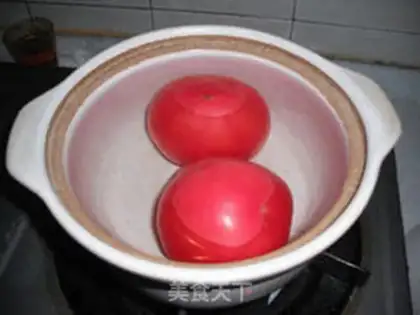
3
Method for peeling tomatoes: First put tomatoes in boiling water and blanch them for half a minute, so that the skins can be easily peeled off.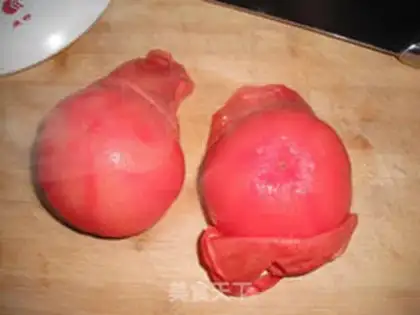
4
Take out the scalded tomatoes, wait for a while, you can tear off the skin, and then cut the peeled tomatoes into small pieces.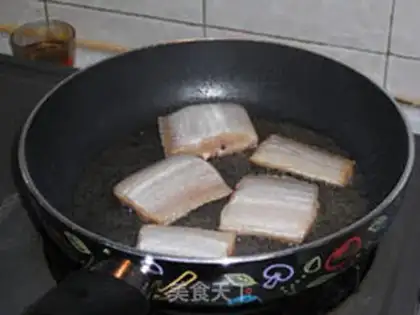
5
Boil the pan to dry, pour in a proper amount of cooking oil and heat it up. Turn the pan a little to make there is oil all around the half pan. When you see a little smoke, you can put the hairtail in one piece and fry it. (Be careful not to flip it after putting it in)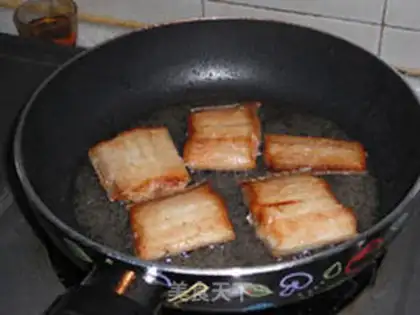
6
Wait until the fish skin is fried until golden brown, then flip and fry the other side. Look! The hairtail will not stick to the pan and be complete; fry the hairtail, control the oil and place it on a plate for later use, and then pour out the fried oil.
7
Pour appropriate amount of edible oil into the original pan and heat it, add minced ginger and minced garlic and saute until fragrant.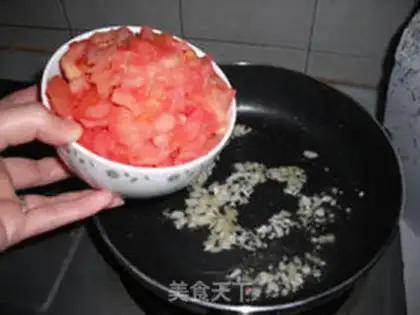
8
Pour in the chopped tomatoes, stir fry for a while and then mash.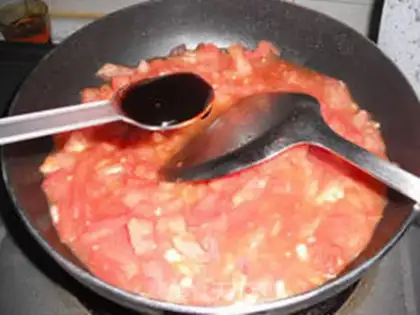
9
Add appropriate amount of soy sauce, oil consumption, white sugar, refined salt, and a little pepper and stir well.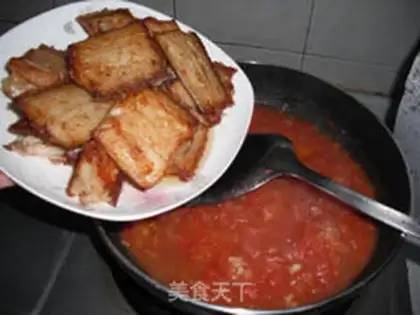
10
Pour in the fried hairtail and let it slowly simmer over medium to medium heat until it tastes well. (Do not cook for too long to avoid nutrient loss)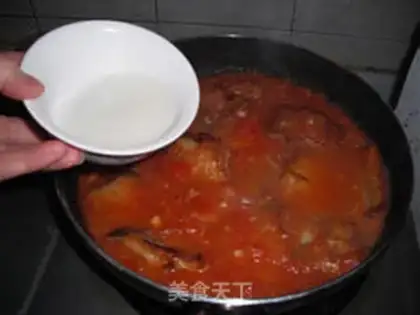
11
Then change the heat to the fire, pour in a proper amount of water starch to thicken, and add in a proper amount of chicken essence.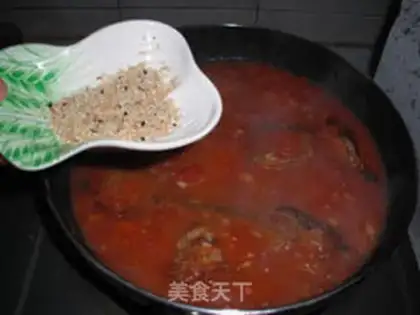
12
Pour in appropriate amount of white sesame seeds/black sesame seeds to burn incense before serving the pan.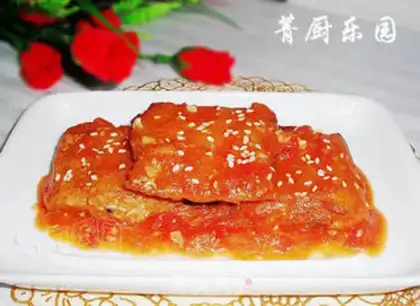
13
A tomato sauce hairtail that is sweet and sour, moderately sour and salty, moist and bright, crispy and tender, tender, light and mellow, and fragrant will definitely make your appetite open!Hairfish in tomato sauce Make Tips
【Chef's Friendly Tips】: Pour out the oil used for pan-frying; it is fine to keep it for frying other dishes, but note that used oil has little nutritional value left. Controlling the oil temperature is very important when frying ribbonfish. Initially, the oil must be hot enough; during the frying process, turn the heat down slightly once the oil reaches a certain temperature. Do not fry for too long to prevent the fish from becoming too dry. Do not cook tomatoes for too long to avoid nutrient loss. Regardless of the size of the ribbonfish, the first step is to buy fresh ones; this is the first step to frying ribbonfish well.【Identifying Ribbonfish Quality】: The quality of ribbonfish can be identified from the following aspects: (1) Body Surface: High-quality ribbonfish have a glossy body surface, complete scales that do not fall off easily, intact fins, and no ruptured bellies or severed heads. Poor-quality ribbonfish have a duller body surface, scales that fall off easily, only a few silver scales remaining on the body, the fish body turns greyish, and there are signs of ruptured bellies or severed heads. (2) Eyes: High-quality ribbonfish have full eyeballs with transparent corneas. Poor-quality ribbonfish have slightly sunken eyeballs and slightly cloudy corneas. (3) Flesh: High-quality ribbonfish have thick, firm flesh with good elasticity. Poor-quality ribbonfish have soft flesh with poor elasticity. (4) Quality: High-quality ribbonfish weigh more than 0.5 kg per fish. Poor-quality ribbonfish weigh about 0.25 kg per fish.