Gaosheng pork ribs, named after the gradually changing seasoning, have the meaning of step-by-step promotion. The ribs are all small bars, implying "rising steadily". They are stacked layer by layer with a green tongue sound at the bottom, symbolizing the height of each step, which means going to a higher level and rising step by step in the coming year.
The traditional color is magenta, mainly soy sauce, cooking wine and the like, and the taste is a bit strong. I created this one myself. The taste is sweet, sour and slightly spicy. My friends think it is very good and recommend it to everyone!
This dish avoids frying, and the method does not continue the heavy oil flavor of traditional Gaosheng pork ribs. It chooses sweet and sour juice, coupled with a refreshing tongue sound, and is rich in nutrients. While eating well during the New Year, we also pay attention to health.
Innovative version of Gaosheng ribs
By CarmelaJast

Recipe Recommendations
- sweet and sour
- burn
- three-quarters of an hour
- ordinary
Steps for Innovative version of Gaosheng ribs
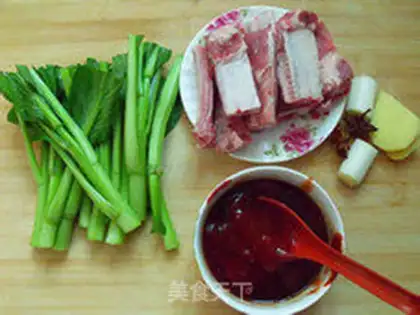
1
The raw material diagram is as shown in the figure.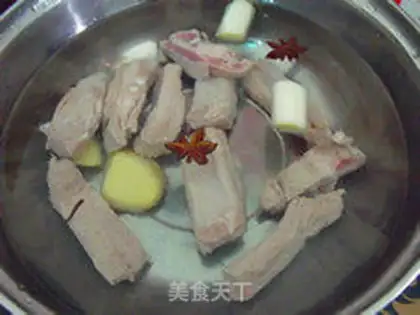
2
Blanch the pork ribs in water, add spring onions, ginger and star anise, and cook for half an hour. Remove and control the water. Don't dump the pork ribs soup.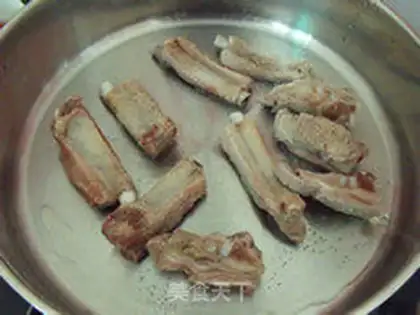
3
Pour oil into the pan and stir-fry the pork ribs until the meat is golden brown. (Blow it up if you are not afraid of trouble).
4
After fishing out the ribs, pour out all the oil, put the sauce in the pan, boil the ribs soup, and bring it to a boil.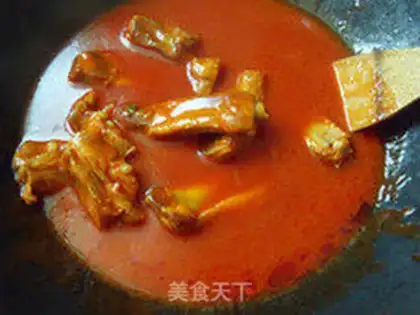
5
Pour in the pork ribs and bring them to boil and simmer for a while.
6
Collect the juice over high heat and add some MSG to enhance the flavor. Sprinkle sesame seeds on decoration. The tongue sounds, blanch the water and place it on the bottom.Innovative version of Gaosheng ribs Make Tips
Reference quantity: 1 jin of pork ribs, one portion is half a tablespoon. 1. When making this sauce, be sure to add the salt last. Taste it first to see if it suits your palate; add it if you find it too bland. Actually, I didn't add any because I didn't find it bland. The light soy sauce already has a salty taste. (For the fruit vinegar, I used apple cider vinegar). 2. The purpose of the light soy sauce is to neutralize the color of the ketchup so it isn't too red. It looks very appealing. It also helps to enhance the flavor. 3. Eating pork ribs is a must during Chinese New Year. You can stew a larger batch without adding any seasonings, then take them out and pair them as you like: sweet and sour pork ribs, salt and pepper pork ribs, etc. The soup from stewing the ribs can be used as stock, for stews, or for making soup. It's great.