It's true Xinjiang
By VicentaLakin
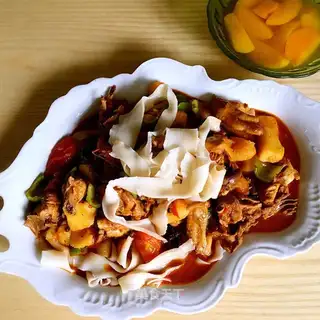
I've always had a crush on this dish, and at the university, we used to have lots of "luxurious" chickens in the tunnel of a New Zeng museum in the North Gate of our school, one with a wide belt, often with another, and without any soup. I can't forget the smell for years, and after many experiments, it finally makes me feel like I'm celebrating for myself.)
Recipe Recommendations
- sanhuang chicken 700g
- green pepper one
- tomatoes one
- oil appropriate amount
- white sugar a spoonful
- soy sauce appropriate amount
- cumin
- potatoes 600g
- onion 150g
- onion ginger garlic appropriate amount
- laoganma 2 tablespoons
- salt appropriate amount
- octagonal of 4
- pepper a spoonful
- dried red pepper four
- chicken essence appropriate amount
- salty and fresh
- burn
- half an hour
- ordinary
Steps for It's true Xinjiang
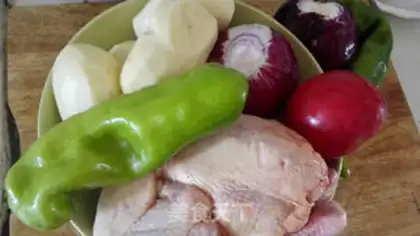
1
All the food is washed and ready for all the big stuff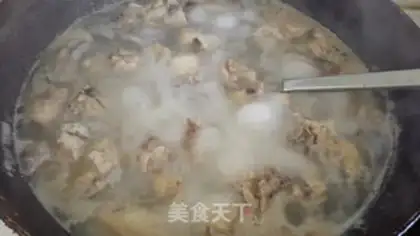
2
Cut off the chicken and water in the pot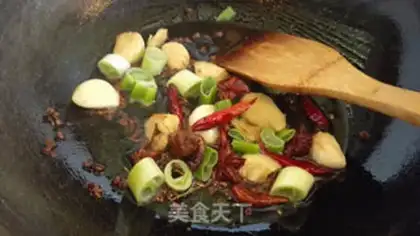
3
It's a little more than usual because it's more food. Five layers of oil boiled into ginger garlic and all kinds of large-scale fire for two to three minutes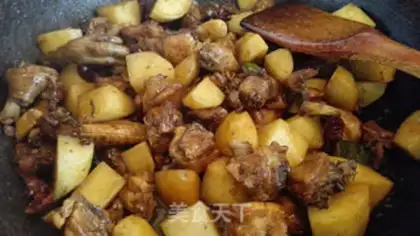
4
Once the fragrance is out of the pot, two or three minutes after the fragrance of the chicken that's in the water, the potatoes will be cut down and the fragrance will continue to boil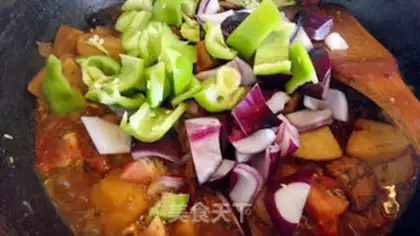
5
The pot is covered with cold water (the amount of water is appropriate to the balance of the food in the pot), the fire is burned, and the small flamingo is 10-15 minutes from potato and chicken ripening (depending on the size of the potatoes and chickens). I'll cut the tomatoes for one or two minutes, and I'll even the onion and the onion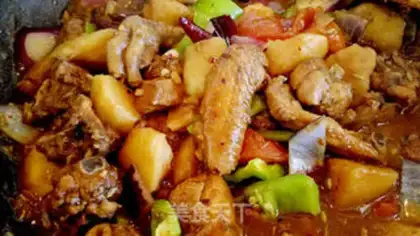
6
For one or two minutes, the tomato peppers will be cooked and a spoon of chicken concentrate will come out。It's true Xinjiang Make Tips
1. The oil temperature for stir-frying ingredients should be kept lower rather than higher to prevent them from burning.
2. The amount of sugar should be such that the sweetness is not detectable; the purpose is to add complexity to the flavor profile.
3. Chinese cooking does not require the same precision as Western cooking, so approximate amounts for all ingredients are sufficient.
4. Salt should be added according to personal taste. I have not specified exact amounts because the variable quantities of other ingredients will affect the saltiness. If you are unsure, follow the principle of adding seasonings such as salt, sugar, and dark soy sauce gradually in small amounts to avoid over-seasoning.
5. Do not skimp on Lao Gan Ma and fennel seeds; these are important seasonings for enhancing the flavor and ensuring the dish tastes authentic. Tomatoes are also a key ingredient for adding freshness to the rich flavor of the dish, so be sure not to omit them—haven't you noticed that most Xinjiang dishes contain tomatoes?