Korean pickles/spicy cabbage
By VicentaLakin
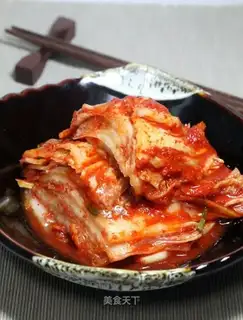
Every winter in Korea, each family prepares a car full of cabbage for pickles. In rural areas, kimchi is prepared, and in some homes there is a cellar where the kimchi is put into the cellar, and the pickle fermented in the cellar is absolutely the best. There is no rural natural environment in the city, but most households are now adding pickles, like the freezers we use, which are used to put pickles, which adjust the temperature to the extent that pickles ferment, and pickles that are fermented in the pickles are very different. There are also many kinds of pickles, of which spicy cabbage is the most basic and essential for three meals a day. Let's make delicious pickles this winter
Recipe Recommendations
- Chinese cabbage the 4
- white radish 1
- water celery 10 piles
- fish sauce 3/4 cup
- thick kelp slices two pieces
- Sydney one
- garlic 20 petals
- dried chili of 9
- chili powder 200g
- coarse salt 1KG
- shallots of 20
- fine salt 100g
- shrimp of 10
- shrimp paste 6 scoops
- onion one
- ginger 5-merous
- glutinous rice soup 1 small bowl
- slightly spicy
- pickled
- an hour
- ordinary
Steps for Korean pickles/spicy cabbage
1
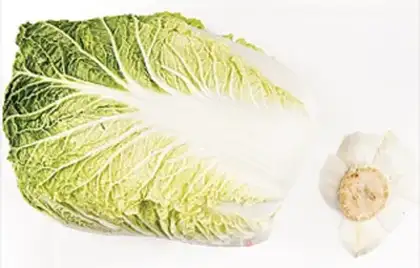
Choose fresh cabbage with green leaves and heavy weights, cut off the roots and wash them。
2
Cut it from the root to about a third, then fold it into 2-4 by hand。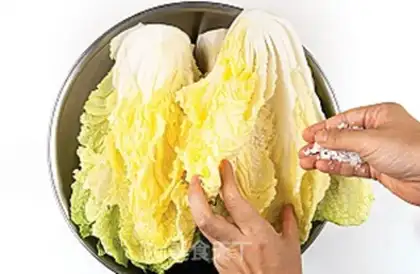
3
The salt is spread evenly among each leaf (mainly in the white part, which cannot be too salty)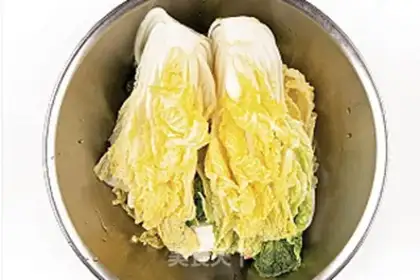
4
Watch your mouth。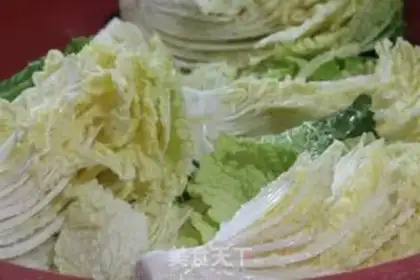
5
The remaining coarse salt is melted with hot water, mixed into the cabbage with a little cold water, which is usually salted for about six hours. It takes one or two times in the middle to get even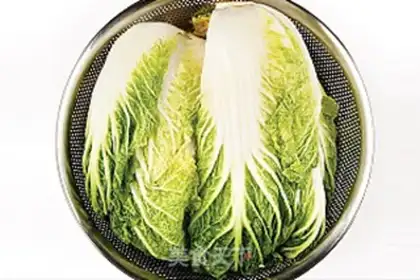
6
The pickled cabbage is flushed in cold water two to three times, followed by the gravitation of the asphalt basket。7
In six hours of pickled cabbage, you can prepare the sauce。
8
Pure water, shrimp skin or dried shrimp, thick sea bands are placed in the pots, which are boiled for 10 minutes and removed from the shrimp and sea bands, and are covered with soup。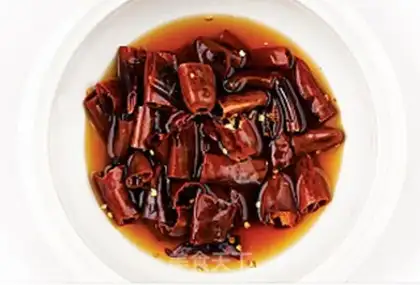
9
Dry peppers are washed and cut into small sections and a glass of water is immersed for more than 15 minutes。
10
Sydney, onions, garlic, ginger skin。
11
The 8th, 9th and 10th materials are mixed with shrimp sauce, rice soup (or three spoons of rice) into the mixer. (Note: The rice soup or rice must be dried and mixed, or the sauce will change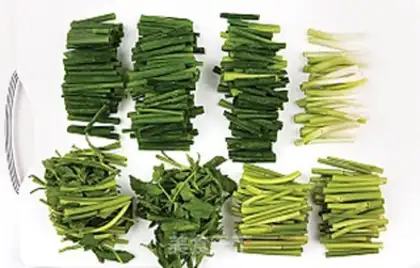
12
Onions, celery wash cleans the leachate and cuts the size of 4-5 cm。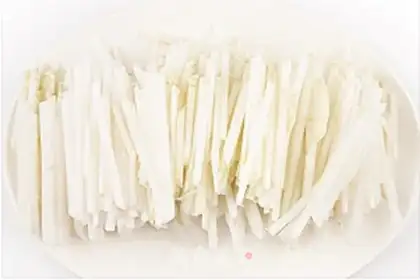
13
the radish cut silk, about 6 cm long, 0.5 cm thick。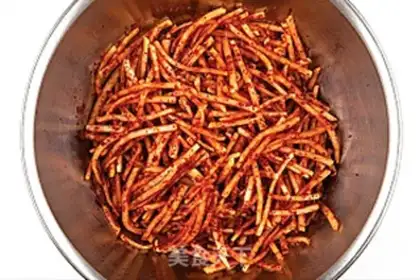
14
The white radish is mixed with pepper powder and then the top colour is added to 4. The order of pepper powder is important. The order determines color and taste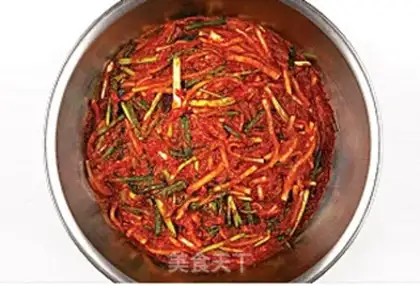
15
We'll mix 12 and 14。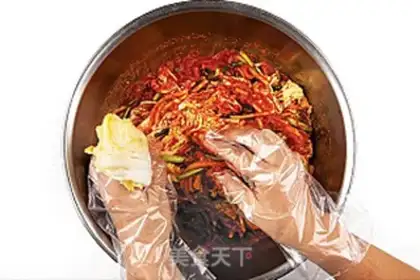
16
With well-prepared fabrics, one layer of the leaves begins at the outermost level of cabbage。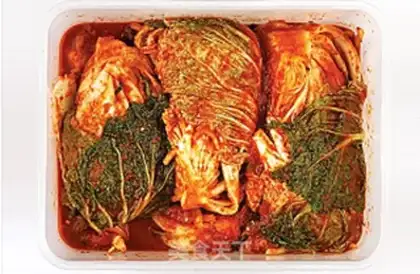
17
The coated cabbage is wrapped in the outermost leaves and placed in a pickle box up the mouth, which requires room for expansion during the fermentation of pickles, preferably at around 20 per cent of the pickles。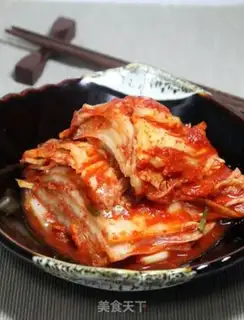
18
The pickle box covers the room temperature for one day and moves to the fridge for about 20 days。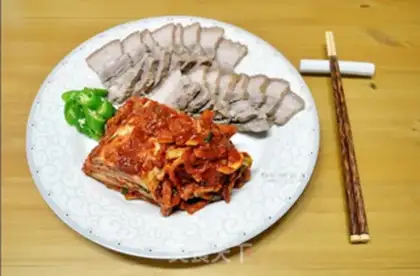
19
I'm glad to see the pickles and the gravyKorean pickles/spicy cabbage Make Tips
1. Glutinous rice soup and rice help with fermentation, and you can also add a small piece of boiled sweet potato. 2. If you are unsure about the quality of the chili powder or the color is not good-looking, you can put the chili powder in after boiling the glutinous rice soup to sterilize it at a high temperature, and the color will also look better. In Korea, many families generally take dried chili peppers cleaned at home to a rice mill to be freshly ground, which is considered more trustworthy. 3. Kimchi can be eaten just after mixing; the taste is different at every stage. Freshly made kimchi will be spicier, and after fermenting for about 20 days, it is suitable for making kimchi soup, kimchi pancakes, kimchi fried rice, and other delicacies.