Handmade powder
By VicentaLakin
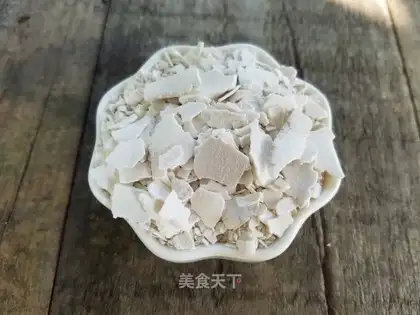
In winter, 9-10 copies of the agricultural calendars are used to market each year, and the pollen is pure natural starch made of fresh fruit. The powder contains calcium, iron, phosphorus and multiple vitamins, in addition to starch, glucose and protein. It is also rich in trace elemental iron Fe and vitamin B12. Its primary function is to provide blood for the benefit of all, so that it can stop the laxity, the abdominal abdominal, thermal, etc., and so on. With the emergence of “quick solution powder”, it is now almost difficult to taste pure handmade powder as a child. And there are older people in our village who insist on the use of traditional hand knives to make powder, and my family has always kept it. Let's see how hand-stabbing powder is made。
Recipe Recommendations
- lotus root appropriate amount
- water appropriate amount
Steps for Handmade powder
1
In spring and summer the leaves are full of ponds, and beneath them are flowers and flowers lit by the stars, and they are a poetic heavens and earth。2
We're using a local old lotus, an old lotus that's so rich and sour3
Washing, cutting: To make powder, it is necessary to cut off the knots of the lichen, to wash it, to make the powder, which seems simple, in fact, every step is about the quality of the powder, and the washing of the lichen is no exception. The lilies don't just have to remove the mud from the skin4
Crushing: Cleaning of the lotus, which must be crushed before the powder starts to wash5
Filter slurry: filtrate the slurry, requiring two layers of filtration on empty basins6
And from another pot to the filtration pot7
And wash it with fresh water8
Then we filter out the slag and the impurities9
Washed slurry. It takes one to two hours to sink10
Once the water has been filtered, the surface water in the basin is poured out, the sand on the ground is removed and filtered three or four times11
Sedimentation drifting slurry: filtered pollen is then used to disperse the water and cool it, and when it is clarified, the water is poured out and re-reduced, two or three times the sediment until the powder is white12
Sour-dry powder, which used to be sour-dry powder, used to be water-sucked in a well-soiled powder bowl, but, to be honest, we're all filtrated with soybeans13
A few layers on the powder. It's pretty quick to suck water14
I'm going to make a piece of tarcrete, and I'm going to cut it into pieces with a knife15
It's not easy to see whether the filter is clean or white. Yeah16
The next thing you know, the technology's working, the knife's sharpening powder, the asphalted powder, which is cut into a tiny piece of thin, the more evenly cut, the more consistent the powder's drying17
Look at this snow and white powder18
Sunshine: A normal winter weather can dry one day, and if it's like the first spring, if it's back in the south, the best season is the autumn winter after September19
Isn't it a bit impressive to see this rowing ditch20
When I was a kid, I thought I'd remember. It's to keep the powder equally warm. Do it21
The tan powder depends on the touch22
Let's try a bowl. Let's see what we got23
It's so sweet, it's so sweet24
Bottled, doneHandmade powder Make Tips
Powder identification 1. See: Pure powder colour is not white, slightly dark white, long saving time, and the colour becomes red brown. 2. Smells: Pure platinum powder has a light fragrance and no dissimilar smell. 3. Test: Take a small amount of powder and rub it with your finger, and the pure powder is leaner and smoother than any other starch. 4. Taste: A small amount of powder is deposited in the mouth, which melts quickly when it touches the saliva. Other starch entrances are not soluble as to be adhesive or conglomerate。