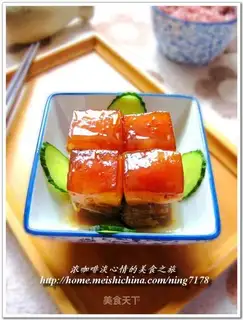
[Dongpo Pork] Hangzhou's famous dish is full of color, aroma and taste. Slow fire, no water and lots of wine are the keys to making this dish. The finished product is red and bright in color, crispy but not broken in shape. It is fragrant and non-greasy in the mouth, with the aroma of wine, and is very delicious.
Su Dongpo of the Song Dynasty (1036-1101) was ranked among the eight greatest writers in the Tang and Song Dynasties in his composition; he was both unique in writing and Xin Qiji; calligraphy and painting were also unique. Even in the art of cooking, he has a knack. When he offended the emperor and was demoted to Huangzhou, he often cooked dishes himself and tasted them with his friends. Su Dongpo's cooking was best at braised pork. He once wrote a poem introducing his cooking experience: "Slow fire, use less water, and when the heat is high, it will be beautiful. "However, it is said that the" Dongpo Meat "named after him was an interesting incident when he returned to Hangzhou for the second time to serve as a local official.
At that time, most of the West Lake had been obliterated by turnip grass. After he took office, he mobilized tens of thousands of migrant workers to remove fields, dredge lake ports, build long embankments from dug mud piles, and build bridges to smooth the lake water, so that the beautiful appearance of the West Lake could be restored and water could be used to irrigate the fields. This piled long embankment improves the environment, not only brings water conservancy benefits to the people, but also adds to the scenery of the West Lake. Later, the "Su Causeway Chunxiao" was formed, which was listed as the first of the ten scenic spots in the West Lake. "
At that time, the common people praised Su Dongpo for doing this good thing for the local area. They heard that he liked to eat braised pork. During the Spring Festival, they all sent him pork at the same time to express their feelings. Su Dongpo received so much pork and felt that he should share it with tens of thousands of migrant workers who had dredged the West Lake. He asked his family to cut the meat into cubes, fire it using his cooking methods, and distribute it to every household, along with the wine, according to the migrant workers 'register. When cooking, his family understood "sending with wine" as "burning with wine", which resulted in the braised pork being made more fragrant, crispy and delicious. The eaters praised the unique and delicious meat roasting method sent by Su Dongpo. Everyone praised it, and anecdotes spread. Among the people who asked Su Dongpo for teachers at that time, not only those who came to learn calligraphy and writing, but also those who came to learn to cook "Dongpo meat."
dongpo meat
By ConorSmith
Recipe Recommendations
- pork belly 650 grams
- soy sauce a little
- rock sugar 80 grams
- ginger slices appropriate amount
- Qingcangduan appropriate amount
- shallots 2 trees
- salty and sweet
- braised
- several hours
- senior
Steps for dongpo meat
1
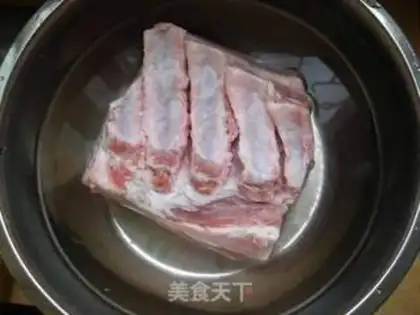
Wash the pork belly, scrape the skin with a knife, soak in cold water for 30 minutes to remove the blood.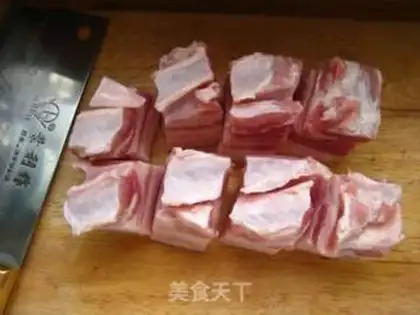
2
Remove and cut into 2CM square pieces.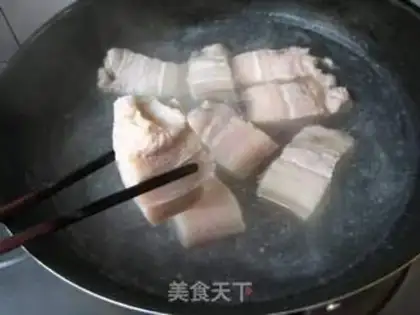
3
Pour water into the pan to boil, put the pork belly pieces into the pan and cook for 5 minutes, remove and set aside.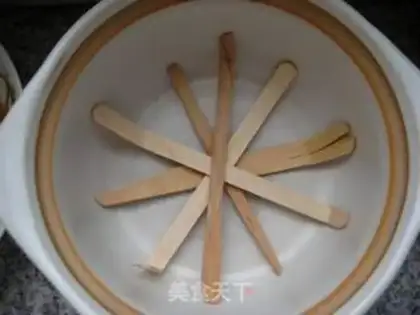
4
Take the casserole and place a bamboo grate on the bottom of the pot (I didn't have it, I used a few flat ice cream sticks to base it, and the effect was good).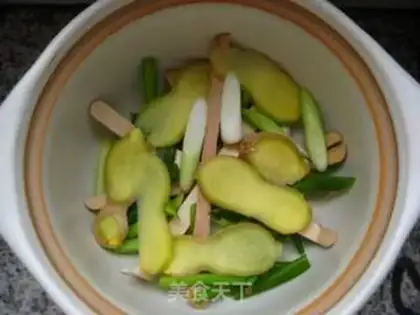
5
Lay green onions and ginger slices on the grate.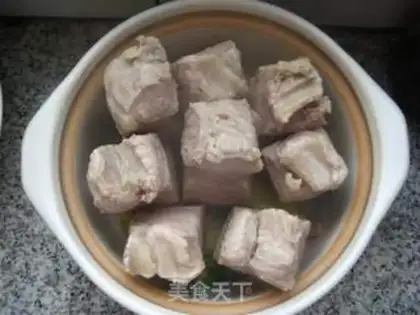
6
Then put the pork belly skin side down into the casserole.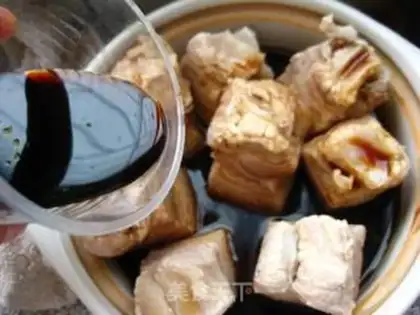
7
Pour in rice wine and soy sauce.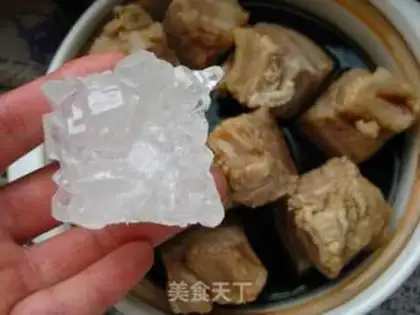
8
Then add rock sugar.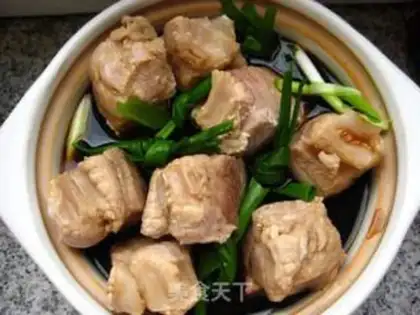
9
Place the shallots on top and bring to a boil over high heat.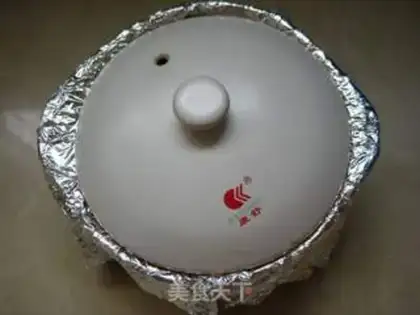
10
Seal the mouth of the casserole with tin foil (the original method was to use peach blossom paper, I didn't have it, and the effect of tin foil is also good. If you don't have tin foil, you can use kraft paper or the like. You can use local materials), cover the lid, turn to low heat (minimum heat), simmer for 2 hours and turn off the heat.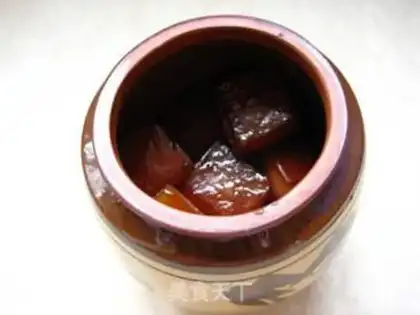
11
Take out the stewed pork belly, skin up and put it into a small earthenware jar.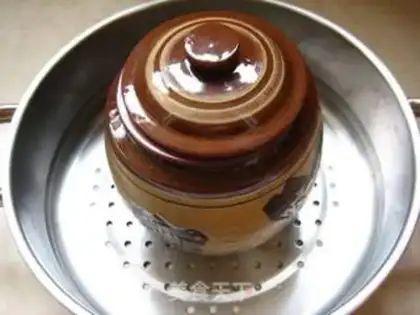
12
Pour in the remaining soup, cover the jar, and steam for 30 minutes. Serve. (If you don't have an earthen pot, use another container with a lid.)