When it comes to Korean food, the most popular food is Korean kimchi, and the most famous of Korean kimchi is undoubtedly spicy cabbage.
Spicy cabbage is a kind of food that has been passed down from generation to generation in North and South Korea. In Korean families, whether it is coarse tea or fine wine or delicacies, spicy cabbage is indispensable. Without this delicious side dish, one will always feel that there is some shortcoming.
In recent years, due to the influence of Korean dramas, Korean cuisine has also begun to occupy a place in China. Hot cabbage, the food that appears most frequently in Korean dramas, has also begun to be widely accepted by the China public with the invasion of Korean culture.
Other Korean delicacies may not be accepted by China due to differences in taste. However, spicy cabbage is of the same origin as Sichuan kimchi. It is pickled and fermented by vegetables. However, it has a richer taste because more auxiliary materials are added, so it is deeply loved by the majority of China people.
In northeastern China, it is easy to buy authentic spicy cabbage made by Yanbian people. However, in inland areas like Hubei, if you want to eat pure spicy cabbage, you can only do it yourself. But doing it yourself also requires a little courage. Because the preparation and production process is quite complicated, if you really want to do it once, you might as well make more at a time and put it in the refrigerator to eat slowly.
Korean spicy cabbage
By MerlBogan
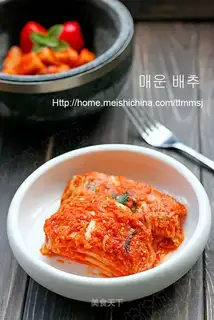
Recipe Recommendations
- Chinese cabbage 1
- glutinous rice flour 50 grams
- white radish half a
- carrots half a
- onion half a
- Apple one
- leek 1 handful
- white sesame a little
- shrimp skin 30 grams
- salt 150 grams
- fish sauce 50ml
- medium spice
- pickled
- several days
- ordinary
Steps for Korean spicy cabbage
1
About two kilograms of Chinese cabbage, tear off the dry and yellow leaves on the surface.
2
Cut the vegetables, tear them into pieces, soak them in water and rinse them clean.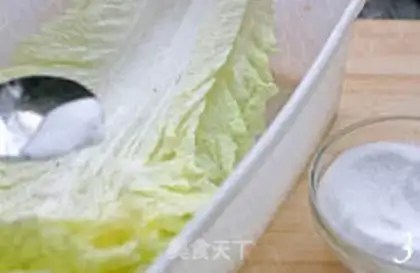
3
Put the dried Chinese cabbage leaves into a large food box one by one. For each piece, sprinkle a layer of salt on the surface, place another piece and sprinkle the salt again, and repeat until all the leaves are put into the box.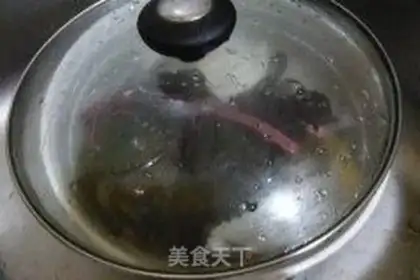
4
Cover and refrigerate overnight.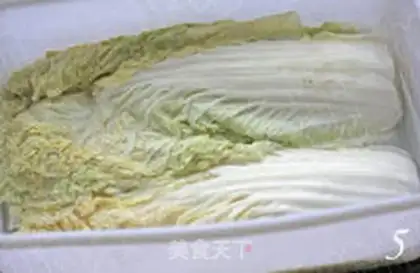
5
Taking it out the next day, you can see that a lot of water has been marinated out of the box.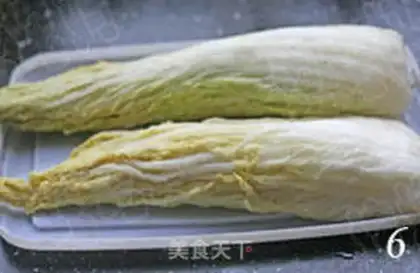
6
Soak and rinse the marinated Chinese cabbage in purified water or cold boiled water, squeeze dry the water for later use.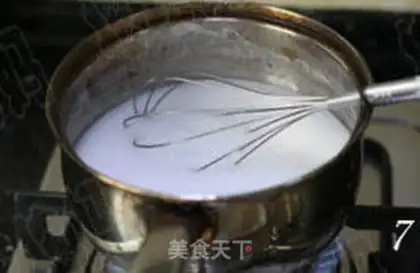
7
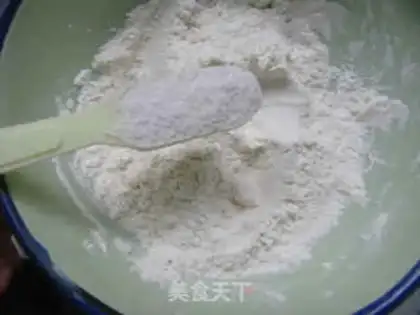
Add 50g of glutinous rice flour to 500g of water (1:10) and mix well, then heat over low heat, stirring while cooking.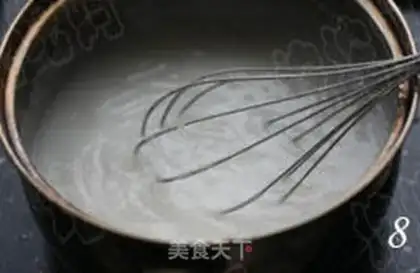
8
Turn off the heat when boiling until it bubbles, and then continue to stir at the remaining heat. After a while, it will become a sticky state like a paste, and let it cool until it is completely cooled for later use (glutinous rice paste is an indispensable step in the production of spicy cabbage. Whether the ingredients can stick together depends on it).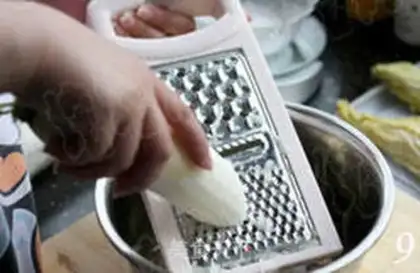
9
Rub the white radish into thin threads.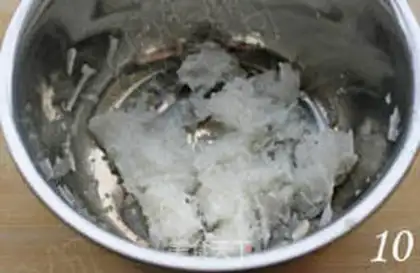
10
Squeeze dry water for later use.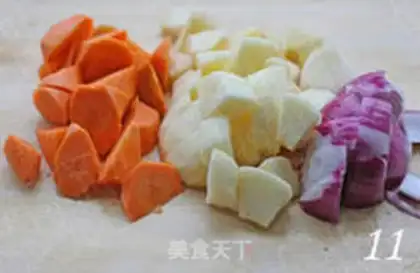
11
Cut carrots, apples, and onions into slices.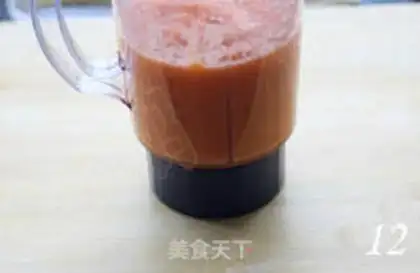
12
Cut the fruits and vegetables into small pieces, together with peeled garlic and ginger, add them to the dish and stir until they are made into a puree.
13
Add the cooled glutinous rice paste to the shredded white radish, then add the red pepper powder, and stir well.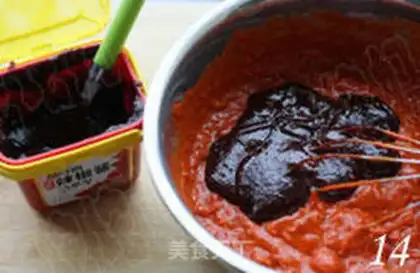
14
Add chili paste and mix well again.
15
Pour in the beaten fruit and vegetable puree, add small shrimp skins (better with shrimp paste) and fish sauce, mix well.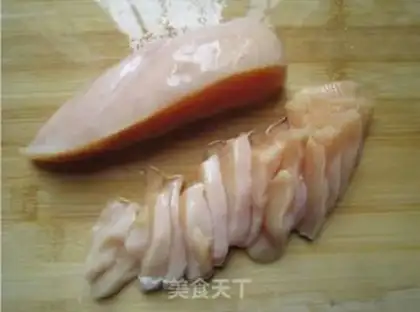
16
Add white sesame seeds, cut into small pieces of leeks, and white sugar, mix well to make a marinade.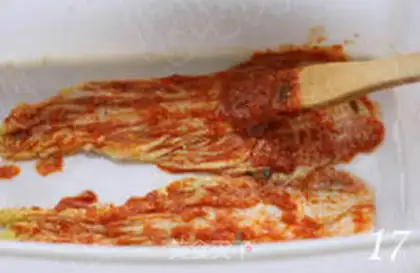
17
Take a piece of squeezed cabbage, use a brush or hand to evenly apply a layer of sauce on the front and back sides, put another piece and apply again, and repeat this until all the cabbage has been coated.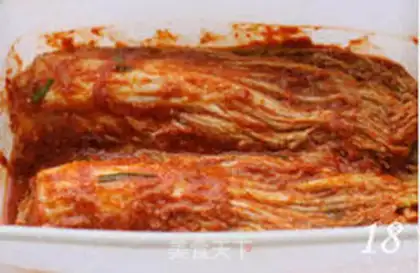
18
Stack the cabbage with the sauce applied neatly in the box, and finally apply a thicker layer of sauce on the surface, cover it, ferment at room temperature for 2-3 days (room temperature 1 day in summer and 3-5 days in winter). Then put it into a small box with good sealing performance, put it in the refrigerator for 5-7 days and start eating. It tastes best within 20-40 days.Korean spicy cabbage Make Tips
(The spicy cabbage tastes so strong that the box used to pickle kimchi can hardly be used anymore. No matter how cleanly washed, it still smells like kimchi. So this is a big box I bought specially. It is only used to pickle kimchi. Generally, it is used to pickle two to three Chinese cabbages. When dividing them into small boxes into the refrigerator, it is best to use glassware with better sealing properties. First, it is not easy to smell, second, it is not easy to deteriorate, and third, it is convenient to clean and does not affect other uses)