The oven at home is too small, and it is too troublesome to make colorful buns one after another! It's enough to bake one large piece of bread in a stove, and you can still eat it if you cut it into slices, haha!
The company is too busy at the end of every year and the beginning of the year! It seems that all the work of the year is concentrated in this time period. I'm so tired after a day, I don't have time to go home and work on the troublesome meals. The simpler the better. It's almost okay to have enough nutrition. This is the case every year. Since the outside world has made a lot of contributions, the family can only make do with it!
Big bread has the benefits of big bread. After kneading your hair, you can do something else. You can rest and read within two hours. When the time is up, knead it, knead it and soak it for an hour and then you can rest for a while. Let it lie in the mold and slowly grow. When it gets fat, it's time to go out of the furnace. Anyway, for one night, it didn't take much trouble even to rest and bring some toast.
Toast with raisins
By AllenHayes

Recipe Recommendations
- high-gluten flour 250 grams
- soup seed 70 grams
- eggs 一枚 50 grams
- milk 30ml
- butter 30 grams
- ice water appropriate amount
- fine sugar 40 grams
- dry yeast 3 grams
- salt 5 grams
- sweetening
- baking
- several hours
- ordinary
Steps for Toast with raisins
1
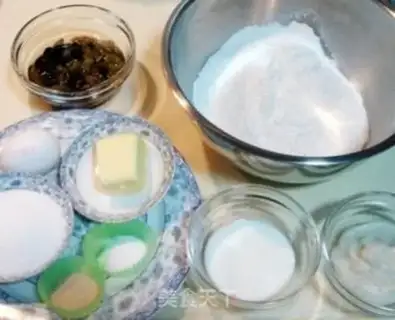
Ingredients: 250 grams of high-gluten flour, 70 grams of soup, 50 grams of an egg, 30ml of milk, 40 grams of fine sugar, 3 grams of dry yeast, 5 grams of salt, 30 grams of butter, appropriate amount of ice water, 40 grams of red and green raisins, 15 grams of Cointreau orange wine for soaking raisins, and a little hot water.
2
Soak raisins in hot water of Cointreau wine for later use.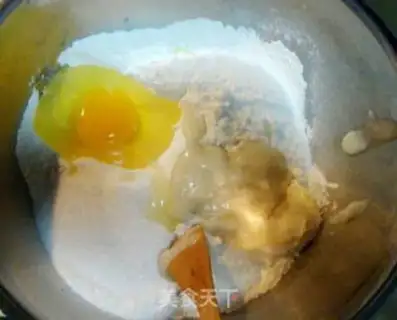
3
Add a little sugar to the yeast and soak it with warm milk for 10 minutes to wake it up. In addition to butter, mix the flour, soup seeds, eggs, sugar, and salt well, pour in the yeast water and mix with ice water, as long as the right soft and soft.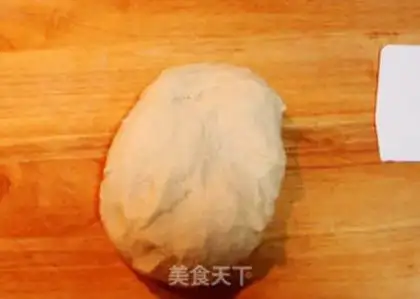
4
Then rub it hard.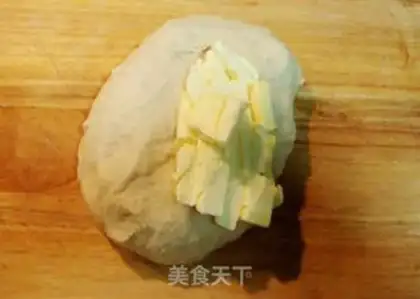
5
After kneading out the muscles, add butter grains and continue kneading until the complete stage. The softness and strength can pull out the membrane. OK.
6
The most suitable basic fermentation temperature is between 28 and 32 degrees.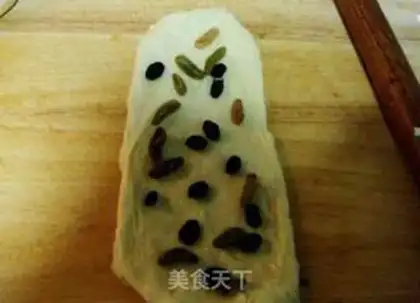
7
After fermentation for 40 minutes, take it out and press with your palm to vent the air. After venting the air, knead it into balls and simmer for 10 minutes. Then use a rubber knife to divide the dough into three parts, hold the dough with your palm and push it round on the chopping board, and then use a rolling pin to roll the three doughs one by one into thick oval dough sheets, and evenly sprinkle the soaked raisins on top.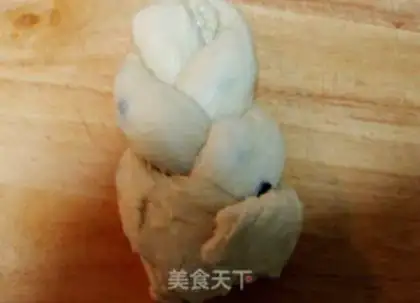
8
Roll the dough sheets into strips from the front to the back, rub each strip into about 30 centimeters long, and weave the noodles into braids.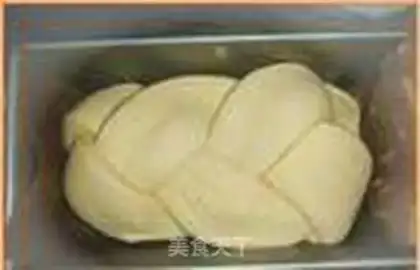
9
Put it in the toast mold and cover it with plastic wrap for final fermentation. Keep the temperature at around 35 degrees and the humidity at 80 to 85 degrees.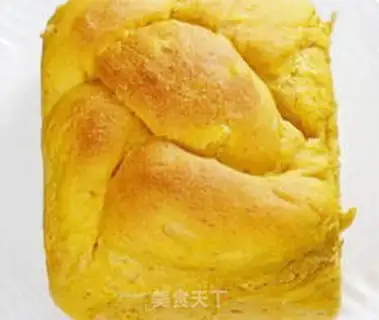
10
After the blank in the mold is fermented until it is seventy percent full, the egg liquid is applied to the blank.
11
Adjust the preheated oven to 170 degrees and bake for 35 to 40 minutes.Toast with raisins Make Tips
1. Kneading to the "full development" stage means the dough becomes less sticky and more flexible; when stretched by hand, it forms a film similar to chewing gum. It is best when it can be stretched until it is thin and translucent. Being slightly less so is fine, as long as it is not too far off, and then it is ready for basic fermentation.
2. When shaping and rounding the dough, do not press down hard on it. Cup your hand around the dough and apply even pressure, similar to rolling a rubber ball in the palm of your hand.
3. Finally, let the dough rise in the mold until it is seven-tenths full, so that it has ample room to expand during baking.