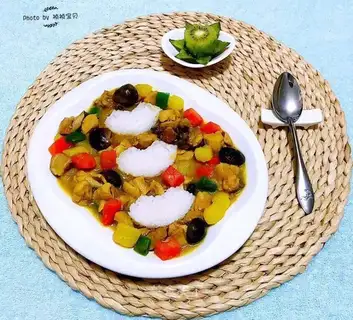
A curry chicken leg
By VicentaLakin
Curry, which is common in South-East Asia, such as India, Thailand and Japan, is a complex spice made of a variety of cyanide formulations. Its taste is spicy and sweet, and it has a special aroma that promotes the distribution of saliva and gastric fluids and the appetite. 1. The main components of curry for the promotion of appetite are spicy spices, such as ginger yellow powder, lasagna, eight horns, peppers, cinnamon, lilac, lilac and seed, which promote saliva and gastrogen distribution, increase gastrointestinal creeping and promote appetite. 2. Promoting the spicy taste of metabolic curry for sweating, accelerating blood circulation and improving metabolic functions. So in hot areas, people love curry. 3. The protection of curry in the heart has the effect of protecting the heart from heart failure. For heart patients, ginger yolk in curry prevents and reverses heart fattening, thus restoring heart function. 4. Decreasing thin curry can help to reduce post-eating insulin reactions and can also contribute to energy metabolism, increase the consumption of heat and promote fat oxidation, thereby contributing to the prevention of obesity. 5. The prevention of Alzheimer ' s has shown, according to animal experiments at Duke University, that ginger yolk in curry can decompose starch samples in the brain and prevent the production of such proteins. The sedimentation of large amounts of starch protein in the brain is the main cause of dementia, which is prevented by curry one or three times a week。
Recipe Recommendations
- chicken legs 2 only
- potatoes 50g
- carrots 50g
- mushrooms 50g
- green pepper 50g
- Jiang 5g
- pepper 2g
- octagonal 2g
- curry 2 blocks
- One product of fresh soy sauce 1 scoop
- oyster sauce 1 scoop
- sugar 0.5 spoon
- cooking wine
- salt 1 spoon
- MSG
Steps for A curry chicken leg

1
In preparation, the potatoes and carrots are rinsed to the skin and rinsed into little mushrooms and twirled to the twirl water。
2
The chicken legs are cleaned clean。
3
Chicken legs cut into small pieces。
4
Flaming water into the pan and removing impurities and fat from the chicken plume immediately cooled into the cold water to make muscle stress elastic。
5
The chicken leg is placed in the pot with a proper amount of fresh water in the peppers and eight horns and ginger。
6
In turn, the sauce, stork, sugar, wine and wine are boiled for 15 minutes。
7
Put in potatoes, carrots and mushrooms and cook them for 10 minutes。
8
When you have half the juice left, you put it in curry and mix it evenly for two or three minutes。
9
Finally, the peppers, salt and smelts are evenly distributed。
10
The rice is coming out of the plate。
11
curry chicken legs are covered by rice with an even amount of soup。
12
It's super delicious。
13
curry's nutrients are very rich, and it's good for the young and old。
14
The curry chicken leg entrance is more fragrance than the curry gravy。
15
Delicious breakfast will make me feel better this day。A curry chicken leg Make Tips
Curry, which is common in South-East Asia, such as India, Thailand and Japan, is a complex spice made of a variety of cyanide formulations. Its taste is spicy and sweet, and it has a special aroma that promotes the distribution of saliva and gastric fluids and the appetite. 1. The main components of curry for the promotion of appetite are spicy spices, such as ginger yellow powder, lasagna, eight horns, peppers, cinnamon, lilac, lilac and seed, which promote saliva and gastrogen distribution, increase gastrointestinal creeping and promote appetite. 2. Promoting the spicy taste of metabolic curry for sweating, accelerating blood circulation and improving metabolic functions. So in hot areas, people love curry. 3. The protection of curry in the heart has the effect of protecting the heart from heart failure. For heart patients, ginger yolk in curry prevents and reverses heart fattening, thus restoring heart function. 4. Decreasing thin curry can help to reduce post-eating insulin reactions and can also contribute to energy metabolism, increase the consumption of heat and promote fat oxidation, thereby contributing to the prevention of obesity. 5. The prevention of Alzheimer ' s has shown, according to animal experiments at Duke University, that ginger yolk in curry can decompose starch samples in the brain and prevent the production of such proteins. The sedimentation of large amounts of starch protein in the brain is the main cause of dementia, which is prevented by curry one or three times a week。