There are many legends about grits. Legend has it that when Emperor Qianlong went to Jiangnan, he passed by Linyi for breakfast and wanted to try the famous local food. Local officials served this unique breakfast. After Qianlong tasted it, he found that he had never tasted such delicious porridge before. He asked casually: "What is this?" The official didn't hear it clearly, so he also asked: "What?" Qianlong heard it as "grits". So it spread among ten, ten spread among hundred, and it spread like this. "Grits" is literally a soup made of meat. Legend has it that it is a breakfast food for the Hui people in the ancient Western Regions. Initially, a Hui couple from Dadu of the Yuan Dynasty came to Linyi to operate it. It was called "meat paste" at that time. Later, more and more imitators were made, and it was designated as "grits" during the Ming Dynasty.
According to Linyi County Annals, rice was created by Linyi people in the late Ming Dynasty. After several changes and improvements, it gradually formed a unique and famous food in Yizhou. Before the liberation of Linyi City, there were eight famous grits shops, but now it has grown to 100 specialized grits shops.
Chicken grits is the most representative traditional snack in Linyi. It has salty, spicy, sour and delicious taste of chicken. It is a flavor snack in the Luyouan area of Shandong Province. Grits is an ancient snack and a kind of congee. It should be meat congee from the north. The "grits" are made of chicken, beef, sheep, pig and other meat, and the production method is slightly different.
It is said that when Wang Xizhi, the calligrapher of the Eastern Jin Dynasty, was reading at night in his hometown of Langye (now Linyi, Shandong), his wife often made grits and made them in. Therefore, it is also known as "Linyi Grits". In the past century, it has become a unique snack and has been spread throughout southwestern Shandong. It is deeply loved by people because of its spicy and delicious taste, fat but not greasy, dispelling wind and removing cold, and eating to strengthen the stomach. Drinking "grits" in the morning is a traditional food custom in Linyi.
grits
By SidneyPurdy
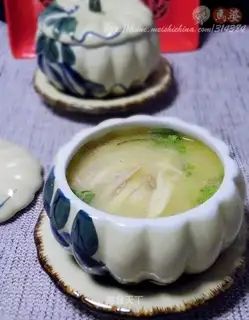
Recipe Recommendations
- hen in 1
- flour 50 grams
- onion 1 tree
- Jiang 1 block
- coriander 1 tree
- pepper appropriate amount
- octagonal of 4
- refined salt 10 grams
- vinegar 1
- soy sauce 1 scoop
- salty and fresh
- stewed
- several hours
- ordinary
Steps for grits
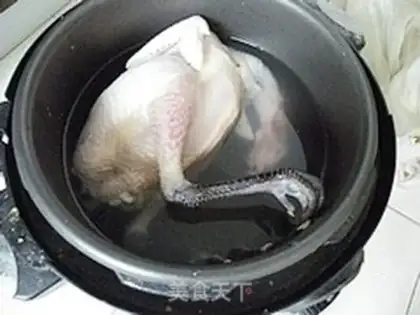
1
Now kill an old hen, put enough water in the pan, heat it up, soak the chicken for a while at about 50 degrees Celsius.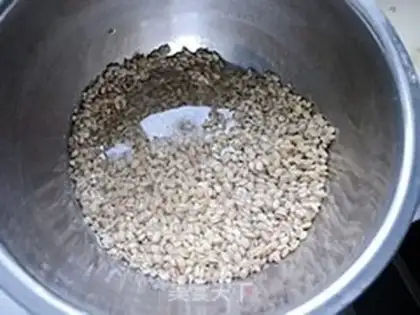
2
Soak the wheat kernels in clear water.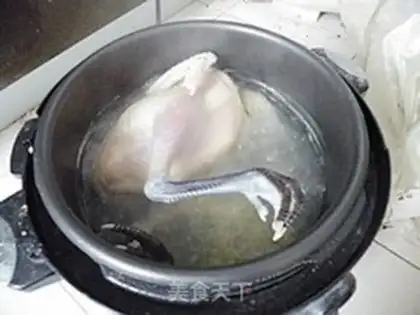
3
Pour out the warm water and add water to the pan.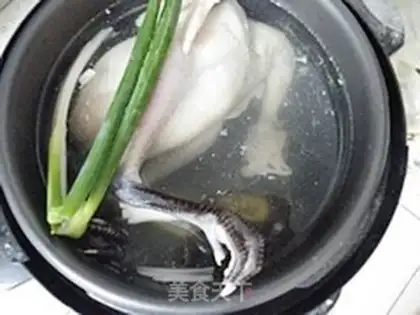
4
Add the whole onions and ginger, and cut the ginger into large pieces.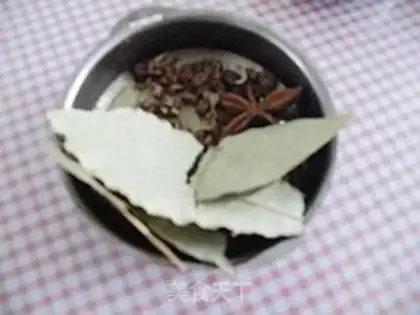
5
Put the anise, pepper and fragrant leaves in the cooking box.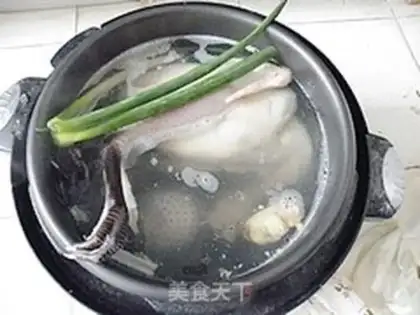
6
Put the box into the pan and start stewing the chicken.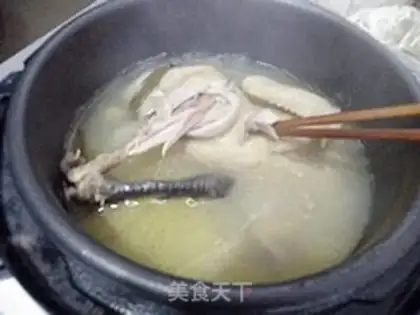
7
After about 1 hour, the chicken is cooked and can be easily inserted with chopsticks.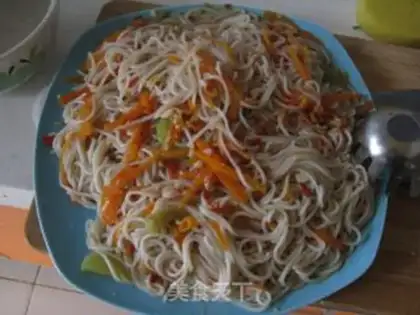
8
Tear off the chicken, remove it and place it on a plate, and leave the chicken rack in the pan.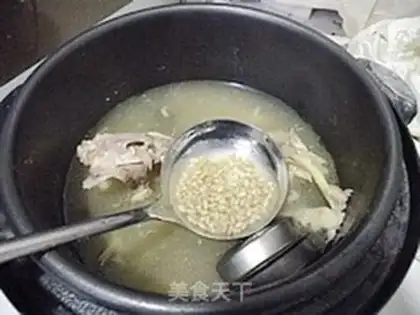
9
Add the wheat kernels.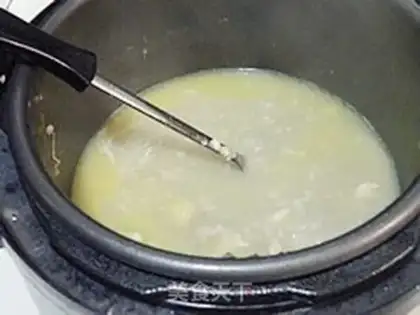
10
Simmer for about an hour, remove the chicken rack and seasoning.
11
Add water to the flour and make a thin sauce.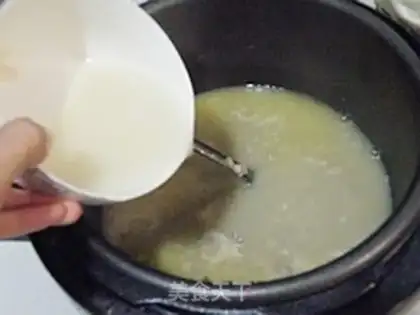
12
Pour the sauce into the pan and stir.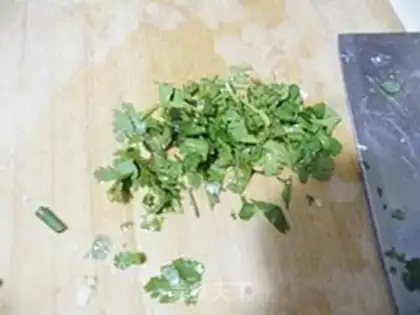
13
Wash and chop the coriander.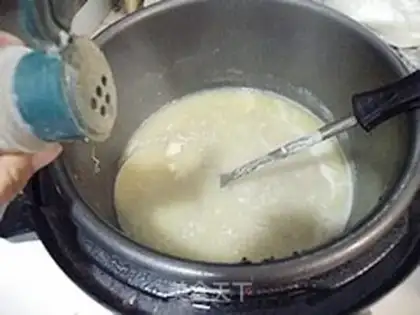
14
When the porridge soup in the pot is boiled again, add light soy sauce, vinegar, salt and pepper and continue to simmer for 5 minutes.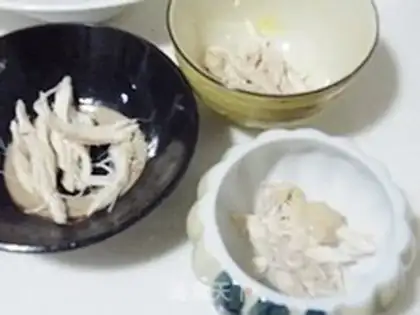
15
Tear the chicken into strips and place it in a bowl.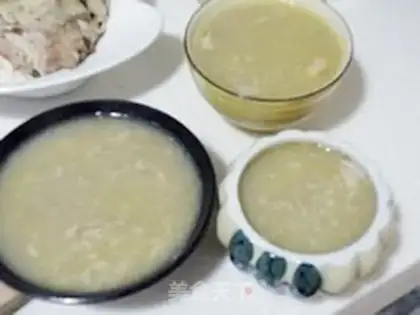
16
Pour in porridge and soup.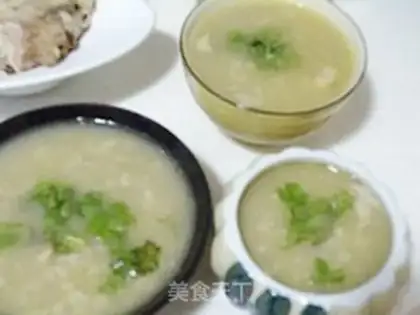
17
Sprinkle with parsley and serve.grits Make Tips
1. To cook chicken grits, you must use free-range grass hens. 2. The worse the wheat kernels are cooked, the better. 3. There should be no small bumps in flour mixing.