Eels are nutritious and easy to digest. It has the effects of replenishing deficiency and nourishing blood, dispelling dampness, and anti-tuberculosis. It is especially suitable for eating when there is too much moisture or when people have a loss of appetite and are weak. When eating eel, Japanese people always match it with rice: place a large piece of eel on the rice, add vegetables, and then pour it with eel juice. The fish juice is immersed in the rice, which is nutritious and delicious.
The special fishy smell of the eel itself will be completely removed and it will taste sweet and delicious. It is also first-class with rice and matches seamlessly with the sweetness of the rice grains. It is the most worth learning in Japanese cuisine.
Eels are divided into river eels and sea eels. The Japanese eat sea eels. The nutritional value of river eels and sea eels is very different. River eels are white eels. In terms of taste, sea eels and river eels are also different, and river eels taste much worse.
According to the Japan Food and Nutrition Research Association, most of the rich fat of moray eel is unsaturated fat that is good for the human body. It is full of DHA (an essential fatty acid for the human body, commonly known as "brain gold") and EPA (unsaturated fatty acids that are conducive to neurodevelopment). In addition, it also contains a rare Xihe Locke protein, which has good kidney strengthening effect and is especially suitable for young men. Eels are also aquatic products rich in calcium. Regular consumption can increase blood calcium levels and make the body stronger.
The taste is delicate because one of the amino acids it contains can make its taste softer and sweeter. Moreover, eels have a lot of fat and little water, so they have a feeling of melting immediately in the mouth.
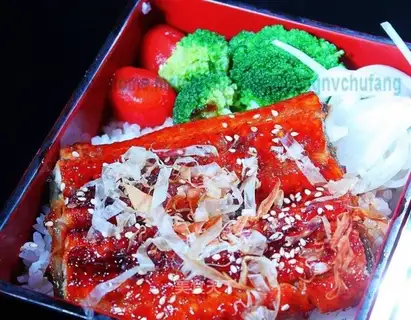
Japanese-style rice with bushiyaki eel
By WilberKuphal
Recipe Recommendations
- eel a
- white rice a bowl
- sweet pepper appropriate amount
- firewood fish slices appropriate amount
- preserved plum appropriate amount
- broccoli appropriate amount
- maltose appropriate amount
- sugar appropriate amount
Steps for Japanese-style rice with bushiyaki eel
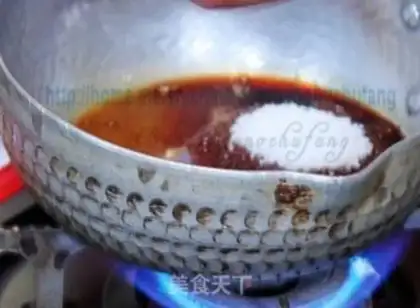
1
Add white sugar to Japanese soy sauce.
2
Bring to a boil over low heat.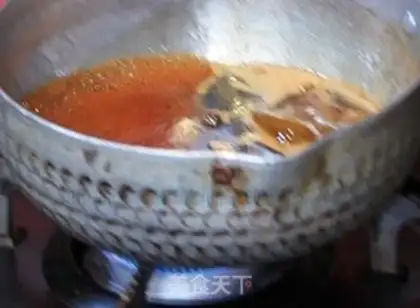
3
Then add the maltose and cook until it is sticky and turn off the heat (mix Japanese soy sauce, sugar, and maltose in a ratio of 1:1:1).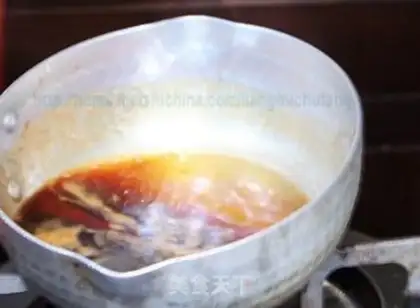
4
Turn off the heat and pour in appropriate amount of sake.
5
Then add the firewood fish slices.
6
Finally, add Japanese-style plum blossoms and cook to make the puyaki eel sauce. (Put 2 Japanese plum blossoms per 100ml of sauce. Of course, you can also use other plum blossoms instead, but the taste will be slightly different)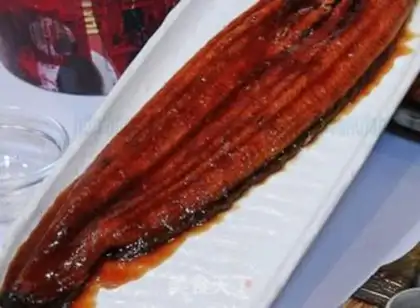
7
Remove the imported Japanese star eel from the vacuum packaging bag and apply the prepared sauce (about 1 hour).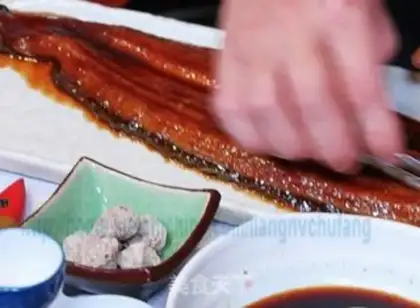
8
Lay it flat on the plate first.
9
Use small tweezers to pull out the thorns (use pliers specially designed to pull out fish bones to remove the thorns. If you don't have them, you'd better prepare a small-head tweezer of the kind you usually use to pull out eyebrows).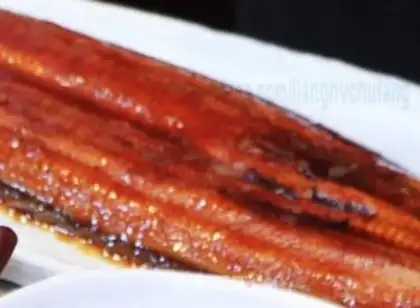
10
Remove the thorn.
11
Carefully grope and remove all the small thorns with tweezers.
12
Clamp the eel with a food clip, and then use special food scissors to cut it to the right size (the scissors must be very sharp when used to cut food, and use it separately from other scissors to avoid damaging the blade).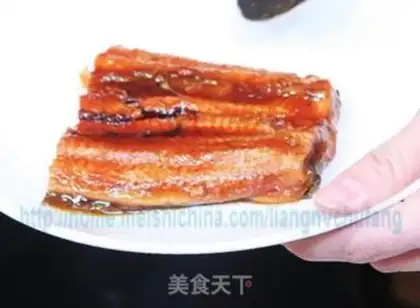
13
First place the processed eel on a plate and evenly coat it with sauce.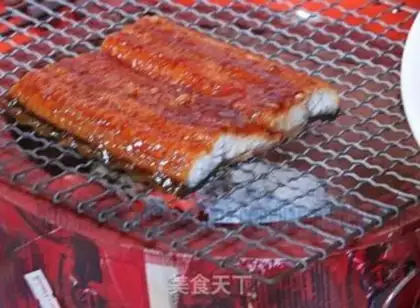
14
Then light the fire, place the star eel on a special barbecue net, and place the skinned side of the eel on the barbecue net (a special barbecue net for Japanese cuisine, with fine workmanship, each air hole is the same size and uniform heat transfer. Japanese cuisine is often used. If you have an ordinary barbecue net or a flat-bottom non-stick pan at home, you can also take out the special pot for barbecue, but if you pay attention to the pan, you should pay attention to opening fire first to heat the pan before putting in the eels).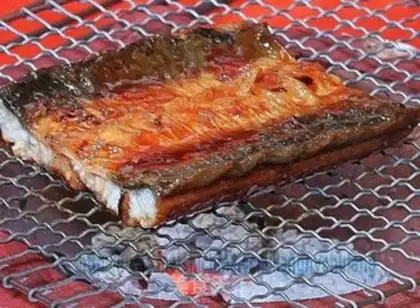
15
The surface can turn over with the sizzling sound, but be careful to burn it.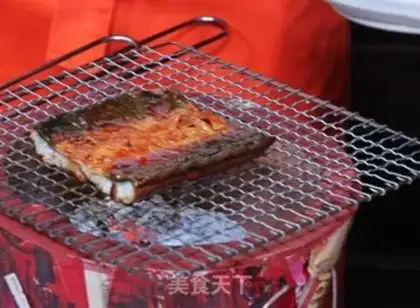
16
It is best to flip it multiple times, but be careful and use clips to turn it over instead of chopsticks to prevent the fish from falling apart.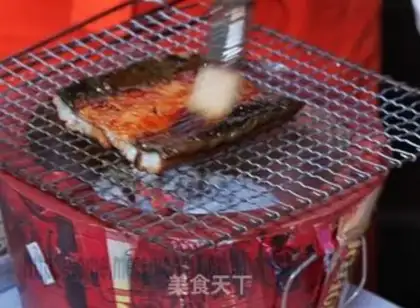
17
Brush the sauce continuously while roasting.
18
Turn over and continue to brush the sauce, keep brushing the sauce until the sauce is cooked.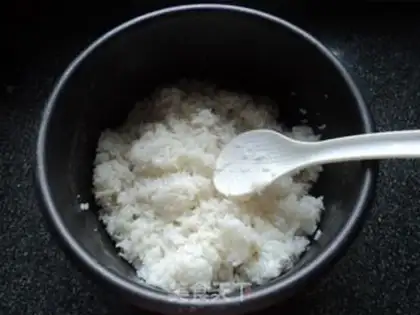
19
After roasting one piece, roast another piece. Don't think of putting more fish slices at a time to save time, because the firepower of each place on the stove is different, so there is no time to brush the sauce and turn it over, which will cause the fish to scorch.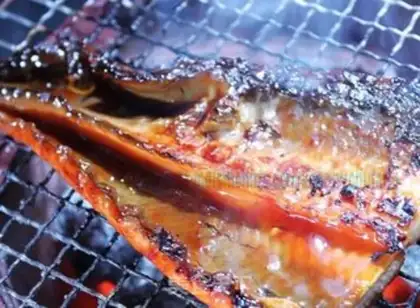
20
The fish tail is quite special, with one end being relatively small. Pay attention to placing the small end close to the edge of the stove net, which is relatively thick, and the large end is close to the center of the fire, because the center firepower is the greatest.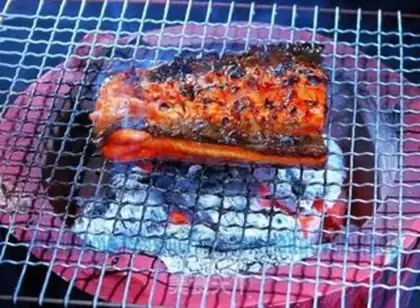
21
The fish skin itself is grayish-black, so it will be grayish-black when it is roasted until it is rolled up, rather than burnt. When roasting, you must be very careful not to burnt it. If you bake it until burnt, it will fail and the taste will become burnt.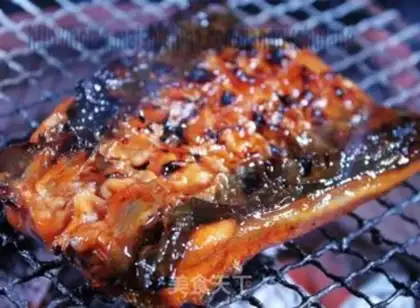
22
Bake until the fish skin is slightly turned over and the fish body becomes soft. It is done.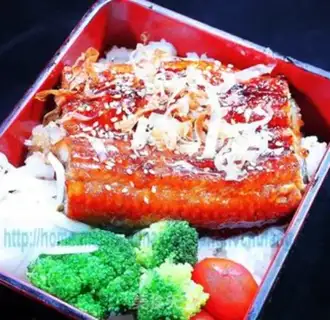
23
Put the cooked rice in the lacquer plate, pour it with the sauce used to roast eels, then add the eels, and place side dishes in the corner. This delicious Japanese rice with rice with rice is ready.Japanese-style rice with bushiyaki eel Make Tips
1 This sauce formula is suitable for Japanese grilled seafood. If it is Japanese fruits and vegetables, it will be a different roasting method. 2 If river eels are used, let the blood be cleaned. After washing, it is recommended to soak them in milk overnight. 3 Every Japanese household has a grilling net, which is a must-have for Japanese cuisine. It is recommended to buy one.