Sugar Jelly Ridge
By VicentaLakin
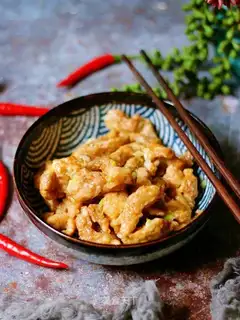
Of the three meals we eat most, we eat pork. In different parts of the pork, there are different ways to eat, for example, five flowers for red meat and stew, pork chops for fried or roasted, chopping dumplings with the tip of the hip, while the youngest and most tasteful part of the pig must be the spinal. It's a pig with two ribs, and it's all skinny meat, whether it's sliced, cuttin, chérège, fried, fried, fried. I've made this sugared ridge today, and I've got "pot meat" in the northeast, "slubber meat section," "soft fried meat" and so on. I think it's the sweetest spinal paste in rue, not ketchup, but vinegar and sugar. This is also the traditional practice described here, where the finished color is yellow, sour and sweet, and the outer choreographies are “CD-ROMs” at every end of the table, which my family particularly loves. But there are some things that need to be taken into account to get this dish ready。
Recipe Recommendations
- sweet and sour
- fried
- half an hour
- ordinary
Steps for Sugar Jelly Ridge
1
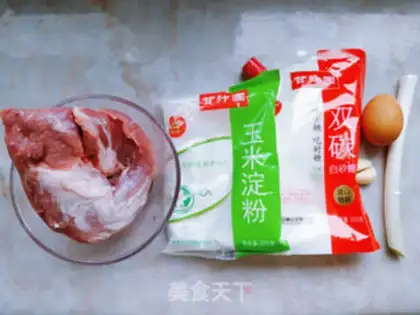
Prepare all kinds of food first。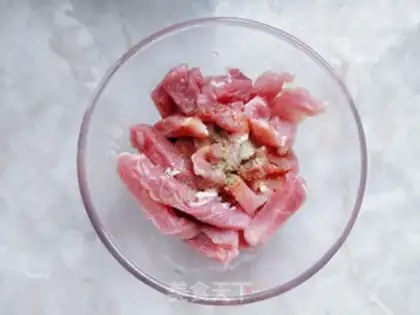
2
It's better to freeze the ridge. Take off all the rims on the ridges and slash them with thick fingers. Little tip: There's a saying that says, "Crunch beef-stacked chickens," and pork is slashed. If it cuts, it is easy to disperse and break, and it is neither gnawed nor disorganized. The fineness of the strips is also relevant: not too thin, lest it be dry; not too thick, not easy to taste and explode。
3
Liquor, raw smoke, pepper powder, chicken powder, ginger powder and a small amount of salt are poured into the meat, which is made for about 10 minutes with hand scratches。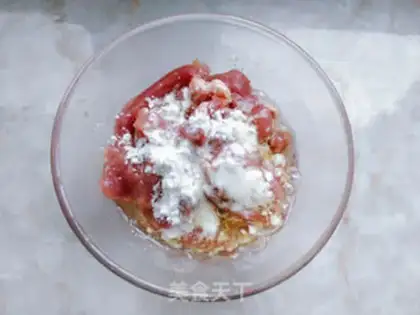
4
And pour the starch and the egg clean, and grab it. Little hint: To wrap the starch on the meat when it's pickled, it ensures that the water is not lost too much, that it is dry, and that it adds a smoother taste. The amount of starch added is to be applied according to the state of the meat, wrap it, and not drop it down. A little more flour could also be added, so that the skin would be thicker and more meat would appear, as would be the case in general hotels。
5
When it is salted, sugar, vinegar, starch, water and a little bit of raw water are evened, and made into sauce. This juice should not be too sticky, so that it doesn't coagulate too fast in the pot, and the hooks are not sticky. As for the ratio of sugar and vinegar, it is usually 2:3 and can also be adjusted to 3:4, mainly because of the population。
6
Heated vegetable oil in small pots, heating the oil up to 50-60% heat (approximately 160-180 degrees) and pouring the crumbs down into the pot with the blasting edges to avoid adhesion. Little tip: There are many ways to judge the temperature of the oil, which can be put into the oil with chopsticks and a piece of meat, if it floats immediately, indicating that the temperature is right, and if it sinks, indicating that it is not warm enough, it will have to heat up a little bit。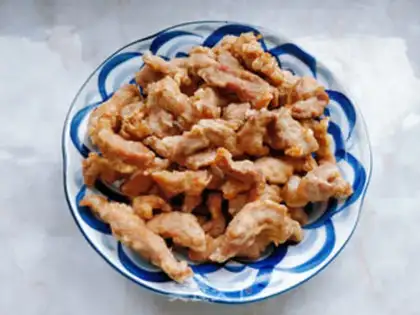
7
Squeezeed meat and put it on suction paper. It usually blows twice, first into a stylist and then out, and then again, blows the meat through the surface。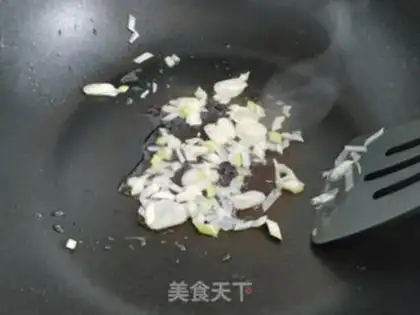
8
And then it's over. Put a little oil in the pan, a little onions. Sliced cucumbers and carrots can also be fired to the end of life if you want to mix the licorice。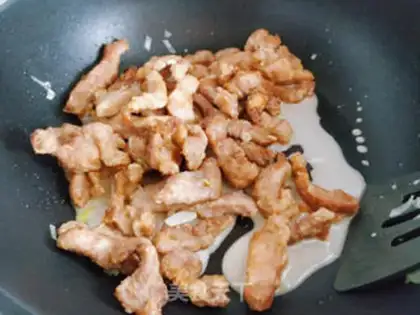
9
Pour in the squeezed meat and pour in the fifth step along the pot. Quick fire。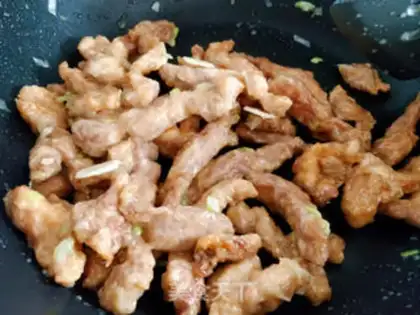
10
The juice becomes sticky and bright, evenly hangs on the meat section, so just turn off the plate. A little tip: Scrambling must be smoothed fast, otherwise the juice becomes sticky at 60 degrees, and it hangs up。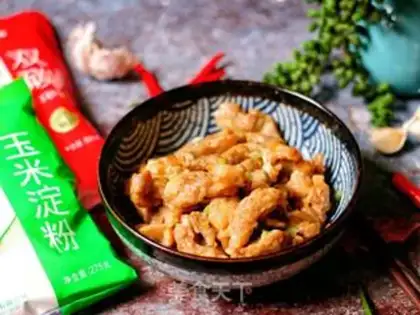
11
Cook a little bit of vinegar on the side of the pot before it comes out. The way to cook is to pour vinegar on hot pots, not just meat。Sugar Jelly Ridge Make Tips
A. ROASTED STARCH, TYPICALLY POTATO STARCH (ALSO KNOWN AS SOUR POTATOES) AND CORN STARCH. WITH POTATO STARCH, IT'S COLORFUL, IT'S MORE STICKY, BUT WHEN IT COOLS, IT GETS THINNER. AND CORN STARCH WOULDN'T HAVE THAT PROBLEM. B. SLUICE, WITH PURE WATER + STARCH, AND WITH SPICES. JUICING IS ALSO A METHOD OF ELUCIDATION BECAUSE IT IS THINNER AND BRIGHTER AND CALLED GLASS. C. UNFROZEN RIDGES, PREFERABLY DEFROZEN WITH ROOM TEMPERATURE OR FREEZE, AND NOT WITH HOT WATER, MAY CAUSE LOSS OF SOLUBLE PROTEINS AND AFFECT MEAT TASTES。