Egg bun
By VicentaLakin
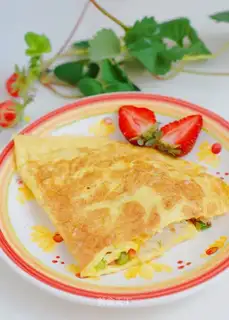
The shape of eggs and rice is often seen in Japanese dramas and comics, and is very cute. The food for omelet food is very common, and one omelet meal consists essentially of three most basic elements: fried rice, egg skin and ketchup. It's not that easy to make a nice egg-packed meal, which is the kind of food that looks very simple, and it's useless. There is no doubt that one of the most difficult steps in making omelet food is to wrap the cooked rice in the omelet. It's really a technical job, and the perfect egg pelvis breaks. Although food products remain the same, failed egg-packed rice can be depressed and food is not good. Today's egg-packing is the simplest half-moon-shaped egg-packing meal, which is simple in comparison to other shapes, and it's basically not going to fail. Quite a bit wetr than the usual fried rice, so it can be better wrapped in egg skin. Eggskin is the most important part of an egg-covered meal, which directly determines its success. Japanese omelet food likes to fry its skin in a smooth state, and I personally prefer to fry it in a golden yellow sofa. A minimum of three eggs for an egg bun to wrap the rice. Let's see what we're doing here
Recipe Recommendations
- salty and fresh
- fried
- ten minutes
- simple
Steps for Egg bun
1
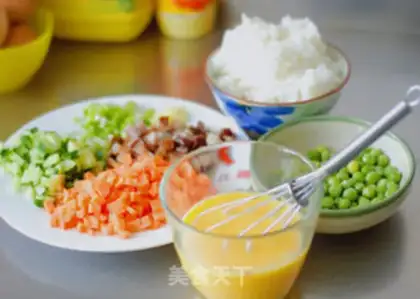
first, we have to prepare all the foods we need to use to make this "eggs" meal, clean up carrots and cucumbers and cut them up to the ground, cut them up to the ground, cut the onions to the ground, boil the peas into the pot and extract the asphalted water, take the overnight rice out of the freezer, pour three eggs into the glass bowl, add salt 1 g, mix the eggs with an egg-beater to the egg-cleaning and egg fluid, and have a thin foam on the egg fluid surface。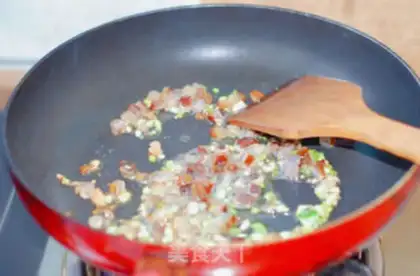
2
then it burns to the palms, pours into peanut oil at 10 ml, then burns into the oil, then sets into the onions cut, and then the porcelain fragrance drops out of the porcelain fragrance to make it transparent。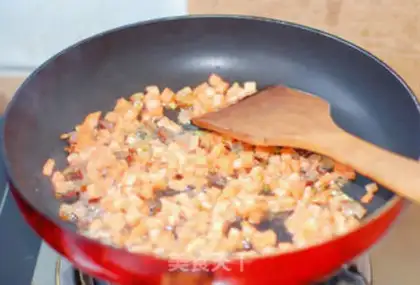
3
The cut-in-carrot ding flatted it, allowing it to fully absorb the fat of the bacon。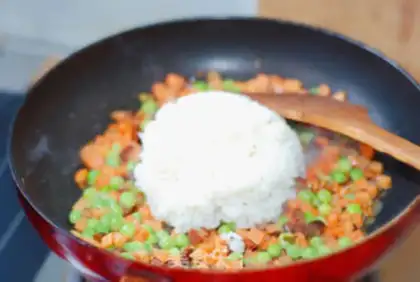
4
Cooked pea grains down and evened, pouring rice into the pot。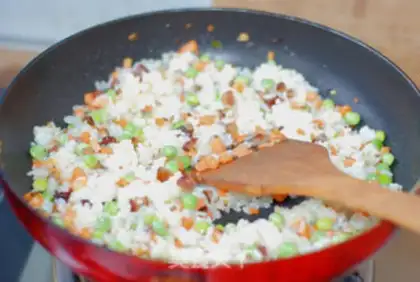
5
Spreading rice with pot shovels, crushing the pressure while turning the rice into fire, giving rice grains full heat。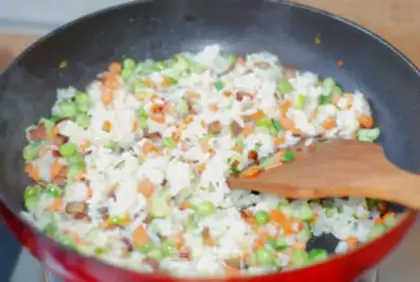
6
the cucumber cucumbers are cut down and the salt is transferred to 1g, so that they can be replaced by an even amount of cucumber。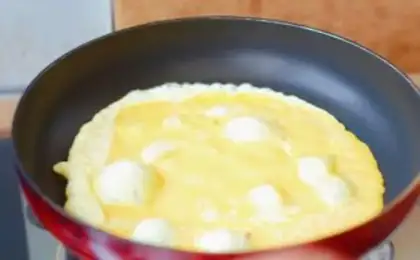
7
the pan is so hot that the palm is so hot that it's tumbled into peanut oil, so that the bottom is evenly oiled. the oil heat turns into a small fire and pours into egg fluids, and the bottom pans are quickly rotated, so that the egg fluids are evenly laid on the bottom of the pans, and the bottoms of the eggskin are swayed and the bottom of the bottom pans are dislocated。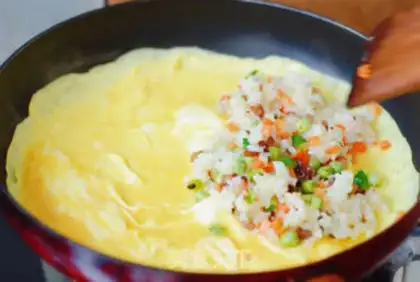
8
Turn the fire and put half of the fried rice that was made。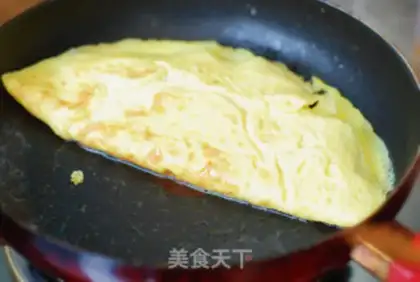
9
The other half of the egg skin is sprawled with a pot shovel and covered on the fried rice, and the surroundings are pressurized, and the plate can be set up with a little frying。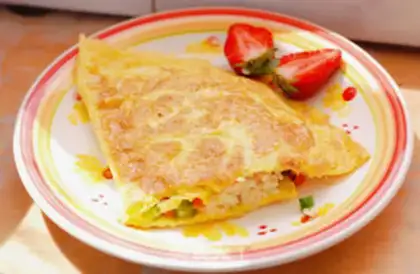
10
Tasty omelet food is ready, and some tomato sauce can be squeezed on the surface of the omelet before it starts。Egg bun Make Tips
The best way to cook rice is to eat it overnight, because the freshly steamed rice is too sticky to make it clear that it is easy to make up. The fried rice packaged in egg buns is not egg fried rice because the skin is already eggs, so there is no repeat egg in it. The type of rice is free, and any food you have at home is free to match. You can put some ketchup on the fire and make some tomato fried rice. 3. The most critical step is fried omelet, which, if it succeeds, will almost succeed. If you are afraid of having a bad egg skin, you can first add a little water starch to the egg fluid, so that the eggs skin is more flexible and not easily broken. 4. The best time to put fried rice is not when the egg skin is fully condensed, but when the highest-skinned egg fluid is not. This is because it is better to stick together and wrap the fried rice when it folds it. It is very difficult to bind up until the surface of the egg skin is fully condensed before cooking。