The nutritional value and medicinal value of cabbage are mainly reflected in the following points:
The first is to help digestion, relieve constipation and detoxify, and prevent intestinal cancer.
Cabbage is rich in crude fiber, which not only moistens the intestines and detoxifies the toxin, but also helps digestion and smoothes the stool. Medical research has also proved that cabbage has a good preventive effect on bowel cancer.
The second is to skin care, face beauty, and prevent frostbite.
In cold winter, the climate is dry, cold winds can cause great harm to human skin, and frostbite also occurs frequently. Cabbage is rich in vitamin C and vitamin E. Eating cabbage often in winter not only can protect skin and beauty, but also has an obvious effect on preventing frostbite.
The third is to prevent breast cancer.
Cabbage can not only prevent bowel cancer, but also prevent breast cancer. Research by American experts has confirmed that women in Asian countries such as China and Japan have a much lower risk of developing breast cancer than women in Western countries. Experts say the reason for this significant gap is mainly because Asian women often eat cabbage. The researchers further explained that there is a trace element called "indole" in cabbage, which is simply an "anti-cancer warrior". It has a strong ability to decompose estrogen, thereby reducing the incidence of breast cancer.
Ginkgo biloba, also known as Ginkgo biloba, is the oldest surviving seed plants. Botanists often compare ginkgo biloba with dinosaurs and are known as the giant panda in the botanical world. Ginkgo biloba belongs to the category of dried fruits. Among many dried fruits, ginkgo ranks third in economic value. The value of ginkgo is mainly reflected in food and medicinal use.
The therapeutic effect of ginkgo biloba
1. Bacteriostasis and sterilization The ginkgolic acid and ginkgolol contained in ginkgo fruits have been proved by experiments to have antibacterial and bactericidal effects and can be used to treat respiratory infectious diseases. Ginkgo fruit water infusion has varying degrees of inhibition on various fungi and can relieve itching and treat tinea.
2. The ginkgo fruit is sweet and bitter and has the effect of astringing lung qi and relieving asthma and coughing. It can be used as an auxiliary dietary therapy for lung disease and cough, asthma with weak physique of the elderly, and various asthma with excessive phlegm.
3. Anti-waterlogging and insect-inhibiting Ginkgo biloba The ginkgolic acid and ginkgolol contained in the outer coat of Ginkgo biloba fruits have anti-tuberculosis effect. Ginkgo biloba fruits soaked in oil have a strong inhibitory effect on tuberculosis bacteria. Fresh fruits soaked in lettuce oil have a certain effect on improving symptoms such as fever, night sweats, cough and hemoptysis, and loss of appetite caused by pulmonary tuberculosis. Therefore, it can be used to treat pulmonary tuberculosis.
4. Stop turbid bands and shrink feces. Modern medical research has found that ginkgo fruit has the effect of contracting the bladder sphincter. It can be used as an auxiliary treatment for children's enuresis, frequent urination due to deficiency of qi, white and turbid leucorrhea, and unstable seminal emission.
5. Reduce serum cholesterol and expand coronary arteries. Ginkgo biloba leaves contain shikimic acid, ginkgo biflavone, isoginkgo biflavone, sterols, etc. In recent years, they have been used to treat hypertension and coronary heart disease, angina pectoris, cerebral vasospasm, High serum cholesterol and other disorders have certain effects.
Chicken soup, ginkgo and Chinese cabbage
By LewisGreen
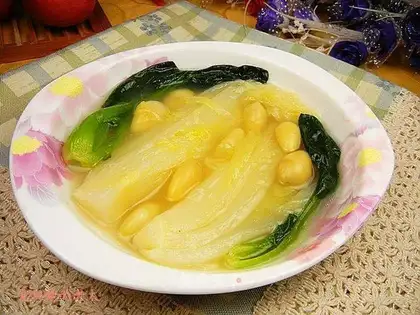
Recipe Recommendations
- Chinese cabbage heart 500 grams
- oil appropriate amount
- salt appropriate amount
- chicken essence appropriate amount
- Jijiazi 1 payment
- Jiang appropriate amount
- onion appropriate amount
- cooking wine appropriate amount
- sour and salty
- stewed
- an hour
- ordinary
Steps for Chicken soup, ginkgo and Chinese cabbage
1
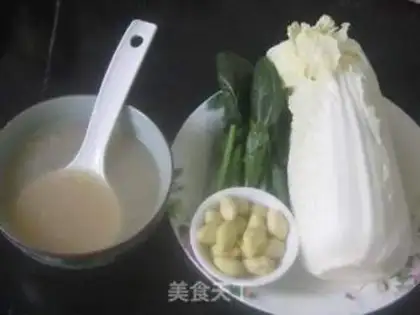
Prepare a bowl of chicken soup. Wash the heart of Chinese cabbage, wash the heart of green cabbage, and cook and remove the shell of ginkgo.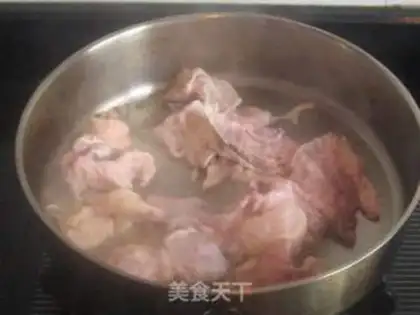
2
How to serve chicken soup: Wash the chicken stand and chop it into pieces. The oil in the pan is hot. Take off the chicken stand and stir-fry.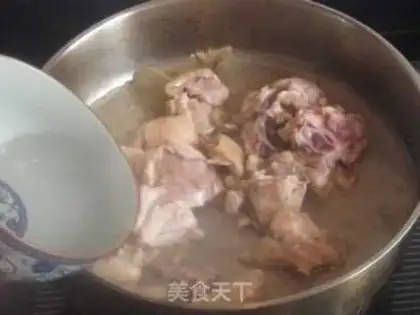
3
When the chicken rack turns color, add 2 large bowls of water.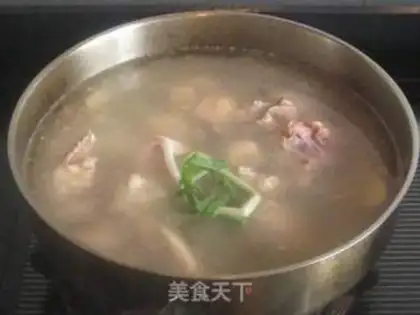
4
Add cooking wine, ginger slices, and onion knots, and bring to a boil over high heat.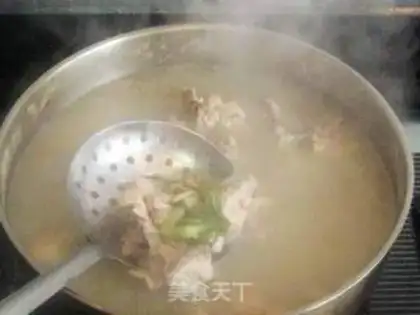
5
Skim off the foam and simmer over low heat for 40 minutes.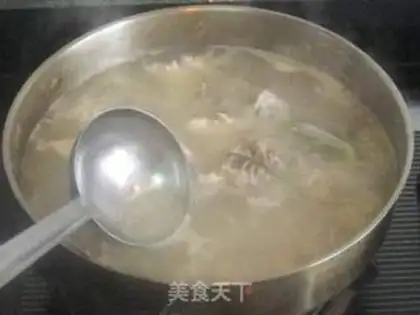
6
Remove impurities and take juice.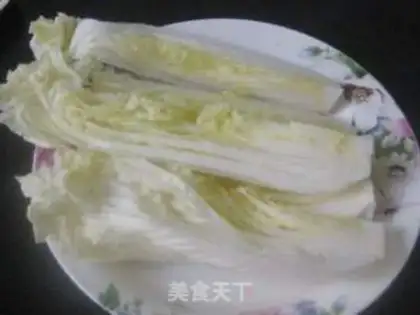
7
Cut Chinese cabbage into 6 sections vertically.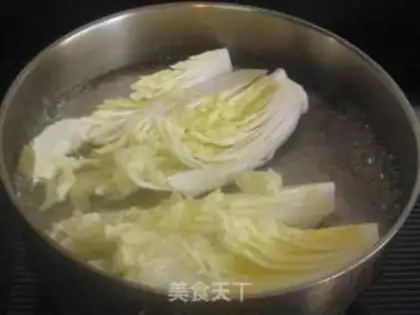
8
Put it in oily boiling water and blanch for 1 minute and remove.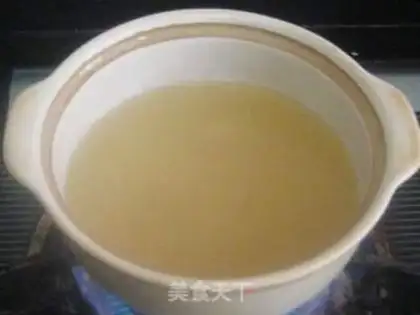
9
Take the casserole and add chicken soup to boil.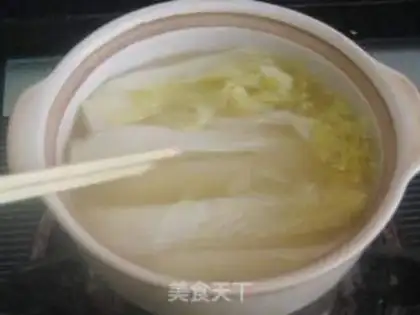
10
Add Chinese cabbage.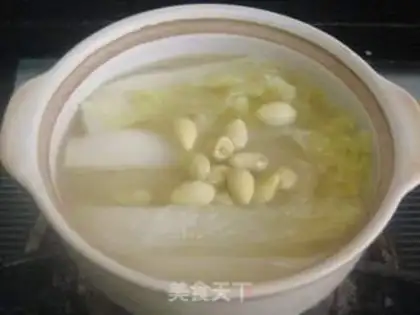
11
Add ginkgo, bring to a boil over high heat, and reduce heat for 15 minutes.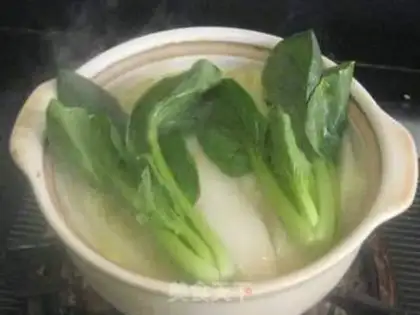
12
Add the green vegetables and bring to a boil.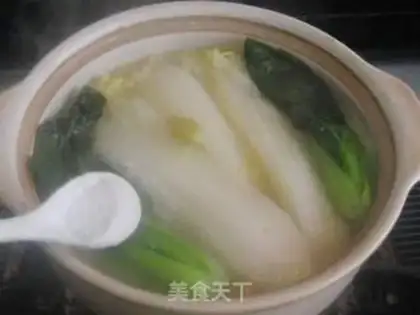
13
Add salt and chicken essence.Chicken soup, ginkgo and Chinese cabbage Make Tips
There is no chicken soup, you can use water. You can use chicken soup without chicken essence.