You haven't heard of her. If you say "thick food", Chaoshan people should understand it, right? In order to find this scientific name, I put a lot of thought into it. Hehe, I finally found it. It's a cabbage. Let's get to know it. If you eat too much of this dish, you will feel astringent in your mouth just like spinach.
Chiao is a leaf-use beet, also known as chard, thick skin pepper, and light cabbage. Its scientific name is Betavulgaris L., It is a variety of the beet genus in the Chenopodiaceae family. Biennial herb with seedlings or leaves as vegetables. Native to southern Europe, it was introduced to China from Arabia in the 5th century AD. There are three types of cabbage based on the color of its petiole: white stem, green stem and red stem. It is more common for farmers in China to cultivate green stem species. Excellent new varieties introduced from abroad in recent years include Nepal's white-stalked sugar beet and Britain's red-stalked sugar beet. They are multi-purpose varieties such as vegetables, feed, and ornamental products. They are easy to cultivate and have high yields. They can be peeled and harvested many times. The supply period is long. They can be marketed when leafy vegetables are scarce in summer, and can be cultivated in solar energy-saving greenhouses in the north. It is commonly cultivated in southern and southwestern China. Sichuan uses red cabbage with stems and leaves as medicine. It is called red chard.
Nutritional value:
Every 100 grams of leaves of the cabbage contains 0.95 g of reducing sugar, 1.38 g of crude protein, 2.87 g of cellulose, 0.1 g of fat, 2.14 mg of carotene, 45 mg of vitamin C, 10.05 mg of vitamin B2, 0.11 mg of vitamin B2, 164 mg of potassium, 75.5 mg of calcium, 63.1 mg of magnesium, 33.6 mg of phosphorus, 1.03 mg of iron, 0.24 mg of zinc, 0.15 mg of manganese, 0.58 mg of strontium. Selenium 0.2 micrograms.
The cabbage is sweet and cool in nature and has the effects of clearing heat and detoxifying, removing blood stasis and stopping bleeding. "Jiahu Materia Medica" records that chard "" supplements the qi, regulates the temper, removes the wind, and benefits the five internal organs." It can be cooked, cold or stir-fried, such as stir-fried cabbage, stir-fried cabbage with tofu with cabbage, stir-fried chard with meat. Folk people believe that stir-fried lotus sprouts and boiled together with japonica rice porridge can relieve fever, strengthen the spleen and stomach, and enhance physical fitness.
stir-fried pork with cabbage
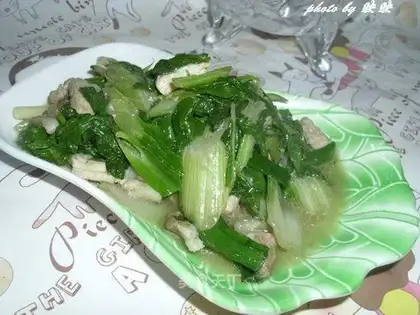
Recipe Recommendations
- Chrysanthemum japonica appropriate amount
- pork appropriate amount
- green garlic appropriate amount
- salt appropriate amount
- salty and fresh
- burn
- ten minutes
- simple
Steps for stir-fried pork with cabbage
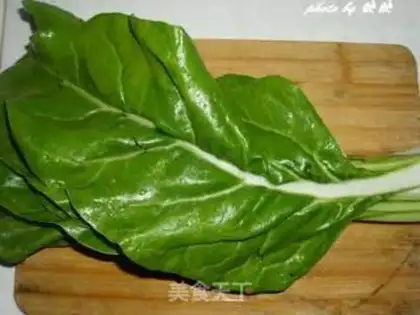
1
Wash a few slices of cabbage.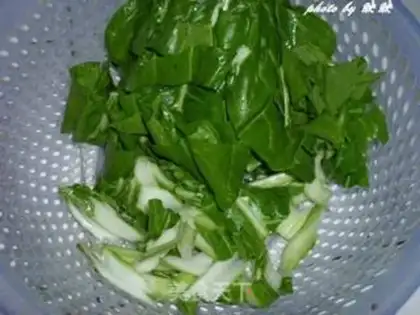
2
Cut the cabbage stems into oblique slices and the leaves into sections.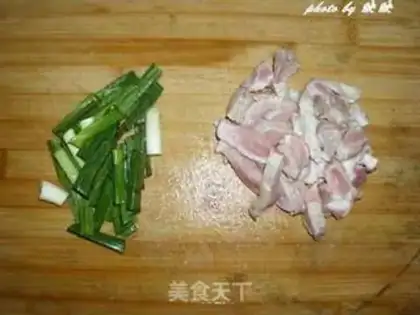
3
Cut pork into small pieces and green garlic into sections. (When the pork was thawed in hot water, it was accidentally half-cooked.)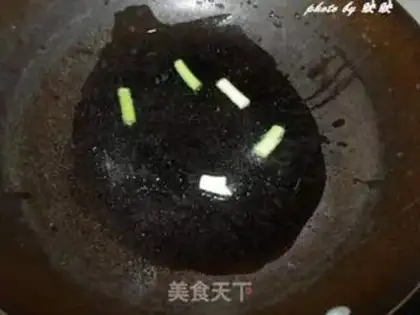
4
Heat the oil in the pan and stir-fry the garlic until fragrant.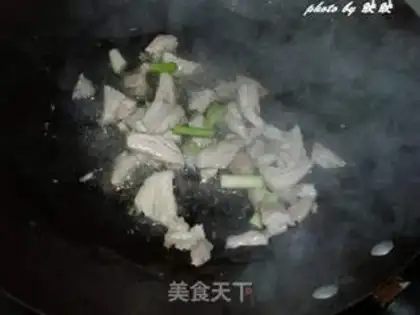
5
Add pork and stir fry.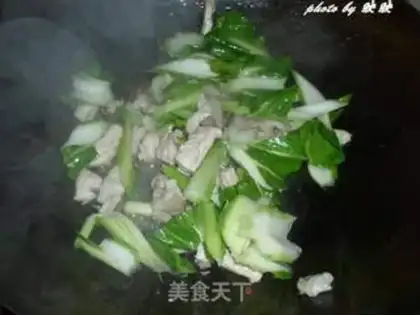
6
Continue to add vegetable stalks and stir fry until done.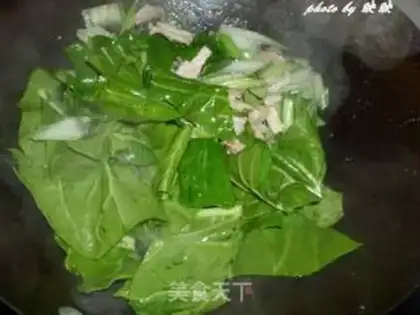
7
Add the vegetable leaves and stir fry.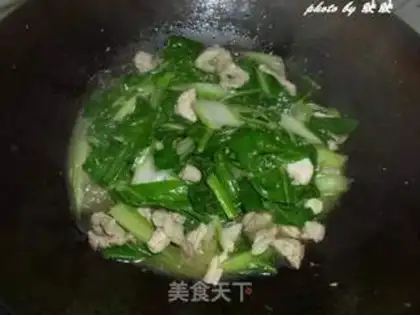
8
Season with salt after the leaves are soft.