Raw and fresh squid porridge
By MaymieOrn
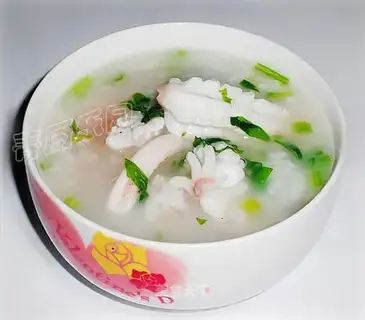
Raw and fresh squid porridge used to be made by my mother at home, and it is very popular in our home. Especially because it has the effects of replenishing blood, nourishing yin and nourishing stomach, and improving eyesight. It is very suitable for people exposed to ionizing radiation. It is also a nutritious porridge with health care in summer. Health porridge is really popular among the general public. The method is simple, but how to make raw and fresh squid porridge best depends on your taste habits and adjust the details, so that you can make this raw and fresh squid porridge according to your feelings ~~
Recipe Recommendations
- winter vegetables appropriate amount
- meters appropriate amount
- parsley appropriate amount
- green garlic appropriate amount
- refined salt appropriate amount
- chicken essence appropriate amount
- sesame oil appropriate amount
- oil appropriate amount
- pepper appropriate amount
- Jiang appropriate amount
- salty and fresh
- casserole
- half an hour
- ordinary
Steps for Raw and fresh squid porridge
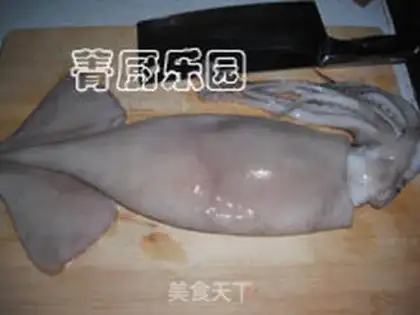
1
Processing method of fresh squid: Wash the surface of the fresh squid you bought.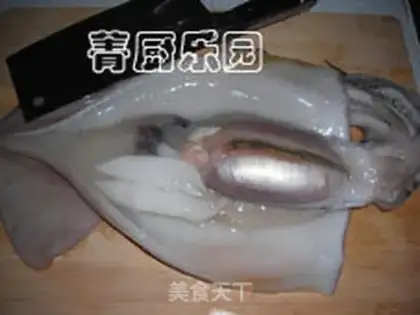
2
Cut the squid open, as shown in Figure 2.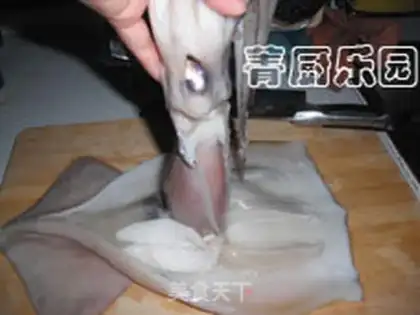
3
Pick up the squid, lift it up, and tear out the internal organs of the squid.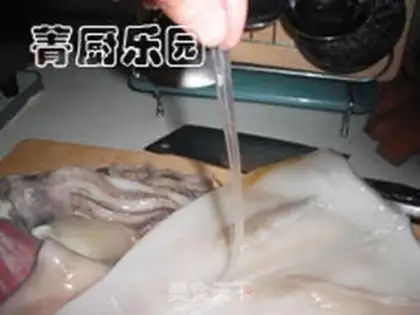
4
Remove the transparent soft bones from the squid.
5
Cut the squid and internal organs open and throw away the internal organs.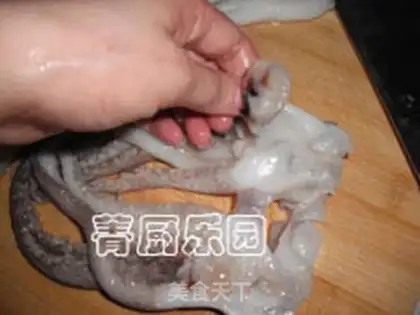
6
Cut the squid head in half, remove the squid eyes and ink.
7
Scrape each claw shell off the squid beard with a knife.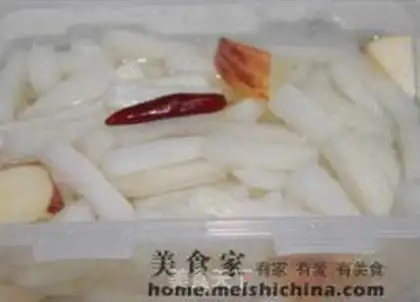
8
Remove the skin from the surface of the squid and squid whiskers, as shown in Figure 8.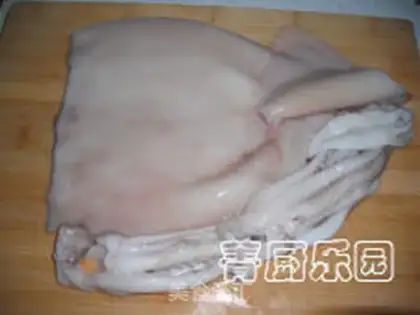
9
Cutting method of squid flowers: Wash the processed fresh squid.
10
Cut the fins on the squid from the carcass first. (The trunk is conical in shape and has short meat fins, arranged at the rear ends of both sides of the trunk, and the two fins are connected)
11
Start cutting the flower knife: Use the knife to cut the knife pattern vertically, as shown in Figure 11.
12
Then use the knife flat pressing method to cut the knife pattern horizontally from the other direction, as shown in Figure 12.
13
When crosscutting the knife pattern, cut it to a certain width, as shown in Figure 13.
14
Cut each cut piece of squid into small sections, as shown in Figure 14.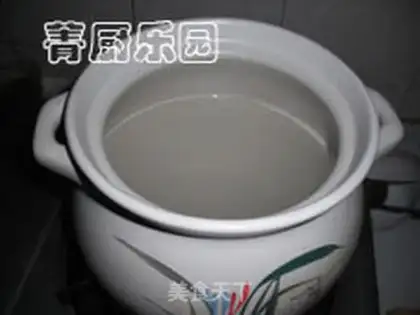
15
Cooking steps: Put the washed rice in a casserole and add appropriate amount of water to boil the porridge. Be sure to use strong fire to make the porridge boil quickly, and then slowly boil it with slow fire to make the texture eroded, soft, and taste sweet and palatable.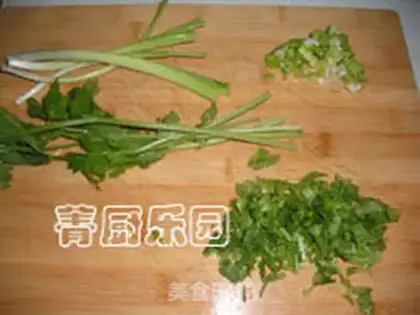
16
During the porridge cooking process, wash the green garlic and parsley, dice them, and dice the ginger for later use.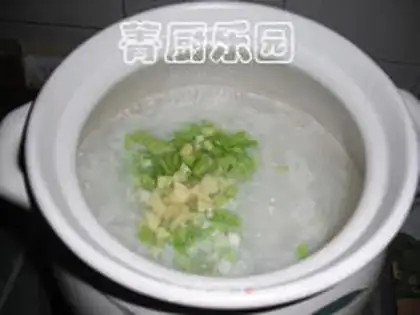
17
When the porridge is almost cooked, put the green garlic and ginger into it first, add cooking oil and refined salt, and cook it for one minute.
18
Put the chopped squid flowers in and stir well, and bring to a boil over high heat. (Put the fresh squid directly in, and the cooked raw and cooked fresh squid porridge will be fresher and sweeter. If you are afraid of fishy smell, you can put the squid in the water first before putting it in)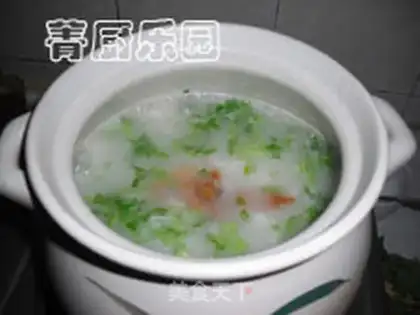
19
Add chicken essence, sesame oil, pepper, parsley, and winter vegetables to boil and turn off the heat. (Winter vegetables and squid should not be boiled for a long time. Winter vegetables will become sour after being boiled for a long time, and squid will not be tender after being boiled for a long time)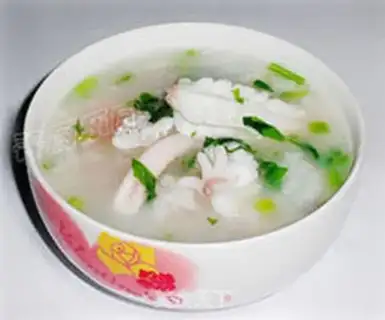
20
A healthy porridge with salty and delicious taste was born! Rice: Rice can improve the body's immune function, promote blood circulation, thereby reducing the chance of high blood pressure; rice can prevent diseases such as diabetes, beriberi, age spots and constipation; the crude fiber molecules in the rice bran layer of rice can help gastrointestinal peristalsis and have good curative effects on stomach problems, constipation, hemorrhoids, etc.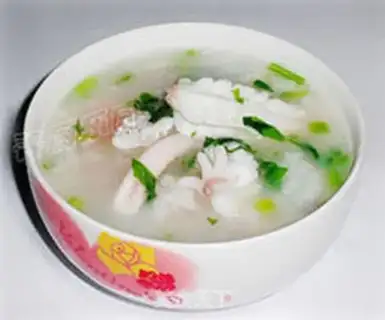
21
Squid (fresh): Squid is rich in calcium, phosphorus and iron, which is conducive to bone development and hematopoiesis, and can effectively treat anemia; in addition to being rich in protein and amino acids required by the human body, squid also contains a large amount of taurine, which can inhibit cholesterol in the blood. content, relieve fatigue, restore vision, and improve liver function; the peptides and selenium contained have antiviral and anti-ray effects. Traditional Chinese medicine believes that squid has the functions of nourishing yin, nourishing stomach, replenishing deficiency and moisturizing skin.Raw and fresh squid porridge Make Tips
[Kitchen Tip]: Squid tentacles must be thoroughly cooked before eating. Fresh squid contains a polypeptide component that can cause intestinal dysfunction if consumed undercooked. Seafood such as squid has a cooling nature, so people with a weak spleen and stomach should eat less of it. Squid is high in cholesterol; therefore, patients with cardiovascular diseases (such as hyperlipidemia, hypercholesterolemia, and arteriosclerosis) and liver diseases should consume it with caution. Squid is a triggering food; people suffering from eczema, hives, and other such conditions should avoid eating it.
[How to Select Squid]: High-quality squid has a complete, firm body that is pink and glossy. The surface has a slight layer of white frost, the meat is thick and semi-transparent, and the back is not red. Inferior-quality squid is thin, small, and incomplete; the color is reddish-yellow with a tinge of black and lacks luster. The surface white frost is too thick, and the back appears dark red or moldy red.