Although South Korean cold noodles and North Korean cold noodles are both cold noodles, they are vastly different in terms of ingredients. Although the two countries are both countries on the Korean Peninsula, they also share the same ancestry. Over the past few decades, due to huge differences in living standards, they have no longer shared the same food structure that existed in the past. At present, they can only share spicy food. Have something in common.
It is no longer easy for North Korea to wrap its belly, but why is it difficult to talk about its diet? It is similar to ours 30 years ago. South Korea is very different. The diet is not only exquisite and refined, but also very comprehensive in nutrition. Even an ordinary cold noodles method pays great attention to the nutritional mix in terms of ingredients. However, North Korea is just staying in, making it with the oldest soy sauce and sour soup. The nutritional value is very low, and the taste and taste are even more different!
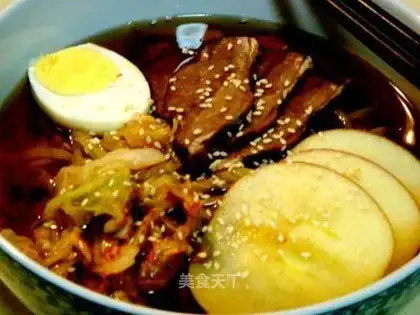
Today, this "Korean cold noodles" made by Da Chao Shao is just the most basic, more authentic, and a way to make Korean home-style cold noodles. There are many varieties of Korean cold noodles, including seafood, vegan, and fruit-flavored ones. However, due to the limited ingredients, let's take the simplest and most basic ones to interpret them!
This cold noodles are half-meat and half-vegetarian, but they taste good, are simple and easy to make, and do not require very precious raw materials. On this basis, many varieties of cold noodles can be evolved, which are also very practical and practical. I also like this cold noodles most often, so make it with what you are most familiar with!
Korean cold noodles
By DeshawnBoyer
Recipe Recommendations
- buckwheat flour 100 grams
- alkali noodles 1 grams
- cold water appropriate amount
- mineral water 1 bottle
- soda 1 teaspoon
- cucumber appropriate amount
- onion appropriate amount
- pepper appropriate amount
- Apple appropriate amount
- pear appropriate amount
- pineapple appropriate amount
- cooked sesame appropriate amount
- kimchi 20 grams
- beef 3 tablets
- cooked eggs half a
- salt 1 grams
- white vinegar 2 tablespoons
- soy sauce 1 tablespoon
- white sugar 2 tablespoons
- sweet and sour
- mix
- several hours
- ordinary
Steps for Korean cold noodles
1
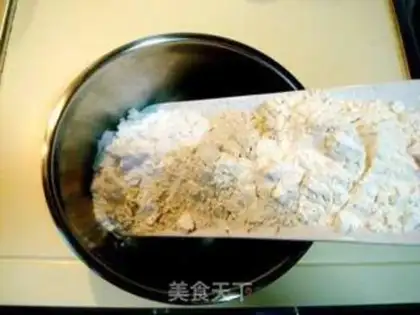
Pour the buckwheat flour, potato starch, and wheat flour into the mixing basin.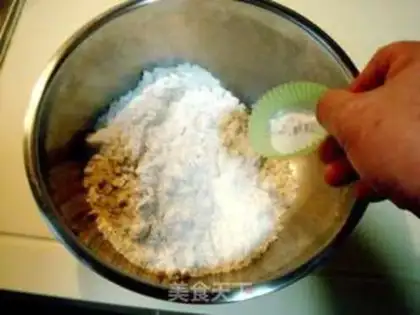
2
Add 1 gram of salt and 1 gram of alkali and mix well.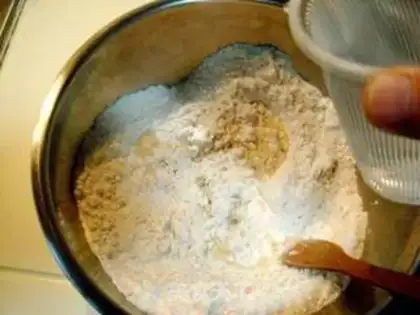
3
Mix the three powders with cold water.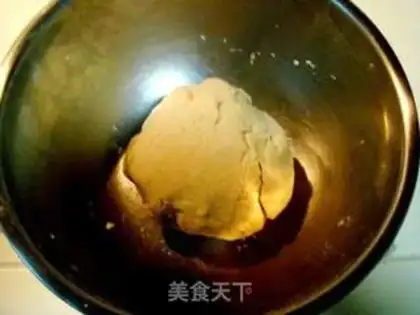
4
Combine a slightly harder dough.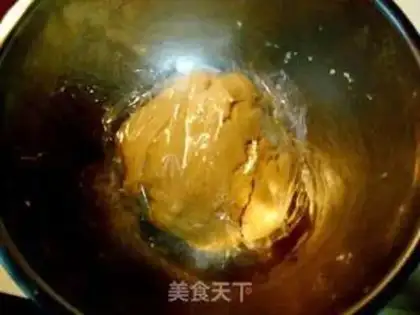
5
Cover the dough with plastic wrap and relax for 30 minutes.
6
Then place it on the panel and roll it out with a rolling pin (note: this synthetic dough has no strength and is fragile, so you have to be extra careful when rolling it)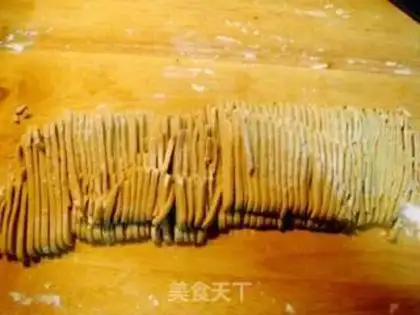
7
After rolling out the dough into dough, dust it with raw flour, fold it, and cut it into thin strips with a sharp knife.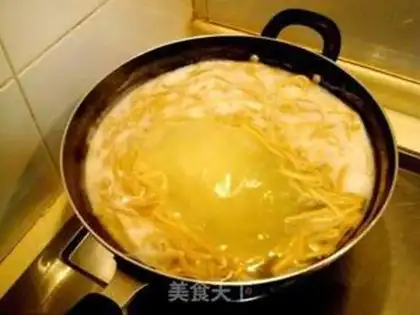
8
Then cook it in boiling water.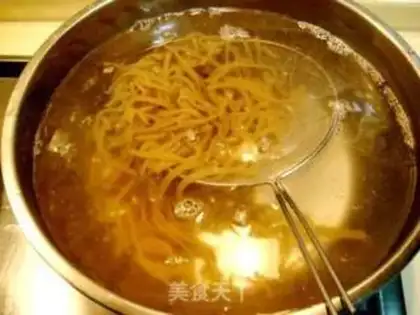
9
Immediately cool the cooked noodles with cold water.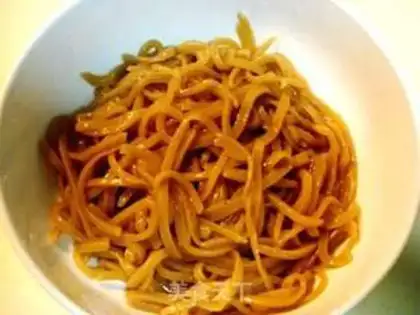
10
Pour into a noodle bowl for later use.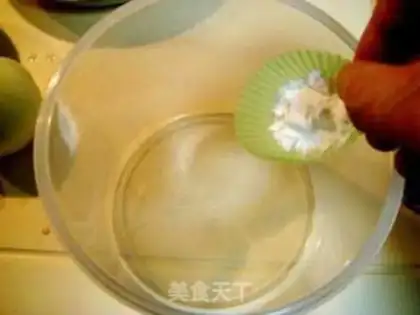
11
Pour the soda into the crisper.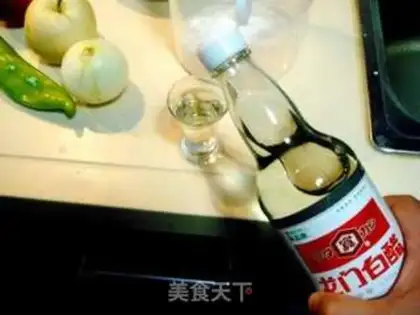
12
Use a glass to measure two tablespoons of white rice vinegar.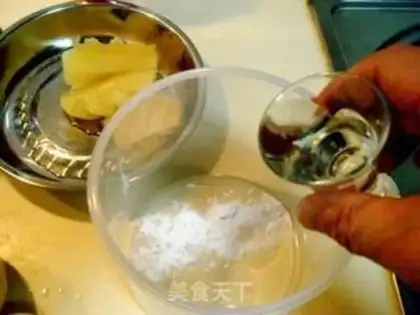
13
Pour the measured amount of white rice vinegar into a crisper.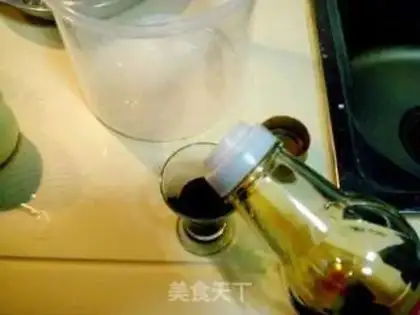
14
Two tablespoons of soy sauce are also added in the wine glass according to the quantity.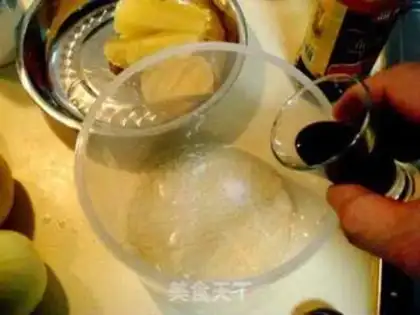
15
Pour in the soy sauce.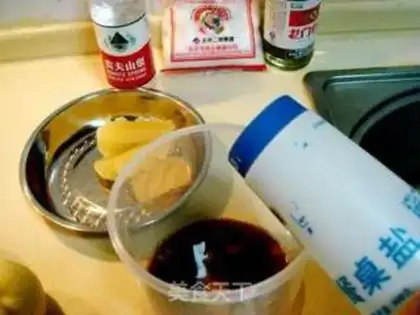
16
Add 1 teaspoon of salt.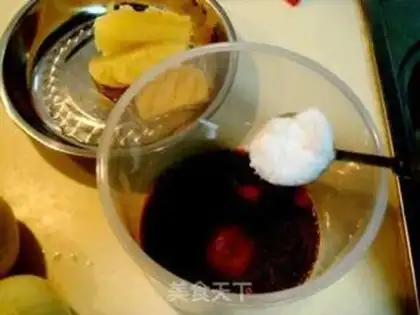
17
Finally, add two tablespoons of white sugar.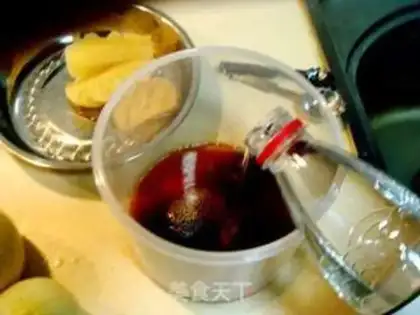
18
And a bottle of mineral water, stir well with a steel spoon.
19
Cut three vegetables and three fruits into slices or blocks with a knife.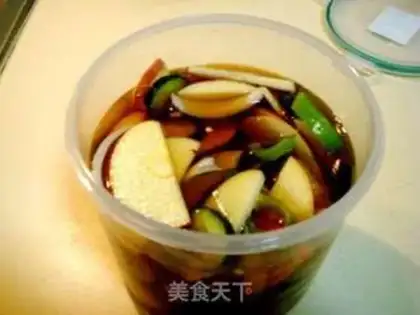
20
Put in the prepared soup and place in the refrigerator, soak for 4 hours.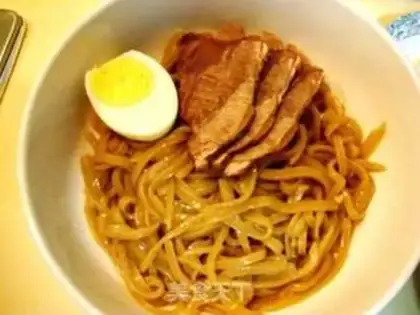
21
In the cold noodles prepared in advance.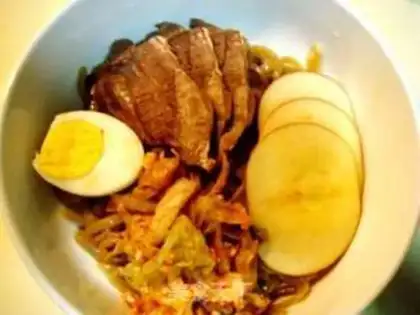
22
Place half cooked eggs, 3 slices of soy beef, 3 slices of apples, and 20 grams of homemade kimchi.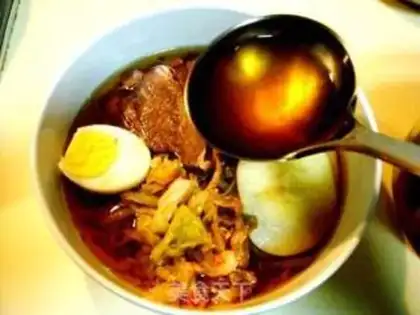
23
After sorting out the ingredients, pour on the cold soup that has been soaked in fruits and vegetables beforehand and chilled.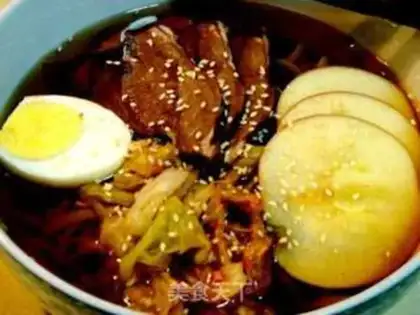
24
Sprinkle with cooked sesame seeds and serve. At this point, all operations are completed.Korean cold noodles Make Tips
1. The three-in-one dough has very low gluten strength and is quite fragile after mixing. Most Korean households have noodle extruders, as the noodles are formed by extrusion, but they can also be cut with a knife. Therefore, you must be extremely careful when cutting to avoid breakage. However, once boiled and cooled, the noodles become very chewy—this is the defining characteristic of this noodle.
2. The broth requires soaking three types of vegetables and three types of fruits; these are the most basic flavor-enhancing ingredients for making Korean cold noodles. It is best to use fresh produce when preparing this dish. Fresh pineapple imparts a richer flavor when soaked. However, due to the season, fresh ingredients were unavailable at the market, so I used canned pineapple as a passable substitute; however, I still recommend using fresh ingredients if possible.
3. The broth must be soaked for a sufficient amount of time to achieve an authentic taste. It must be refrigerated during the soaking process; this makes the flavor lighter and more refreshing, and ensures the noodles in the cold broth have a smoother texture.
4. The toppings for the noodles should not be excessive. However, five ingredients are essential: beef, kimchi, apple, sesame seeds, and egg. These form the foundation of authentic Korean cold noodle toppings; making random changes will result in a loss of authentic flavor. Additionally, do not add ingredients like carrots, as this will significantly diminish the taste of the cold noodles.