♪ Cooled kale ♪
By VicentaLakin

I used to fire cabbage, and it seemed to me that it was not safe for fresh vegetables to grow and transport in such a way as to be eroded by dust, insects, etc. However, after several years of working with a foreigner, Sarah changed that habit. Remember the first time we ate kale, it was Sarah's vegetable salad. She said that vegetables were more likely to eat raw food abroad, such as kale, onions, celery and sweet peppers. Because vitamin C and some biologically active substances contained in vegetables are easily destroyed in cooking, vegetables are eaten alive and their nutritional value is maximized. However, according to Chinese diets, there is a slight discomfort with raw vegetables. At the beginning of the day, you'll be able to tumble quickly in the open water, so you can mix it with food, so that a twilight can completely remove dust, worms and herbic acid, so that your stomach can adapt slowly. Medical studies have shown that eating vegetables is a good way of absorbing their nutrients, as well as their role in combating cancer and preventing multiple diseases. Vegetables mostly contain an immunogenic substance known as a muscular induction agent, which acts on the human cell's muscular genes, produces jammers and becomes a healthy “guardian” of human cells, which has the effect of inhibiting human cell cancer and anti-virus infections. Since the immune material cannot withstand high temperatures, it can only be used if vegetables are eaten alive. Therefore, those vegetables that are able to eat are best eaten; those that are unable to eat are not too well cooked to minimize nutritional losses. And now I'm used to eating kale and so on. It's not easy to get tired of eating vegetables. Perhaps the folic acid in cabbage is an important component of blood cells that can help restore blood function. When you mix vegetables with vinegar, garlic and ginger paste, you can both decorative and fungi. And my habits are sugar, vinegar and raw smoking are the three main protagonists, so my taste is sweet。
Recipe Recommendations
- purple cabbage appropriate amount
- Green cabbage appropriate amount
- salt appropriate amount
- soy sauce appropriate amount
- mature vinegar appropriate amount
- white sugar appropriate amount
- sesame oil appropriate amount
- sweet and sour
- flavoring
- ten minutes
- simple
Steps for ♪ Cooled kale ♪

1
Take a quarter of the chrysanthemum and green kale and remove the hardlock from the center
2
Cut it in thin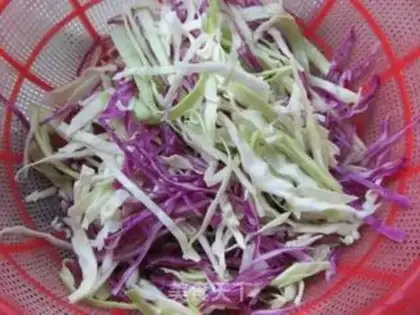
3
Cut it in thin后冲洗一下
4
Crack it with salt, remove the juice from it, flush it with cooling water
5
A little salt
6
A little bit
7
I'll give you some of that
8
Plus a spoonful of sugar
9
We'll mix it with a little perfume
10
We'll mix it with a little perfume均匀即可装盘。
11
Wrote evenly and load the disc。♪ Cooled kale ♪ Make Tips
When eating raw vegetables, pay attention to the following points: 1. Choose fresh vegetables and ensure they are clean. 2. Hands must be cleaned and disinfected before preparing food; 3. Raw and cooked foods should be kept separate; wash vegetables and meat separately to avoid cross-contamination, etc. 4. When making cold vegetable dishes, adding vinegar, minced garlic, and ginger can both add flavor and kill bacteria. 5. Vegetables suitable for raw consumption include: carrots, cucumbers, tomatoes, bell peppers, lettuce, Chinese cabbage, cabbage, eggplant, cauliflower, chili peppers, onions, celery, etc. 6. Vegetables not suitable for raw consumption are: first, starchy vegetables (such as potatoes, taro, yam, etc.) must be cooked, otherwise the human body cannot digest them; second, vegetables containing certain harmful substances, such as seeds of some legumes; third, leafy greens that grow close to the ground. Under conventional cultivation conditions, these vegetables are often watered with manure and pesticides, causing contamination that cannot be cleaned with water no matter what.