Sand and tea ribs
By VicentaLakin
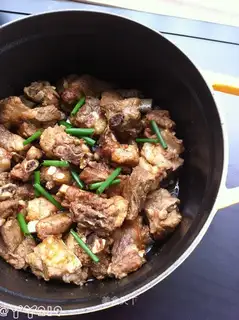
There's a guy in my house who likes ribs, not only ribs, but bones-related things, pigs' feet, chicken claws, and all. He's been with people for a long time, and he's had a really big impact on each other. The way things are, the way they are, the way they are, the way they are, the way they are, the way they are, the way they are. I also seem to be infected with bone-eating disorders, and, and for a long time, you will find that ribs are the second most common food for all kinds of fish in my home. Red fever, sugar vinegar, bean veal, garlic roasting is the way I've been doing it. Now that we're getting interested in cooking, we're always trying to create new dishes, buy food, come home, open up my tasting cabinets and try to match the jar with the jar. That's how it works today. Socha sauce, which I came to contact in Shenzhen, has the habit of eating hot meat for breakfast in the hot zone, and every time I eat this hot meat, I always get a big plate of socha sauce, and I always like it. It's good to eat meat with salsa sauce. It's got to match the ribs. I'm sure it didn't disappoint me, and that's what the bone-eating guy said: "This is a very strong smell of sauce at the entrance, and it's very tender and juicy." How's the evaluation going? Anyway, the bold use of spices has yielded unexpected results. This is a mixture of salsa sauce, which is popular in Fujian and Guangdong. Colored and light brown, in the form of paste, with special complex scents such as garlic, onions, peanut rice, shrimp and raw fresh salt, as well as mild sweet and spicy. This salsa sauce and the salsa sauce along Indonesia is actually the same thing. For cooking beef, lamb, pork is a good choice. It is said that the ancients of Fujian and Guangdong in the South China Ocean brought back saloon sauce in the early years, and it was not surprising that these exotic spices were popular in both places, and they began to make themselves, gradually forming the three main types of fusil tea, saloon sauce and imported saloon sauce, which are different in origin and taste。
Recipe Recommendations
Steps for Sand and tea ribs
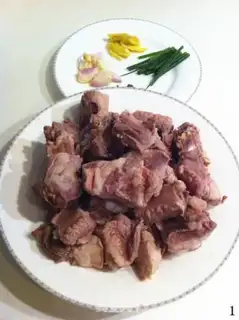
1
(b) Placing, rinsing and drying of ribs; ginger slicing, red onion head shredding, onion cutting spares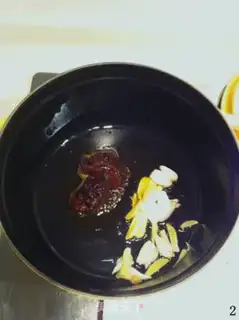
2
(b) A little hot iron casserole, a little oil, a little ginger, red onions and sal tea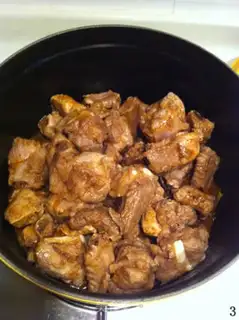
3
(b) Lower ribs, with proper defoliation, with a few raw and gin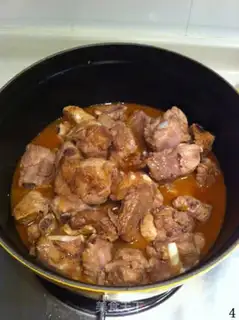
4
When the ribs are coloured, appropriate water is added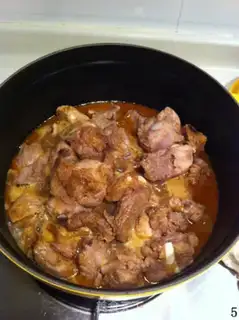
5
(a) Cook it, turn it into a fire, and add guacamole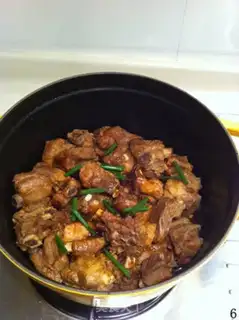
6
It's about 40 minutes, and the ribs are soft, and the onions are enough。Sand and tea ribs Make Tips
1. If it is a white enamel cast iron pot, you do not need to heat it, and the oil is poured directly;
2. You can not use casting iron pans, but increase the stewing time appropriately;
3. Leave more soup, bibimbap is very good;
4. Both soy sauce and sand tea paste have a certain salinity, and whether to add salt depends on personal taste.
2. You can not use casting iron pans, but increase the stewing time appropriately;
3. Leave more soup, bibimbap is very good;
4. Both soy sauce and sand tea paste have a certain salinity, and whether to add salt depends on personal taste.