♪ Painted choreography ♪
By VicentaLakin
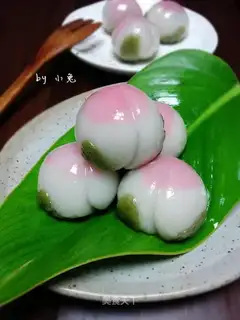
Recently participated in an innovative New Year night dish, and there must be two things missing at the dinner table. One is a dumpling and one is this soup. Tong Ying meant a small family, happy and happy. But every year it's full of soup. It's very monotonous. And there's the problem, if you can't get it out, it'll turn into a sticky beach... and a couple of them stick together and become one. So let's try the veggie round. With a little chord, the veggie round is soft and not stylish. And a little bit of beauty and glamour for the soup, and an old boy must be very fond of it. It's also very nice to make soup, but it's also inspired by Japanese and fruit formations, which were first passed on from China, then promoted by the Japanese, and then made their way to the top on the outside, and it's usually the first time that the powder with the sauerkraut and the soybeans and the oil are grafted with white bean sand and the oil to make a pretty, direct meal. The Japanese are used to eating cold, which is powerful compared to the gastrointestinal function, and the cool and fruit can be digested in their stomachs, but we have a Chinese stomach. If you want to get hot, then you can't make the skin hot, you have to make it hot, and then you can put the formula in the house for a couple of days. And with pumpkin mud, it's great, it's five or six models, and it's starting to come out like this peach. Let's share this peach-forming poach
Recipe Recommendations
- glutinous rice flour 50g
- Chengfen 30g
- bean paste 50g
- matcha powder 1 teaspoon
- edible red pigment 1 drop
- oil appropriate amount
- sweetening
- steamed
- an hour
- senior
Steps for ♪ Painted choreography ♪
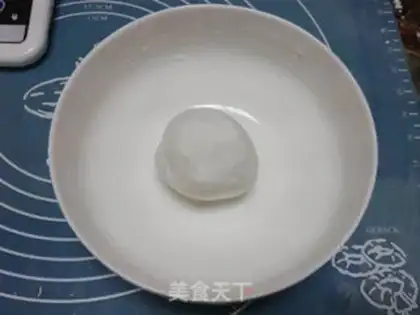
1
Plumbing and rice powder are evenly mixed, with open water and soft noodles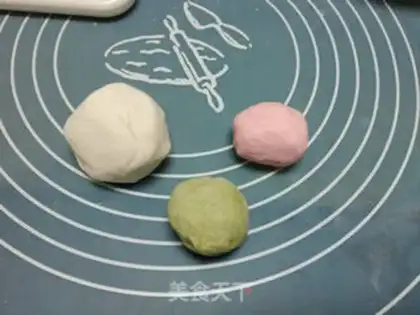
2
Two little noodles, about the size of a soup round, were put in a proper amount of tea powder and red chromosomal in a light green and pink patch, and there was no color in the juice that could be filtered from strawberry to mud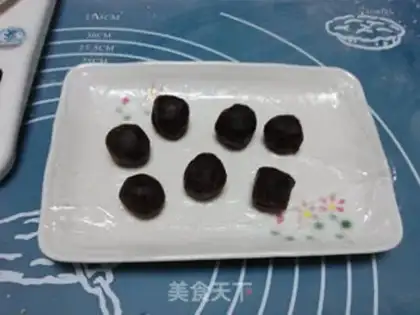
3
The bean sand is split into the same size, and it's covered in pills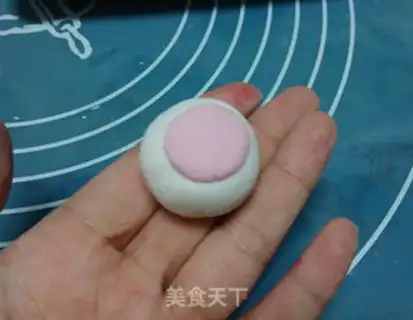
4
Take a piece of white pasta and a little red pasta and flattened it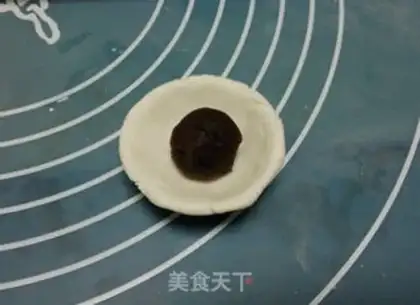
5
I've never had a red face on one side, and I've pushed the bowl out of the hole and put it in the soy sauce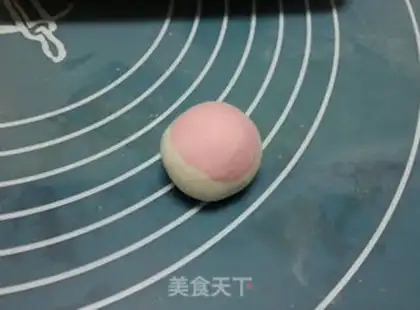
6
Squeeze your mouth slowly, press the red part gently so that it integrates with the white noodle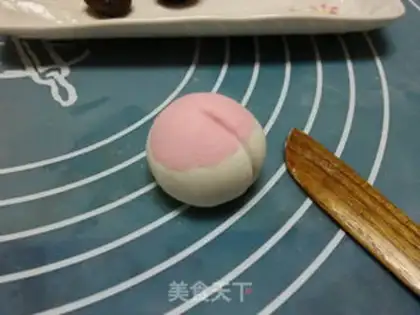
7
With a wooden knife, a toothpick, or a fruit knife, it's a little half a circle of radians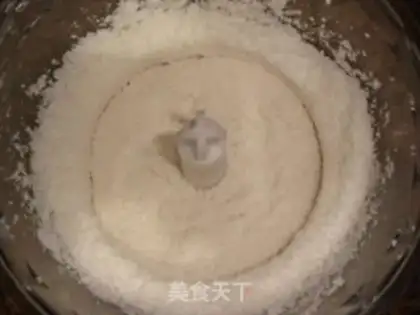
8
Take two green noodles and grow a cone shape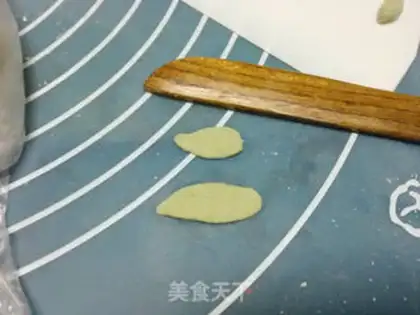
9
The shape of the leaf is formed with a flat finger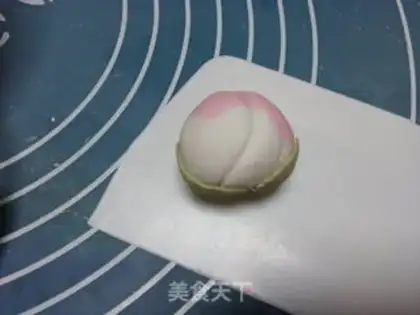
10
A little water on the bottom of the peach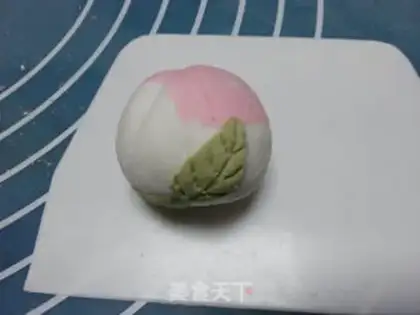
11
Put your toothpicks on the line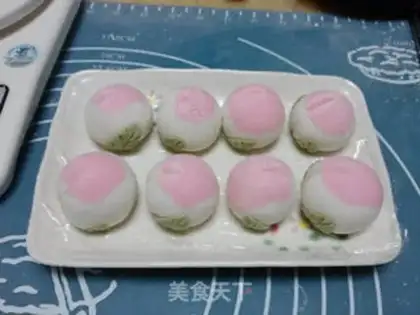
12
The well-made twigs are in a plate with a lasagna13
When the water starts steaming, it evaporates the plum fire for 15-20 minutes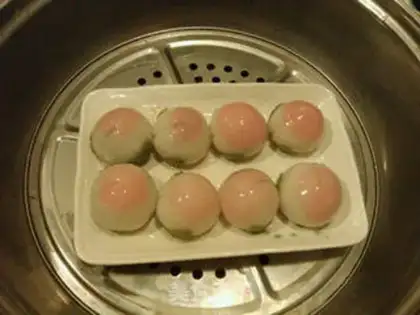
14
When the water starts steaming, it evaporates the plum fire for 15-20 minutes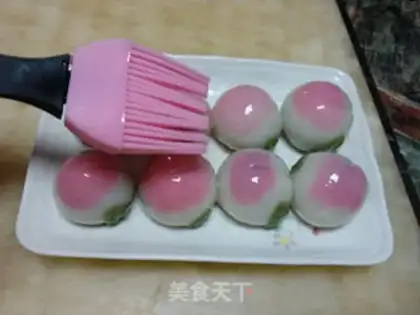
15
Once it's evaporated, put a layer of edible oil on it♪ Painted choreography ♪ Make Tips
1. During the preparation process, the dough should be wrapped in plastic wrap to prevent moisture evaporation and drying. If it becomes dry, simply add a few drops of hot water and knead it again.
2. The plate must be lined with plastic wrap to prevent the steamed Tangyuan from sticking to the plate.
3. A small amount of green and red dough is enough; a portion the size of a small Tangyuan is sufficient.
4. The ratio of glutinous rice flour to wheat starch is approximately 3:2. The amount I used makes about 20 pieces, enough for two or three people. If you prefer a chewier texture, you can use a 1:1 ratio.
5. Brushing with oil after steaming prevents the surface from drying out and avoids sticking to the teeth when eating. If eating immediately after steaming, there is no need to apply oil. If there are leftovers, coat with oil and cover with plastic wrap to prevent drying; they can be re-steamed before eating.