Five-colour rice
By VicentaLakin
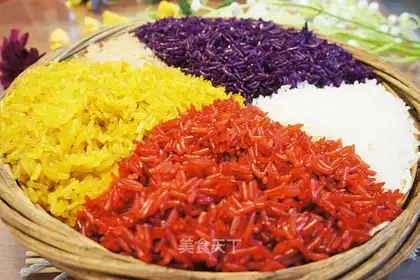
five-colour rice, commonly known as five-colour rice, also known as gruel rice, green rice or rice rice, is known for its colours as black, red, yellow, purple and white. on the occasion of traditional folk festivals such as the festival of chingming, the march 3rd, the april 8th, the cows and the midday festivals, the families of the strong people like to cook five colours of rice, which are traditional foods used by the strong families to serve their guests. this practice has been going on for a long time, as stated in the qing dynasty “on march 3th, the rice is dyed in black, i.e., in green”. legend has it that there is a man of great talent, whit gui, who is under the command of the emperor. after a year of drought, in an effort to relieve the suffering of the population, he invited the emperor himself to visit the country, using a plan to free the emperor from his food. the emperor later discovered that te gue had been caught and ordered to arrest him. the people of the country heard that they were sending te gui to hide in the mountains. the imperials were unable to catch them and set fire to the mountains, which was the day of march. after the imperial soldiers left, the villagers found the body of tu gue in a mammoth cave and buried him next to the mammoth with tears. on march 3th of each year thereafter, the strong dyed the rice with a molasses of molasses, yellow, purple, black, etc., and then fertilized it to the mountain for sacrifice. there's another interesting legend about the five-colour rice. a young man in the old village, tenon, whose father had died long ago, lived only with his mother, who was paralysed. tennon is very nice to her mother and is afraid that she will be alone at home, sometimes with her mother on her back when she goes up the mountain to chop wood or go into the fields. on each occasion, he brought a bag of her mother ' s favorite rice, which allowed her to eat whenever she was hungry. this move by the mother and son of tennon was detected by a monkey on the hill. on one occasion, while tenon went to the mountains to chop wood, the monkey slipped to his mother and took away a large bag of hot rice. the mother was unable to move and had to watch the monkeys take the rice. that's the way it's been for a couple of times. looking at a hungry mother, tennon was pulling the maple leaves around him, thinking how to keep the monkey from taking the rice? all of a sudden, tennon discovered that his hand had been caught in black, moving with a ding-tao machine, and immediately proceeded to cut the maple leaves from the tree home, immersed them with water, produced black liquid juice, and immersed the rice in black juice. the next day, the black rice was fertilized and the house was full of fresh air. what smells so good? tenon's excited to say, "dawg, this is black rice, so sweet!" this is the day of march. in the early morning, tenon took his mother to the mountains and cut wood, and wrapped black rice with her plantains, and revealed on purpose a black colour. the monkey saw such a big, dark mass of things that tennon thought he was seducing him with some poison that he couldn't touch and fled. on that day, tenon ate black rice, not dry, not tired, but full of force and more wood. since then, tenon and his mother had gone up the mountain to chop wood, both with black rice and without fear that the monkey would take it away. subsequently, the strong families learned tenon, their families learned to make black rice, and then gradually made yellow, red, purple rice with yellow, red and blue grass, which gradually evolved into today's five-colour rice. it became one of the most popular foods for a strong family. the production of five-colour rice is more skillful. black rice rice, which is covered with maple leaves and the skins of its plumes, and is dipped in a certain amount of water after a slight drying of the wind, and immersed one day and one night, extracts the leaves, i.e. black dye fluid. black dye juice is to be boiled up to 5 or 60 degrees in chinese pots and immersed in the rice. yellow dyes, which can be extracted from the fruit and tubers of plants such as yellow juice (known as "hair", yellow twilight and yellow twilight). if you boil yellow juice, or if you tumble a tatter into the water, you get a tumbled dye, you can also use the tumbler to mix it with the tumble, and you can get yellow tungsten (which can be evaporated, not immersed). red dyes, purple dyes, are boiled with water from the same variety of red and blue grass of different leaves (the strong term is gogyaemq). the leaves are longer, the colours are deeper, the colours are thicker, and the rice bubbles are purple; the leaves are round, the colours are lighter, the colours are lighter and the rice bubbles are red. after extracting the four liquid juices, each of the different amounts of rice is immersed in them, and when the top colour is evaporated in the steam cage for about an hour, the five colours of rice, black, red, yellow, purple, white (silver rice) can be evaporated. and the colours of this five-coloured rice, the colours, the brightness of the crystals, and its tenderness, the taste, the smoothness of the aquarium, and the small ginseng are truly reminiscent. five-colour rice with natural plants is not only delicious but also of some medicinal value. red orchids have a blood-bearing function, and the qing dynasty's "red and juicy, blood-created" argument, "the yellow flowers" or "liquary" have a warm and cold blood function, and lee qu-jin says in the "breathing, powerful, long-skinned and long-spring" in the "breathing" in the "breathing, powerful, long-spring" in the "breathing", and also says that the cuisine is made of mammite leaves, and that the food can be "strenching bones, gastrical, able to carry, remediate." - - the above is from the web. back home this year, he took some yellow flowers and two red and blue grass back to guangzhou, tried to find maple leaves, but did not know where to find them, so he made only four pure ones. black was supposed to use her sister's plaster, but it was worse than fruit, and then he used a water bubble made out of black beans, but the color was not pure, it turned gray and it was brown. that night, we cooked the purple cuisine, and the cuisine juice was particularly good, so we made some rice, and the colour was pretty good, so we replaced the black with cuisine cuisine cuisine, but the evaporation of the cuisine cuisine cuisine became light and light, with a little regret. that's why i think the violet is the same as the maple leaf, and the color is better when it's blubbered and steamed. unfortunately, this time it's not all the color, it's too hard to find。
Recipe Recommendations
- glutinous rice appropriate amount
- Red and blue grass appropriate amount
- dried yellow flower appropriate amount
- Amaranth appropriate amount
- glutinous rice primary color appropriate amount
- black bean juice appropriate amount
Steps for Five-colour rice
1
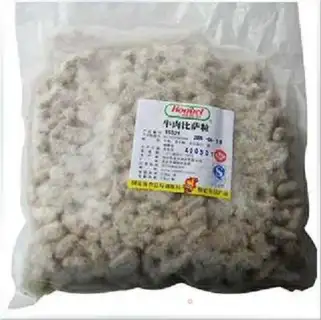
Prepare all materials。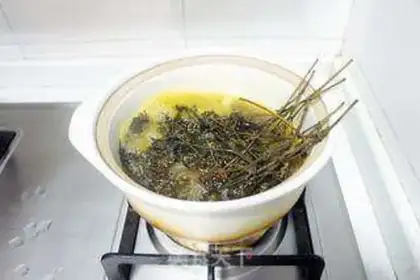
2
The yellow flowers are washed and rinsed into the casserole with fresh water to boil for yellow dye。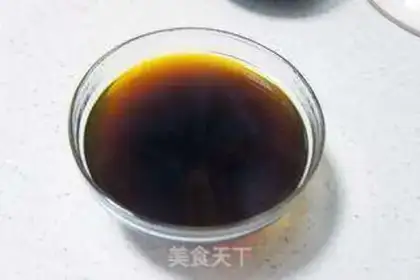
3
Pour the yellow dye tar out of the spare。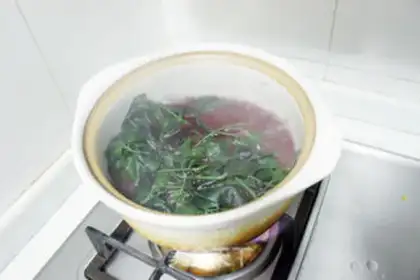
4
Scavengers of red blue grass (purified with purple) are placed in casseroles with fresh water and boiled to extract purple dye。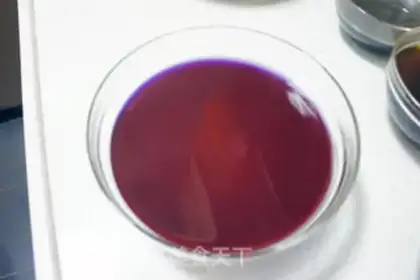
5
Pour the purple glucose out of the spare。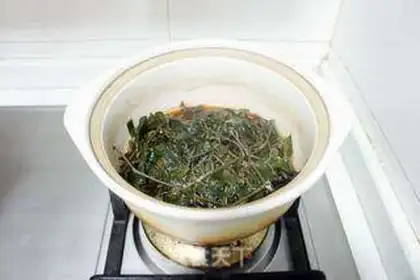
6
The red blue grass (red) washes into the casserole with fresh water and boils to extract red dye。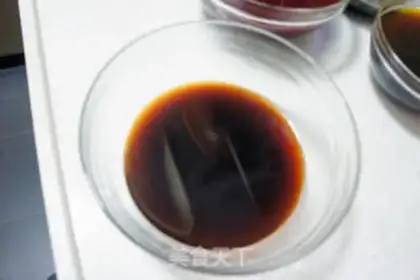
7
Pour red dye tar out of the spare。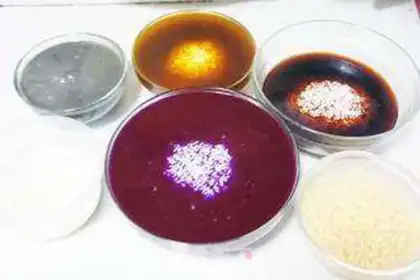
8
The rinsed rice is poured into the juice bowls separately, white is the original colour of the rice is placed in a bubble in the water and in the fridge overnight. [Orchid (red blue grass), yellow (dry yellow flowers), red (red blue grass), black (black bean juice), plum (chrysanthemum juice), white (colour rice)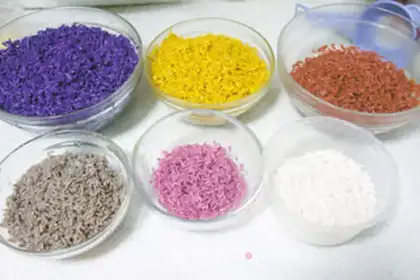
9
Pour out of the dried water of the gill rice。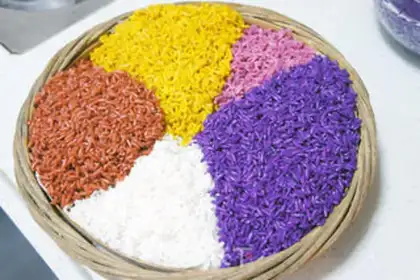
10
In turn, dyed rice shall be placed in a masonate with evaporated cloth. (The bamboo platinum was brought back at home, old and old, but very fond of it, and the old used to make bamboo, but it is now rare to see it. I'm not sure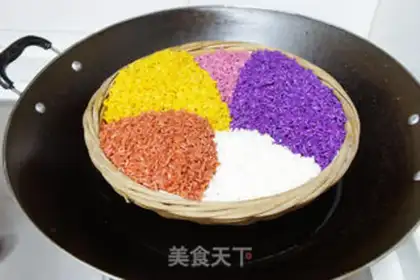
11
The boiler is filled with a proper amount of clean water and is mounted on a steam shelf with rice。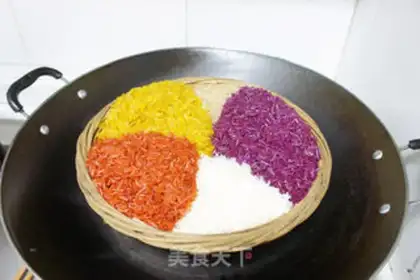
12
It's fine to boil up to the sodium。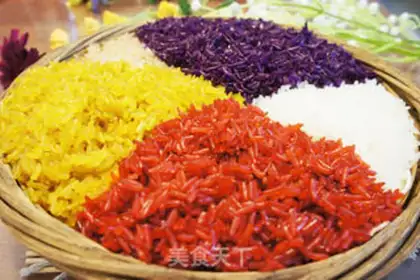
13
The finished chart。