In traditional Chinese medicine, flavors are categorized into five types: sour, bitter, sweet, pungent, and salty. These five flavors correspond to the five Zang organs and are closely related to human health. The "Yellow Emperor's Inner Canon" states, "Sour enters the liver, bitter enters the heart, sweet enters the spleen, pungent enters the lung, and salty enters the kidney." Starting from this issue, we will introduce the relationship between flavors and the five Zang organs in sequence to help you better practice dietary therapy for health preservation.
"Sour enters the liver" means that consuming sour foods or herbs such as hawthorn, Schisandra berry, dark plum, and white peony root can nourish the liver.
"Nourishing the liver" refers to the process of "moistening liver yin and nourishing liver blood," which in turn softens and regulates the liver. Only when liver yin and liver blood are sufficient can the liver's various physiological functions function properly. Symptoms such as abdominal bloating, poor appetite, edema, irregular menstruation, and eye discomfort are often treated from the liver's perspective.
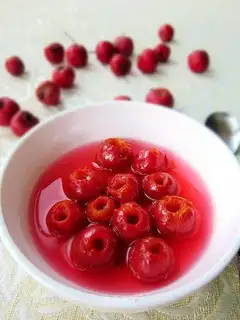
Braised Hawthorn
In daily diet, you can appropriately consume some sour foods, such as hawthorn, oranges, and grapes. Adding a little vinegar during meals or when cooking certain dishes can also be beneficial, as needed and according to habit.
It is worth noting that sour foods are not suitable for consumption all year round. In spring, liver qi is vigorous. Because sour foods can exacerbate liver qi and damage the spleen and stomach, they should be eaten less. In autumn, all things converge, and one should "reduce pungent flavors and increase sour flavors to nourish liver qi," increasing the intake of sour flavors to align with the season's energy of contraction and storage.
If you have a cough with phlegm, or have diarrhea and difficulty urinating, it is not advisable to consume sour foods or herbs, because the sour flavor has an "astringent" and "coagulating" effect, which is not conducive to the expulsion of pathogenic factors. In addition, individuals with high blood sugar, peptic ulcers, or excessive stomach acid are also not suitable for consuming them.
 Cream
Cream