Women and men have fundamental differences in their physiological structures. There are also differences in the choice of food and drink. The seven most nourishing foods for women, which regulate the spleen and stomach, nourish qi and blood, detoxify, and promote beauty and longevity. You deserve to have them!
Longan and Red Jujice with Tremella Soup
Aloe Vera: Also known as "green gold of nature," since the 1980s, the world has experienced an "aloe craze." No other plant has been found to have such all-around effects as aloe, including whitening, moisturizing, sun protection, freckle removal, detoxification, anti-inflammatory, bactericidal, analgesic, hair care, and promoting wound healing. It has a special effect on treating acne.
Red Jujube: Hailed as the "ironclad crop" and "woody grain," also known as Chinese date, it is known as one of the "five fruits" along with peach, plum, apricot, and plum (or chestnut). It is extremely high in vitamin content. The saying "eat three jujubes a day, and you will never look old in your life" also calls it a "natural vitamin pill." Patients who continuously eat red jujubes recover three times faster than those who only take vitamin supplements.
Lotus Root: The root, leaves, flowers, stamens, and fruits are all treasures. It is rich in starch, protein, vitamins C and B1, as well as inorganic salts such as calcium, phosphorus, and iron, which best meet the body's needs. It replenishes qi and blood, enhances immunity, is easy to digest, and is suitable for all ages. Traditional Chinese medicine calls it "mainly supplementing the middle and nourishing the spirit, and replenishing qi and strength." A short and thick lotus root is better, with the second section from the tip being the best.
Longan: "Longan in the south, ginseng in the north," also known as dragon eye (longyuan, yuanrou). It "greatly replenishes qi and blood, its strength surpassing that of ginseng and astragalus" ("Compendium of Materia Medica"). Unlike lychee's damp-heat nature, it can be used as medicine to replenish qi, nourish blood, and calm the mind. It is suitable for postpartum (or illness) recovery and can inhibit uterine cancer cells.
Carrot: Also known as ginseng root or "earth ginseng," it has a mild and continuous sweating effect, stimulates the skin's metabolism, improves blood circulation, and makes the skin delicate, smooth, and ruddy. American scientists believe that eating two or three carrots a day can lower cholesterol by 10-20%, helping to prevent heart disease and tumors.
Goji Berry: Its content of vitamin C, beta-carotene, and iron is higher than that of oranges, carrots, and steak. "In spring, goji leaves are picked and called Tianjingcao; in summer, flowers are picked and called Changshengcao; in autumn, seeds are picked and called Gouqizi; in winter, roots are picked and called Digupi." The saying "If you are traveling a thousand miles, do not eat goji berries" means that it can greatly stimulate sexual function, so it is not suitable for long-distance travel from home, but is suitable for recuperation at home.
Walnut: Also known as walnut or Qiangtao, it is known as one of the "four major dried fruits" along with almond, cashew, and hazelnut. In the West, it is called the "smart fruit," "strongman food," and "nutrient-rich nut," while in the East, it is regarded as the "longevity fruit" and "treasure for nourishing people." The American Dietetic Association recommends eating walnuts two or three times a week, especially for middle-aged and elderly people and women.
Women should eat more of these nourishing foods, as replenishing qi and blood is the foundation of health preservation and wellness. Eating more of these foods can also improve various minor ailments in women.
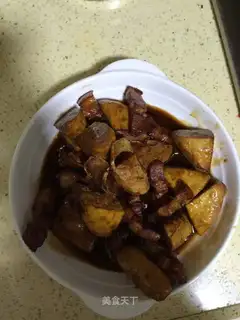 Ginger tofu