An ancient Chinese medical work, the "Huangdi Neijing" (Yellow Emperor's Inner Canon), states: "The five grains are for nourishment, and the five domestic animals are for benefit," advocating for the consumption of meat in moderation to promote health.
Red Date and Chicken Soup
Chicken is high in Vitamin A
Paired with red dates to protect the heart
Nutritional Characteristics: Chicken has a low fat content and a high protein content, with an amino acid composition that is close to the body's needs. Chicken is rich in unsaturated fatty acids that can lower cholesterol, and it is also rich in Vitamin A and niacin, which can repair skin and mucous membranes. Therefore, chicken is beneficial for a healthy figure and skin care.
Suitable For: Chicken has a sweet flavor and a slightly warm nature, and can be eaten year-round. Due to its delicate texture, it is most suitable for people with poor appetite. In addition, chicken has a good therapeutic effect on symptoms such as malnutrition, aversion to cold and fear of cold, fatigue, menstrual irregularities, anemia, and weakness.
Cooking Methods: Chicken has a delicate texture and is suitable for various cooking methods. To maintain its low-fat advantage, it is best to choose lighter cooking methods, such as white-cut chicken or clear stewed chicken. On the contrary, crispy chicken, spicy chicken, fried chicken, etc., which are deep-fried, not only lose nutrients but are also high in calories, which is not good for health. When stewing chicken, in addition to ginger slices, Sichuan peppercorns, and bay leaves, you can also add a few red dates, which not only makes the flavor more fragrant but also nourishes the heart and qi. When drinking chicken soup, it is best to eat the meat together.
Selection Points: When selecting chicken, first look at the cut at the slaughter site. Due to the struggle of the live chicken, the cut will not be very flat. If the cut is a smooth curve, it may have been cut after death. Secondly, look at the eyes. A fresh chicken's eyes are fully or half-open, and the eyeballs are bright in color; if it has been stored for a long time or has spoiled, the eyes will be sunken and the eyeballs will be cloudy. Finally, look at the chicken's buttocks. A fresh chicken's buttocks are very clean; if it is a sick chicken, the buttocks will be a bit green.
Chestnut Braised Pork
Pork is rich in Vitamin B1
Paired with chestnuts to nourish the brain
Nutritional Characteristics: According to the "China Food Composition Table", pork has more than 4 times the Vitamin B1 content of beef of the same weight, and more than 5 times that of lamb and chicken. Vitamin B1 is closely related to the function of the nervous system, can improve postpartum depression symptoms, and can also eliminate human fatigue.
Suitable For: Pork has a neutral nature and can be eaten year-round by people of all constitutions. However, its fat content is higher than other meats, so it is more suitable for thin people, while people who are overweight or have high blood lipids should control their intake.
Cooking Methods: Pork is high in fat and is not suitable for frying; stewing is more appropriate, and oil should be controlled when stir-frying. Different parts of the meat have different textures. The tenderloin and rump are suitable for cutting into shreds for stir-frying; shoulder meat is suitable for chopping into a filling or for stewing; pork bones are suitable for making soup. Pork has a gamey flavor, so it is best to add one or two star anise when stewing, and adding a few chestnuts can nourish the brain.
Selection Points: Fresh pork is light red or light pink, the fat on the surface is white and shiny, and it feels slightly dry or slightly moist but not sticky when touched, and has a resilient feel when pressed. Unfresh or diseased pork is gray or dark red, the fat is light green or pink, and it feels dry and sticky when touched. Injected water meat is generally moist on the surface, has poor elasticity, and liquid seeps out when pressed. Meat containing clenbuterol looks abnormally bright, the fat is relatively thin, usually less than 1 cm.
Potato and Beef Stew
Beef is the best for iron supplementation
Paired with potatoes to invigorate the spleen
Nutritional Characteristics: Red meat is an important source of iron, and beef is particularly rich in heme iron, which can effectively prevent iron-deficiency anemia. In addition, beef has higher protein and zinc content than other meats, and the lowest fat content.
Suitable For: Beef has a slightly warm nature and can be eaten year-round by people of all constitutions. However, the muscle fibers of beef are relatively coarse and not easy to digest, so the elderly, children, and people with poor digestion should not eat too much.
Cooking Methods: The tenderloin of beef is the most tender and is suitable for stir-frying into shreds or slices; the shoulder meat is also relatively tender and suitable for braising; brisket is suitable for making soup; shank meat is best for slow-cooking over low heat or for making sauced meat. Beef has a pure flavor, so it is not advisable to add overly strong spices when cooking. Adding some ginger, dried tangerine peel, bay leaves, and a little fennel is sufficient. Potato and beef stew is one of the most classic pairings and can invigorate the spleen.
Selection Points: Fresh beef has a uniform red color, the muscle is shiny, the fat is white or light yellow, the surface is slightly dry, not sticky, has good elasticity, and has no peculiar smell. It is worth reminding that tender beef has a light red color, and old beef has a dark red color. People who love tender beef can distinguish carefully.
Radish and Lamb Hot Pot
Lamb can supplement selenium
Paired with radish to moisten the lungs
Nutritional Characteristics: The nutrition of lamb is similar to that of beef, and it is also rich in protein and heme iron, making it a good food for blood tonification. It is worth noting that the selenium content in lamb is much higher than that in other meats. Research shows that selenium has antioxidant effects, can resist heavy metal toxicity, protect vision, and inhibit tumors.
Suitable For: Lamb has a warm nature and is best eaten in winter and spring. It can replenish qi, tonify deficiency, and resist cold. It is suitable for people with weak constitutions who are afraid of cold, and is quite beneficial for people with asthma, bronchitis, and lung diseases. On the contrary, if the body is heat-sensitive and often has dry stools, lamb should be eaten less. Patients with cough and phlegm caused by strong fire, indigestion, arthritis, and eczema should avoid it. The fat content of "fatty lamb slices" is generally over 30%, so people with high blood lipids should eat less.
Cooking Methods: Lamb has a fine texture. The tenderloin, shoulder meat, and rump are all suitable for short-cooking dishes. In addition, lamb ribs are suitable for making soup, and lamb leg is suitable for slow-cooking over low heat. When cooking lamb, pairing with hawthorn and mung beans can remove the gamey flavor; pairing with white radish can moisten the lungs; pairing with carrots can tonify deficiency and replenish qi.
Selection Points: When buying lamb, you can observe the muscle fibers; the finer and tighter, the better. Fresh frozen lamb has a bright color, showing a bright red. If it is whitish, it has generally been frozen for more than 3 months; if it is dark red, it may have been thawed repeatedly; if the fat part is yellow, it has been frozen for too long. When selecting fresh lamb, touch it; it should feel slightly sticky. Injected or unfresh lamb will not be sticky. In addition, lamb chops with fine bones usually indicate that the sheep is younger and the meat is more tender.
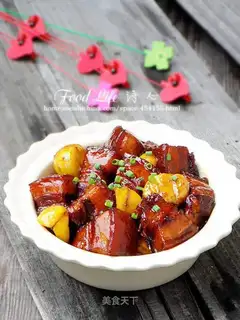 Chestnut red meat
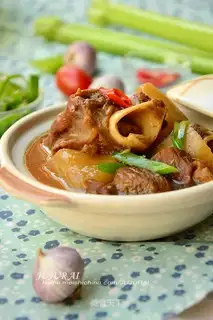 Rop and lamb
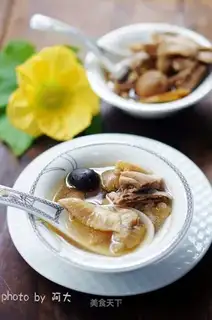 Red-tree chicken soup
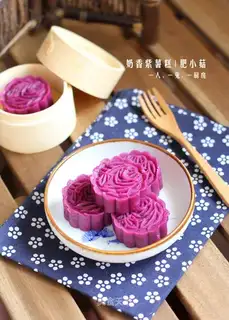 Milky lasagna