Many people supplement calcium through their diet, but the following ten common misconceptions about calcium supplementation are often mistaken for effective methods. Come take a look! These foods can hinder calcium absorption—are you making any of these mistakes? Dr. Fan Zhihong, a council member of the Chinese Nutrition Society, points out common myths about calcium supplementation. Which ones apply to you?
1. Believing that eating beef is good for bones
Many people believe that Westerners have strong bones because they love beef. In fact, many people who eat a lot of beef are actually those who suffer from severe calcium deficiency. This is because beef itself contains very little calcium, and this is true for all meats. At the same time, meat contains a large amount of "acid-forming elements," mainly phosphorus, sulfur, and chlorine. These elements make the blood more acidic, and the body has to use calcium ions from food and bones to neutralize them, thus increasing the loss of calcium from the body and reducing calcium absorption. Therefore, middle-aged and elderly people with calcium deficiency should appropriately control their intake of meat, whether it's red meat or white meat.
2. Believing that eating vegetables has nothing to do with bone health
While many people love animal products, they often neglect to eat enough vegetables. They think vegetables only contain dietary fiber and vitamins and have nothing to do with bone health. In reality, vegetables not only contain large amounts of potassium and magnesium, which help maintain acid-base balance and reduce calcium loss, but they also contain a good amount of calcium themselves. Leafy green vegetables are generally moderate sources of calcium. For example, bok choy, Shanghai cabbage, kale, and celery are all calcium-rich vegetables that should not be overlooked. Recent research has confirmed that vitamin K in leafy greens is essential for the formation of osteocalcin, which is necessary for depositing calcium into bones.
3. Believing that spinach is useless for calcium supplementation
Many people know that spinach should not be eaten with tofu because it contains a large amount of oxalic acid, which combines with calcium to form an insoluble precipitate. However, these people overlook the other side of the issue: spinach also contains many factors that promote calcium absorption, including abundant potassium and magnesium, as well as vitamin K. Spinach is recognized as a treasure trove of vitamin K, ranking first among various fresh and raw foods. Vitamin K is not destroyed by heat and, like carotene, requires fat to aid absorption. Therefore, when eating cold spinach, be sure to add some sesame oil.
4. Believing that eating fruit for meals is good for bone health
Many women on diets believe they can get enough protein and vitamins just by eating fruit, often replacing a full meal with fruit. In reality, while fruit is beneficial for acid-base balance, it is not a good source of calcium and is severely lacking in protein. Bone formation requires a large amount of calcium and also collagen as a framework for calcium deposition. If you replace three meals a day with fruit, your intake of both protein and calcium will be severely insufficient, which will only promote osteoporosis.
5. Believing that drinking beverages has nothing to do with calcium supplementation
To improve taste, most beverages contain phosphates, which severely hinder calcium absorption and promote its loss. Cola is the most harmful among them because it contains phosphoric acid. If you soak a person's teeth and bones in cola, they will slowly dissolve! The refined sugar in it is also not good for calcium absorption. Therefore, anyone who needs to supplement calcium should strictly limit their intake of sugary drinks. Tea is rich in potassium ions, has a low phosphorus content, and also contains fluoride, which promotes strong bones and teeth. Therefore, drinking tea is beneficial and harmless for bone health. But be careful with so-called "tea drinks"; their color may be from caramel coloring and do not provide the benefits of tea.
6. Believing that drinking bone soup will prevent calcium deficiency
The calcium in bones will not easily dissolve out. Experiments have shown that after steaming in a pressure cooker for two hours, the fat from the marrow floats to the surface, but the calcium content in the soup is still negligible. There is only one way to supplement calcium with bone soup: add half a bowl of vinegar and simmer it slowly for another one to two hours. Vinegar can effectively help dissolve bone calcium. It should be noted that you should not use a pressure cooker for this; it's best to use a clay pot to avoid dissolving too much aluminum into the bone soup.
7. Believing that drinking milk is not helpful for calcium supplementation
Although some people claim everywhere that milk contains a lot of protein, which will make the body more acidic and promote calcium loss, this statement is incorrect. In fact, the protein content in milk is only 3%, while its water content is as high as 87%. Every 250 grams of milk contains more than 250 milligrams of calcium, as well as abundant potassium and magnesium, plus vitamin D, lactose, and essential amino acids that promote calcium absorption. Unlike meat, milk is not an acid-forming food but a slightly alkaline one. Therefore, milk does not make body fluids acidic and will not promote calcium loss. Overall, milk is still the best food for calcium supplementation.
8. Believing that soy milk is a high-calcium food
Nutritionists often advise that people who cannot drink milk can drink soy milk as an alternative. Indeed, in many ways, soy milk is an excellent food. However, in terms of calcium content, it is far inferior to milk—the difference is not just one or two times. This is because although the calcium content in soybeans is not too low, it becomes very diluted after being ground with 10 cups of water to make soy milk. Drinking a cup of soy milk is equivalent to eating only a few dozen soybeans, so the calcium content is very low. The real benefit of soy milk for bones is that it provides phytoestrogens, which reduce calcium loss in menopausal women.
9. Believing that seaweed can supplement calcium
Many media articles tell you that seaweed is very high in calcium, but this is only true for dried seaweed. But who can eat a large amount of dried seaweed? Once it absorbs water, the calcium content is no longer that high. Moreover, soluble dietary fibers in seaweed, such as alginic acid, can hinder calcium absorption because they can form strong complexes with calcium, carrying it "straight through the gut." But seaweed is not entirely useless; it is a typical alkaline food, and regular consumption can help reduce calcium loss in the body.
10. Using silken tofu to supplement calcium
Many people know that tofu is the best calcium-supplementing food among plant-based foods. Soybeans themselves contain a fair amount of calcium, and a calcium-containing coagulant is added when making tofu, so people who don't drink milk often consciously eat more of it. However, silken tofu is not a good source of calcium because it does not use a calcium-containing coagulant; instead, it uses glucono-delta-lactone. At the same time, silken tofu has too much water, so its protein and calcium content are very low. Besides silken tofu, "Japanese tofu" should also not be used for calcium supplementation.
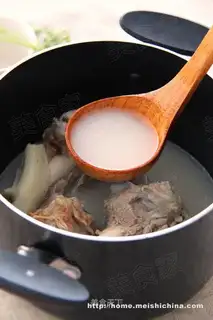 bone soup
 Gold needle fat cow
 The meat pine tofu
 Fruit and pear
 The fragrance of peanut rice