As people's living standards improve, the quality of the New Year's Eve dinner has been rising year after year. Nowadays, more and more people prefer to have their New Year's Eve dinner at restaurants and hotels. On one hand, they can enjoy a variety of delicious cuisines, and on the other, they spare their family the toil of cooking. Although many restaurants have thoughtfully set up combination meals, most of them are not nutritionally satisfactory from a nutritional standpoint. Therefore, it is particularly important to learn some tips for ordering dishes and avoiding "pitfalls."
Freshly squeezed fruit and vegetable juice
Myth 1: Drinking sweet beverages before the meal
At some point, various sweet drinks became an indispensable choice after guests are seated. Especially for children, who cannot drink alcohol, parents often let them indulge in drinks like Coca-Cola and Sprite. However, carbonated drinks not only have extremely low nutritional value but can also interfere with the digestive absorption of food. In comparison, pure fruit juice, vegetable juice, and fresh soy milk are better choices, while plain yogurt offers good protection for those who drink alcohol. Some restaurants make their own fruit juices, corn juices, pumpkin juices, etc., which are fresh in taste and stylish in style and well worth trying.
Myth 2: Cold dishes with meat and fish take center stage
During a banquet, it's inevitable to order a few cold dishes to whet the appetite. Cold dishes have less oil and contain both meat and vegetables. If more refreshing vegetarian dishes were ordered, they could balance the problems of excessive oil and excess protein in the main courses. However, most diners habitually order meat and fish cold dishes like marinated beef, which causes the cold dishes to lose their role in balancing nutrition and exacerbates the excess of protein.
A better choice is to focus on vegetarian dishes like raw mixed vegetables, vegetables with dipping sauce, starchy foods (such as buckwheat noodles, fern root noodles, etc.), root and stem vegetables (such as lotus root, Chinese yam, etc.), and fruit salads, paired with one or two low-fat meat, fish, and bean products. Using these refreshing foods to start the meal can ensure the intake of dietary fiber and potassium and magnesium elements in a meal, and also avoid wasting most of the protein as energy.
Blanched Kai-lan
Myth 3: Excessive cooking oil and heavy seasoning
Many northern residents prefer strongly flavored dishes, believing that this is the only way to be satisfying. However, a dish should have a balance of salty and light, sour and spicy flavors to avoid overloading the taste buds. Furthermore, heavy-flavored cooking often masks the unpleasant smell of stale ingredients and a lower-quality texture, so restaurants are often enthusiastic about encouraging diners to order such dishes.
When ordering, you should appropriately order some lightly seasoned dishes, such as those prepared by steaming, blanching, or stewing. Two or three heavily flavored dishes are enough for a satisfying experience, and you can add one or two sour and spicy or fresh and sour dishes to refresh the palate. This way, there is a focus, a contrast, and a lingering aftertaste, creating a rich flavor profile without being too greasy.
Myth 4: Too much seafood is never enough
Some diners especially love freshwater and seafood products, feeling that only eating these can make a banquet seem high-class. In fact, although aquatic products are rich in nutrients and delicious in taste, they are also a "hard-hit area" for pollution. The characteristic of aquatic products is that they concentrate heavy metals. If the proportion of seafood and fish dishes on a table is too high, the total intake will inevitably be large, and there is a greater risk of pollutants exceeding safety limits. This not only increases the body's detoxification burden but can even lead to poisoning in severe cases.
It is recommended to control the number of aquatic product dishes to 1-3 per meal, and the consumption should also be controlled, with no more than 200 grams per meal being ideal.
Stir-fried Yellow Ear, King Oyster Mushroom, and Tofu
Myth 5: Vegetables, fungi, and algae are nowhere to be seen
One of the great dangers of banquets is the severe imbalance between animal and plant foods. Because a large amount of protein consumed in one meal cannot be fully utilized by the body, a large amount of protein is broken down for energy use, while producing nitrogenous waste, which increases the burden on the liver and kidneys and hinders the acid-base balance.
During the holidays, one should choose high-quality vegetarian foods that are not usually eaten on a daily basis, such as fungi, high-end new vegetables, health nuts, and algae and tubers with health benefits. These vegetarian dishes can not only promote health but also reduce the burden on the digestive system, killing two birds with one stone. At the same time, they also highlight the diner's health awareness and fashionable taste.
Myth 6: Drinking a savory soup after the meal
It is said that "drinking soup before a meal makes you more beautiful," but northern banquets rarely see appetizing soups; instead, oily and salty soups are served during and after the meal. In fact, a rich banquet is not suitable for drinking large amounts of thick soup afterward. This is because the numerous dishes have already provided an excessive amount of salt and fat, which the body can hardly bear; drinking soup afterward will inevitably increase the intake of salt and calories, which is not beneficial to health.
Drinking a little soup before the meal, not too much, can also reduce the amount of food consumed, which is beneficial for those who are losing weight. After or during the meal, it is more appropriate to eat congee made from grains and beans, or simply use fragrant tea to cleanse the palate.
Steamed Cornmeal Cakes with Milk Flavor
Myth 7: Only eating dishes, not staple food
There is currently an unwritten rule that at banquets, one only eats dishes and not rice, and it is only after drinking and eating to one's heart's content that one remembers to ask about the staple food. However, consuming a large amount of food rich in protein but lacking carbohydrates on an empty stomach is not only bad for digestion, but the protein is also wasted and produces waste.
From a nutritional and health perspective, if you are not drinking alcohol, it is a good idea to serve a small bowl of rice or congee before the meal. This can not only reduce the waste of protein but also alleviate the problem of greasy food harming the stomach. Introducing some starchy ingredients into the cold dishes can also alleviate these problems to a certain extent.
Myth 8: Crispy snacks as a substitute for staple food
Currently, most restaurants have introduced a variety of fancy staple foods, such as various crispy snacks, fried rice, paratha, and fried pastries, to replace rice and noodles, presenting them to guests as rich and fashionable. These fancy staple foods are much higher in fat than rice and noodles, especially the crispy and paratha types, which have a fat content of over 30%, and even a high proportion of saturated fat. If plant cream and shortening are used, it will also bring "trans fatty acids" which are extremely detrimental to heart health. Using them to replace traditional staple foods is clearly unwise.
After a delicious meal, it is best to drink some light congee, which is good for the stomach and can improve nutritional balance. If various coarse grains, tubers, beans, and some health-promoting ingredients are added, it can better reflect the diner's emphasis on health quality.
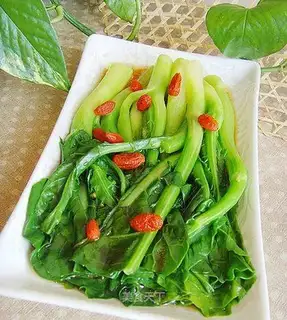 boiled kale
 Milk flavor corn wowtou
 Freshly squeezed fruit and vegetable juice
 The Five Valley Boots