A selection of classic Japanese recipes. Here are the three most delicious and classic Japanese recipes. Save them, you're welcome!
Tuna Sushi Rolls
Tuna and Vegetable Sushi Rolls
Main Ingredients: 350g rice, 1 can of tuna, 3 sheets of nori seaweed
Supplementary Ingredients: appropriate amount of oil, 3g salt, 2 eggs, appropriate amount of salad dressing, 25ml sushi vinegar, appropriate amount of carrot, appropriate amount of cucumber, appropriate amount of broccoli
Steps
1. Prepare all the ingredients.
2. Add sushi vinegar to the cooled rice and mix well. The rice should not be too sticky at this point.
3. Shred the carrot, cut the cucumber into strips, and slice the broccoli stems into thin strips.
4. Bring water to a boil in a pot, add a little salt and a few drops of oil. Blanch the broccoli, stems, and carrot shreds until cooked, then remove and set aside.
5. Boil the eggs, add two spoonfuls of salad dressing, and mash into egg salad (adding salad dressing is for better flavor, but it can be omitted).
6. On a bamboo mat, place a sheet of nori. Spread a thin, even layer of rice over it, pressing flat with a spoon. Leave a 1cm border of nori uncovered at one end (this makes it easier to seal).
7. Cover the rice with plastic wrap and smooth it out.
8. Gently lift the nori (along with the rice and plastic wrap) and flip it over. The order should now be: bamboo mat, plastic wrap, rice, nori.
9. On the nori, arrange the cucumber strips, blanched carrot shreds, broccoli stems, mixed egg salad, and tuna.
10. Slowly roll the bamboo mat and plastic wrap forward, while simultaneously pulling the mat and plastic wrap back as you roll.
11. Once fully rolled, squeeze the roll firmly with both hands using the bamboo mat (this ensures the roll is tightly packed).
12. Remove the bamboo mat and plastic wrap. Finely chop the blanched broccoli florets and dice the carrot shreds. Roll the finished sushi in the chopped vegetables (broccoli florets, carrot dice) to coat it.
13. Cut the roll into 1.5cm wide pieces. Clean the knife with water after each cut for a neat and beautiful finish.
Octopus Balls
Octopus Balls
Ingredients
Main Ingredients: 100g cake flour, 2 eggs, 30g onion puree
Supplementary Ingredients: appropriate amount of salad dressing, appropriate amount of aonori (green seaweed flakes), appropriate amount of takoyaki sauce, appropriate amount of bonito flakes, appropriate amount of salt, appropriate amount of soy sauce, 370ml water
Steps
1. Prepare tools: a special takoyaki pan, a simple oil brush.
2. Prepare the basic batter.
3. From my experience, adding about 30g of onion puree will make the flavor more fragrant and closer to the Osaka style.
4. If the prepared batter is not used immediately, remember to stir it well before using, as it tends to settle easily.
5. Over medium heat, pour the batter to fill the molds. Add the fillings and rotate the pan 90 degrees.
6. After one full rotation, continue to rotate another 90 degrees.
7. Then, after a short while, flip them multiple times to color them evenly and round them out.
8. When they are nicely browned, brush the surface with oil using a brush and continue to cook for a bit longer until they are done.
9. A close-up shot before taking them out. Aren't they round? However, because the inside is soft, they will become wrinkled after coming out of the pan, which is very normal.
10. This is what they look like after resting for a moment. But they are still hot!
Japanese Tamagoyaki (Japanese Rolled Omelette)
How to make Tamagoyaki
1. Whisk the eggs, then add Japanese dashi stock, sake, salt, and sugar. Mix well to form the egg mixture (the mixture should not be foamy).
2. Heat a flat pan. When a drop of egg mixture sizzles upon contact with the pan, it's ready to start.
3. Lightly coat the pan with a thin layer of salad oil. Pour in a suitable amount of egg mixture to cover the pan surface. Cook over medium-low heat. Poke any bubbles that form with chopsticks. When the egg is half-set, fold the omelette in half and move it to the side of the pan.
4. Re-coat the empty part of the pan with oil. Pour in another layer of egg mixture, slightly lifting the edge of the existing omelette to let the new mixture flow underneath, ensuring the entire pan is covered. Cook until half-set, then fold and move to the side again. Repeat this process until all the egg mixture is used up.
5. Use a spatula to shape the finished tamagoyaki against the edge of the pan, then transfer it to a plate. Let it cool, and it's done.
6. Making Japanese dashi stock can be troublesome and difficult to master. It is recommended to buy canned Japanese dashi stock or use a seafood seasoning (dashi powder) to cook it yourself.
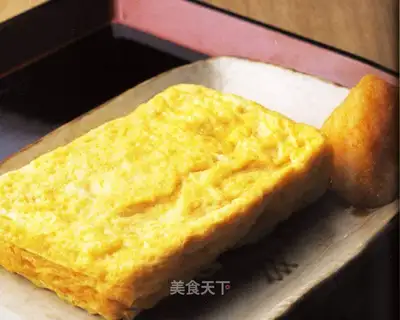 Japanese thick egg fever
 octopus
 ♪ Caramel omelet rice ♪