Eating leeks in the spring is good. In fact, yellow chive (also known as chive sprout, yellow chive sprout, or white chive) is even more fresh, tender, fragrant, and delicious than regular chive. Moreover, yellow chive is extremely rich in calcium, phosphorus, iron, carotene, and vitamin C, making it a nutritious vegetable that aids digestion. Especially when stir-fried with lean pork, it has a great effect on supplementing calcium.
Yellow chive cooks easily, so do not stir-fry it for too long. It is best when the leaves are not withered, rotten, or green. Consume it immediately after purchase. Store it in a cool, dry, and ventilated place.
Yellow Chive Sprout Stir-fry with Pork
Yellow chive is a variant of chive, but it's not really a variant because it's not a fundamental change. It's just grown using a different method. Generally, when the chive sprouts, they are covered to prevent them from being exposed to sunlight. After about half a month, because they grow in complete darkness and cannot perform photosynthesis to produce chlorophyll, the leaves start to turn from green to yellow, becoming yellow chive. Yellow chive is more fresh, tender, fragrant, and delicious than regular chive, with a light, sweet taste and not as pungent. Yellow chive is usually stir-fried or used as a filling for some wrapped foods. It should be noted that yellow chive should not be consumed with alcohol, spinach, honey, or beef, and it should not be eaten after being stir-fried and left overnight.
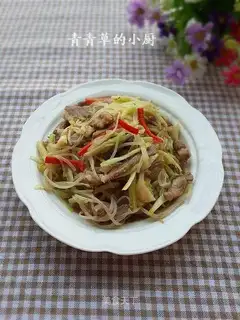 Scrambled meat