Chestnuts, we've seen them many times, and in our daily lives, we often eat them as a snack. But who knew this "snack" is so nutritious!!
Chestnuts are rich in nutrients, including carbohydrates, protein, fat, various vitamins, and inorganic salts. Chestnuts have a good preventive and therapeutic effect on hypertension, coronary heart disease, and atherosclerosis. For the elderly, regularly eating chestnuts is greatly beneficial for anti-aging, preventing decline, and prolonging life.
Sugar-baked Chestnuts
Chestnuts have many uses. They can be boiled into a soup for consumption by those who are weak after an illness or have sore and soft limbs; they can be cooked into a porridge with sugar, which has the effect of tonifying kidney qi and strengthening bones and muscles; a few dried chestnuts can be eaten in the morning and evening, or fresh chestnuts can be simmered, for the elderly with kidney deficiency; for sprains, contusions, and bruises, the raw chestnut flesh can be ground into a paste and applied to the affected area. It should be noted that raw chestnuts are difficult to digest, and cooked chestnuts can easily cause qi stagnation, so one should not eat too many. People with indigestion or excess internal heat should not eat them.
The Nutritional Value of Chestnuts
1. The rich unsaturated fatty acids, vitamins, and minerals in chestnuts can prevent and treat diseases such as hypertension, coronary heart disease, arteriosclerosis, and osteoporosis. It is a nourishing treasure for anti-aging and prolonging life, known as the "king of dried fruits," and is called the "ironclad crop" and "woody grain" along with jujubes and persimmons.
2. Chestnuts contain riboflavin, and eating them often is beneficial for children's persistent mouth sores and adult oral ulcers.
3. Chestnuts are a type of dried fruit with a high carbohydrate content, which can provide the body with more energy and help with fat metabolism. They have the effect of tonifying qi and strengthening the spleen, and nourishing the stomach and intestines.
4. Chestnuts are rich in vitamin C, which can maintain the normal function of teeth, bones, blood vessels, and muscles. It can prevent and treat osteoporosis, soreness and weakness in the waist and legs, pain in the bones and muscles, fatigue, etc., and delay human aging, making it an ideal health fruit for the elderly.
Braised Pork with Chestnuts
Other Values
The entire chestnut plant is a treasure. It can be processed into dried chestnuts, chestnut flour, chestnut paste, chestnut puree, pastries, canned foods, etc. Chestnut soup is a nutritious candy suitable for all ages. The wood of the chestnut tree is hard, straight-grained, and resistant to decay and moisture, making it a good material for military, automotive, shipbuilding, and furniture; the leaves, bark, and burrs are rich in tannin, from which tannin extract can be obtained; the flowers are a good source of nectar. All parts of the chestnut can be used for medicinal purposes. Chestnuts can strengthen the spleen and benefit qi, and eliminate damp-heat. The shell can be used to treat nausea as an astringent; the bark can be decocted to wash erysipelas; the root can treat symptoms such as partial kidney deficiency.
The chestnut nut is widely used as a food in Europe, Asia, and the Americas. In medieval Southern Europe, it was a major source of carbohydrates for people living in the forest.
Chestnut wood is very strong, durable, and not easily corroded. It is dark in color with beautiful grain, making it an excellent material for decoration and furniture. However, because chestnut trees grow slowly, large-sized chestnut wood is very expensive.
The bark of the chestnut tree can be used to extract tannic acid and tannin, which are important raw materials for the leather industry. The leaves can be used to feed oak silkworms.
Chestnuts should not be eaten in excess. Too many raw ones are hard to digest, and too many cooked ones can easily cause qi stagnation. Diabetics should eat less or none, because the sugar content of chestnuts is very high.
Braised Chicken Wings with Chestnuts
Medicinal Food Efficacy
The most popular way to eat chestnuts in China today is sugar-roasted chestnuts. A mixture of sugar sand and sand is used to stir-fry the chestnuts with the blackened sand. This serves two purposes: to ensure even heating of the chestnuts and to prevent the loss of sugar in them. The roasted chestnuts are sweet and delicious. In Beijing snacks, there are small steamed buns made of chestnut flour, which is said to be a recipe passed down from the imperial palace and was once appreciated by Empress Dowager Cixi.
Chestnuts have the function of nourishing the stomach, strengthening the spleen, tonifying the kidneys, and strengthening the muscles. "Compendium of Materia Medica" states: "Chestnuts are sweet in taste and warm in nature, entering the spleen, stomach, and kidney meridians." Tang Dynasty Sun Simiao said: "Chestnuts are the fruit of the kidney, and those with kidney disease should eat them." "Compendium of Materia Medica" points out: "Chestnuts treat kidney deficiency, weakness in the waist and legs, can tonify kidney qi, and nourish the stomach and intestines." "Someone with internal cold had a sudden, severe diarrhea, and was cured after eating two to three dozen simmered chestnuts." Su Dongpo's brother Su Zeyou once wrote a poem praising the medicinal value of chestnuts: "When I grew old, I developed problems with my waist and feet. An old man passed down a recipe. When guests came, I would tell them of the morning and evening practice, swallowing slowly the white jade-like liquid." Eating chestnuts can benefit qi and blood, nourish the stomach, tonify the kidneys, and strengthen the liver and spleen; eating them raw also has the effect of treating soreness and pain in the waist and legs, relaxing the muscles and activating the collaterals. The high starch content in chestnuts provides high energy, potassium helps maintain a normal heartbeat rhythm, and fiber strengthens the intestines and keeps the excretory system functioning normally.
Because chestnuts are rich in soft dietary fiber, diabetics can also enjoy them in moderation. However, raw chestnuts are hard to digest, and cooked ones can easily cause qi stagnation, so one should not eat too many at a time. It's best to eat chestnuts as a snack between meals or incorporate them into dishes, rather than eating a large amount after a meal, to avoid excessive calorie intake and maintain a healthy weight. Fresh chestnuts can easily become moldy and spoiled, and eating moldy chestnuts can cause poisoning, so spoiled chestnuts cannot be eaten.
Medically, chestnuts are considered sweet, warm, and non-toxic, with the effect of strengthening the spleen and supplementing the liver, and strengthening the body and bones. Regularly eating them raw can treat weakness in the waist and legs; the shell and bark have an astringent effect; fresh leaves can be used externally to treat skin inflammation; flowers can treat scrofula and diarrhea, and the root can treat hernia. Folk remedies often use chestnuts: eating one or two raw chestnuts in the morning and evening can treat kidney deficiency in the elderly with weak and frequent urination; raw chestnuts pounded into a paste and applied to the affected area can treat sprains, contusions, and swelling and pain of the muscles and bones, and has the effect of relieving pain, stopping bleeding, and absorbing pus.
Containing large amounts of starch, protein, fat, B vitamins, and other nutrients, it is known as the "king of dried fruits." It can prevent and treat diseases such as hypertension, coronary heart disease, arteriosclerosis, and osteoporosis.
So it turns out our usual "snack" is so nutritious. It seems I have an excuse for my gluttony from now on, hahahaha!
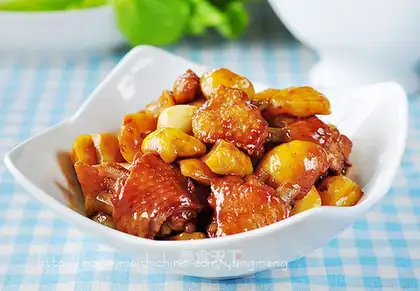 Roasted chicken fin with chestnut
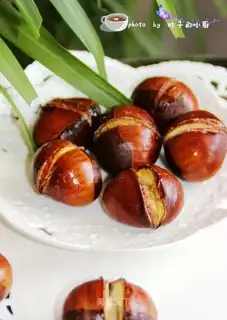 Sugar roasted chestnuts
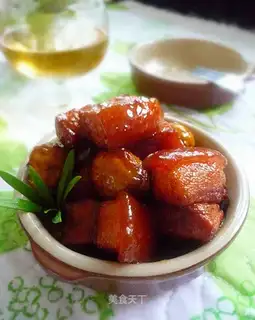 Scrambled meat