Before learning the tips below, the author's way of making congee was simply to add rice and water to the pot and wait for it to boil. The taste of the congee, however, is best left unsaid. Perhaps many people, like the author, would ask: "What kind of taste can congee have?" Well! Try making a pot of congee using these 6 steps, and you'll know!
1. Soak the rice before cooking
Before making congee, it's a good idea to soak the rice in cold water for half an hour to allow the grains to expand. The benefits of doing this are: ① It saves cooking time; ② When you stir the congee, the rice grains will swirl in one direction; ③ The resulting congee is soft and has a great texture.
Chinese Chestnut Congee
2. Add the rice after the water has boiled
Most people add cold water and rice to the pot at the same time when making congee. However, true masters use boiling water. Why? You've probably experienced the congee at the bottom of the pot getting scorched when using cold water, right? Adding the rice to boiling water prevents this phenomenon and also saves more time than cooking with cold water.
3. Control the heat when cooking congee
When making congee, bring it to a boil over high heat first, then reduce to a low simmer and cook for about 30 minutes. Never underestimate the importance of adjusting the heat, as the aroma of the congee is released this way!
4. Don't forget to stir the congee
Many people never stir the congee when cooking, or some stir only because they're afraid it will stick to the bottom of the pot. In fact, the real purpose of stirring is to achieve a thick consistency, meaning it makes each grain of rice full and soft.
The stirring technique is: stir a few times when you add the rice to boiling water, then cover the pot. When it has been simmering over low heat for 20 minutes, start stirring continuously for about 10 minutes until the congee reaches a thick, soft consistency before serving.
Millet and Pumpkin Congee
5. Don't forget to add a little oil when making congee
This might seem strange to you—adding oil to congee? Yes, about 10 minutes after reducing the heat to a simmer, add a little salad oil. You'll find that not only will the finished congee have a bright color, but it will also taste exceptionally fresh and smooth.
6. Cook the base and ingredients separately
You can add some of your favorite vegetables and meats to congee to increase its nutritional value. Most people have the habit of throwing everything into the pot at once, but that's not how century-old congee shops do it. The congee base is the base, and the ingredients are ingredients. They are cooked separately—the base is boiled, and other ingredients are blanched—before being combined and simmered together for no more than 10 minutes. This method results in a clear, not murky, congee where the flavor of each ingredient is fully extracted without mixing. This is especially important when the ingredients are meat or seafood.
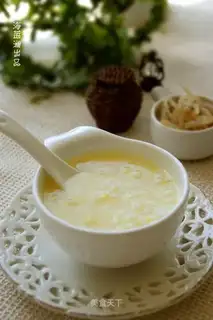 Chestnut porridge
 Jell-O