Summer is the hottest and most humid season of the year. A slight oversight in diet can lead to some unnecessary trouble, but summer is also the season with the most variety and highest yield of vegetables. We often say that we should eat more vegetables in the summer, so which vegetables are suitable for eating in the summer?
【Beijing】 Tomato and Grapefruit Juice
Seasonal vegetables suitable for summer
1. Tomatoes
Summer is the season for tomatoes. Many people love tomato and egg soup, which is appetizing and nutritious. It's not only pleasing to the palate but also good for the body. It can help prevent and improve various physical ailments, while also reducing fat and detoxifying, helping to change an obese constitution. It is an indispensable food for weight loss diets.
Tomatoes are rich in lycopene, and its antioxidant effect can effectively inhibit the activity of active oxygen, giving it high anti-cancer properties. Additionally, vitamin K can help prevent osteoporosis, and vitamin E is a great helper for maintaining liver function and alleviating hangovers.
2. Eggplant
The purple skin of eggplant is rich in vitamins, a quality unmatched by other vegetables. Among these, vitamin P can increase the elasticity of capillaries and improve microcirculation, playing a certain preventive role for patients with hypertension, arteriosclerosis, and scurvy. The special substance contained in the fiber of eggplant has the effect of lowering cholesterol. Compared to ordinary purple eggplants, the skin of white eggplant has medicinal value and can be used for removing freckles and beautifying, as well as treating rheumatic joint pain.
Ginger Juice Green Beans
3. Green Beans
Green beans are a "regular" on the dining table. Although the calcium content of green beans is not very high, they contain a large amount of vitamin K. Green beans include runner beans, string beans, and lima beans. Runner beans are large, thick-fleshed, and have large beans, making them less likely to cook through, so extra care must be taken during cooking. The method for preventing green bean poisoning is very simple: just cook all green beans until they are thoroughly soft. Also, be careful not to buy or eat old green beans, and remove the tips and pods of the green beans, as these parts contain more toxins.
4. Bitter Melon
In the hot summer, it's easy for people to suffer from "heatiness" (internal heat). Eating bitter melon can relieve summer heat and fatigue, stimulate appetite, whet the appetite, aid digestion, and help improve immunity, making it the most suitable gourd vegetable for summer. Bitter melon is bitter in taste and cold in nature, with the function of clearing heat and purging fire. When the weather gets hot, people start to deliberately eat more bitter melon to clear heat and relieve summer heat. Although bitter melon is bitter, the bitter it is, the better. This is because the more bitter the melon, the more momordicin it contains, and the higher its nutritional value.
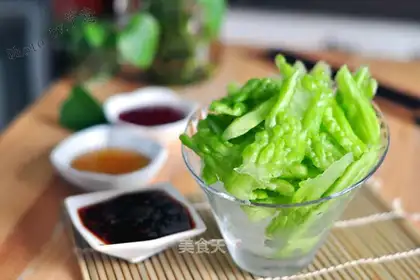
Chilled Bitter Melon
5. Winter Melon
Summer is the season for various melons to be available. Eating more winter melon at this time can quench thirst, relieve summer heat, reduce internal heat, and dryness, and it also has many therapeutic effects. Traditional Chinese medicine believes that winter melon is cool in nature and sweet and bland in taste. It enters the lung, large intestine, and bladder meridians, and has the effects of clearing heat and relieving summer heat, making it an excellent remedy for summer heat.
Moreover, the cool nature of winter melon is not as strong as that of bitter melon or radish, so even pregnant women do not need to avoid it particularly. Patients with gout, high blood pressure, heart disease, liver disease, as well as beriberi and edema, may be troubled by ascites and difficulty urinating. They can boil winter melon and then eat it to help with urination and reduce edema. When making winter melon soup, don't rush to peel or remove the seeds. It's best to wash the winter melon skin and cook it with the skin and seeds in the soup. After it's cooked, remove the winter melon skin and seeds to achieve a diuretic effect.
6. Asparagus
Asparagus is sweet and cold in nature, with the effects of clearing heat and promoting urination. Therefore, in the scorching summer, eating asparagus is a good choice for people. In addition, the tips of green asparagus are rich in vitamin A, which is also very beneficial for improving eyesight.
Asparagus is rich in flavonoids, which have antioxidant effects. Regular consumption has a good effect on anti-aging and also has anti-tumor properties. Cold-dressed asparagus is both healthy and appetizing, making it very suitable for summer.
Suoyi Cucumber (Scallion Oil Cucumber)
7. Cucumber
Cucumber has the effects of clearing heat, promoting urination, removing dampness, detoxifying and reducing swelling, and promoting the production of body fluids to quench thirst. It can assist in treating conditions such as fever and thirst, sore throat, wind-heat eye diseases, damp-heat jaundice, and difficulty urinating. The malic acid contained in cucumber can inhibit the conversion of carbohydrates into fat. In addition, the cellulose in cucumber helps to promote the excretion of putrefactive substances in the human intestine and lower cholesterol, thus strengthening the body.
Cucumber is rich in vitamin E, which can play a role in prolonging life and anti-aging. The cucumber enzyme in cucumber has strong biological activity and can effectively promote the body's metabolism. Mashing cucumber to apply to the skin has the effect of moisturizing the skin and smoothing wrinkles.
8. Luffa
Luffa, also known as hanging melon, is native to the ocean and was introduced to China in the Ming Dynasty, becoming a commonly eaten vegetable. Luffa has high medicinal value, and all parts of it can be used as medicine. In summer and autumn, green luffa is abundant on the market. Traditional Chinese medicine believes that luffa is sweet in taste and cool in nature, and it enters the liver and stomach meridians. It has the effects of clearing heat and resolving phlegm, relieving cough and asthma, and cooling blood and detoxifying. Luffa is highly nutritious and contains various nutrients such as protein, fat, sugar, calcium, iron, phosphorus, carotene, and vitamins.
Not only is fresh luffa effective, but traditional Chinese medicine also believes that the network of an old luffa, similar to the body's meridians, can help guide the body's meridians to be unobstructed and qi and blood to flow smoothly. Luffa is rich in juice and should be cut and cooked immediately to prevent its nutritional content from being lost with the juice.
Garlic Steamed Luffa
9. Celery
Celery contains nutrients such as protein, fat, carbohydrates, fiber, vitamins, and minerals. Among them, the content of vitamins B and P is relatively high. The content of mineral elements calcium, phosphorus, and iron is even higher than that of general green vegetables. Celery is not only nutritious but also has medicinal value. Celery is also a cool vegetable and can be eaten appropriately in the summer according to dietary preferences.
The leaf stalks of celery are high in water and low in calories, making them an excellent source of potassium. Celery is high in iron content and contains a large amount of crude fiber, which can stimulate intestinal peristalsis and reduce edema. A study by the University of Milan in Italy showed that celery contains chemicals that stimulate the body's fat consumption. Coupled with its rich crude fiber, it facilitates bowel movements, thereby reducing the absorption of fat and cholesterol, resulting in a good weight loss effect.
 Chinese cucumber salad
 Garlic silk melon
 Ice cream
 Ginger Bean
 Pork
Pork