Coughing is a very painful ordeal, and the course of the illness is often long. Colds, heatiness, bacterial infections, dry air, and dust pollution can all cause coughing. How can you make a cough go away faster? In fact, many foods in daily life are super effective for treating coughs. The editor has selected 11 kinds of foods for you to help you stay away from coughs and have a healthy body.
1. Rock Sugar
The "Ben Zai Xin" states: "Rock sugar can 'stop coughing and resolve phlegm'," and it is best consumed by boiling it in water or letting it dissolve in the mouth. Therefore, it is used in many simple cough remedies.
The effects of rock sugar, white sugar, and brown sugar are different. Brown sugar has the effect of promoting blood circulation and dispelling stasis, making it suitable for women during their menstrual period or after childbirth. Rock sugar and white sugar can clear heat, reduce inflammation, relieve internal heat, stop coughs from heat, and resolve thick phlegm. For people with a cough, consuming rock sugar has the effect of resolving phlegm and stopping coughs.
2. Snow Pear
The "Compendium of Materia Medica" records that the pear, or "li," has a nature that flows downward. It has effects such as treating wind-heat, moistening the lungs, cooling the heart, resolving phlegm, reducing fire, and detoxifying.
Snow pears have the effect of moistening the lungs, clearing dryness, stopping coughs, and resolving phlegm. Therefore, it is very effective for symptoms such as dryness, itching, pain, hoarseness, thick phlegm, constipation, and dark urine in patients with acute tracheitis and upper respiratory tract infections.
Snow pears can be eaten raw, steamed, or made into soups and puddings. However, snow pears are cooling in nature, so one should not eat too many at a time. Especially for those with a weak spleen and stomach, cold abdominal pain, or blood deficiency, they should not be eaten in excess, as it can easily damage the spleen and stomach.
Rock Sugar Snow Pear
3. Kumquat
Kumquats have anti-inflammatory, expectorant, and qi-regulating, cough-suppressing effects, and have a significant therapeutic effect on bronchitis.
The characteristic of kumquats is that the peel and flesh are eaten together. After chewing, one immediately feels the throat moistened and a fragrant taste in the mouth. 80% of the vitamin C in kumquats is concentrated in the peel, reaching as high as 200 milligrams per 100 grams. In addition to being eaten fresh, kumquats can also be steeped in tea for drinking. A major use is processing them into candied kumquats, licorice kumquats, jam, tangerine peel wine, and kumquat juice. The peel can also be used to extract aromatic oil, which has high medicinal value.
4. Walnut Kernels
Walnut kernels contain many trace elements needed by the human body and are an important auxiliary material in traditional Chinese patent medicines. They have functions such as regulating qi and nourishing blood, stopping coughs and resolving phlegm, moistening the lungs, and nourishing the kidneys. When coughing, chewing some walnut kernels can effectively relieve the cough.
Candied Walnuts
5. Monk Fruit
Monk fruit is a valuable medicinal material. It is cooling in nature and sweet in taste, and its function is to clear the lungs and moisten the intestines. It is mainly used for pertussis, phlegm-fire coughs, blood-dryness constipation, etc. It has a good therapeutic effect on acute tracheitis, acute tonsillitis, throat inflammation, and acute gastritis. Using a small amount of monk fruit, steeped in boiling water, can both refresh the mind and produce saliva, and prevent respiratory infections. Taking it year-round can prolong life.
Monk fruit juice can also be used for cooking, with a fresh and pleasant aroma. Monk fruit is praised by people as the "immortal fruit."
6. Olive
Olives have the effects of clearing heat and detoxifying, moistening the throat and resolving phlegm, promoting the production of saliva to quench thirst, and can be used as an auxiliary treatment for sore throat, vexation and thirst, coughing with blood-streaked phlegm, etc., caused by various diseases.
Cabbage and Monk Fruit Soup
7. White Radish
White radish has the effects of lowering qi, aiding digestion, eliminating phlegm, moistening the lungs, detoxifying, promoting the production of saliva, harmonizing the middle jiao to stop coughs, and promoting urination and bowel movements.
For coughing with phlegm, it is best to chop it finely, simmer it with honey, and chew it slowly. For pharyngitis, tonsillitis, hoarseness, or aphonia, you can mash the radish and take it with ginger juice. For hemoptysis, it can be cooked and eaten with lamb or crucian carp. To prevent colds, it can be boiled for consumption.
White radish can be eaten raw to promote digestion. In addition to aiding digestion, it also has a strong anti-inflammatory effect. Also, white radish juice has a cough-suppressing effect. Pour half a cup of sugar water into a glass bottle, then fill it with shredded white radish. Let it sit overnight, and you will have white radish juice.
8. Winter Melon
Winter melon has the effects of resolving phlegm and clearing heat. The "Dian Nan Ben Cao" also says it can "treat wheezing and asthma, moisten the lungs and clear heat phlegm, and stop coughs." Winter melon seeds also have the effect of moistening the lungs and resolving phlegm.
Braised Winter Melon with Dried Radish
9. Celery
Also known as early celery or medicinal celery. It has the effect of clearing heat and calming the liver, and is especially suitable for whooping cough of the type where liver fire invades the lungs. The "Food Therapy" once introduced: "For whooping cough: use 500 grams of the entire celery plant, wash and mash it to extract the juice, add a little salt, warm it in a double boiler, and take one wine glassful in the morning and evening for several days."
10. Purslane
Also known as purslane, horse-treading vegetable, sour vegetable, or peace vegetable. It has a heat-clearing effect, and it is believed in folk medicine that it is suitable for children with whooping cough. According to an introduction in the 1959, No. 3 issue of the "Shanghai Journal of Traditional Chinese Medicine": For treating whooping cough in children, a 50% purslane syrup made from purslane alone is taken. Generally, after eating for 3 consecutive days, the cough decreases, the duration of attacks shortens, and the symptoms also alleviate.
Celery with Wood Ear Mushroom
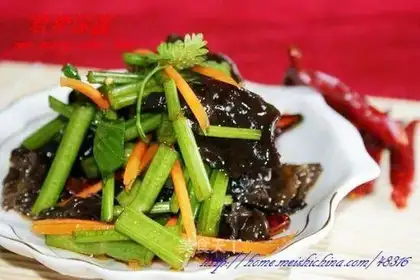 Celery mixed with fungus
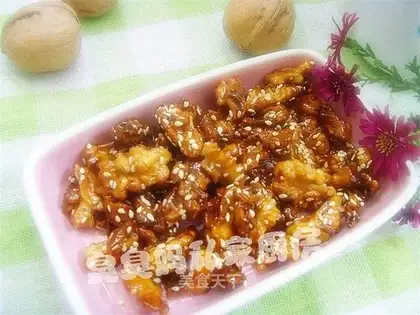 amber walnut kernels
 rock sugar Sydney
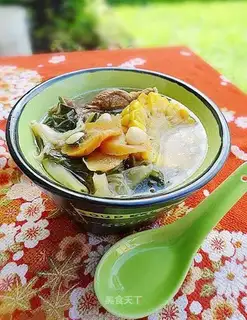 Dried vegetables and grosvenori soup
 Roach dry-burned melons