Introduction: Scallions, garlic, and chives are many people's favorites. As seasonings, they are all very fragrant. These three common vegetables, though seemingly unremarkable, have extremely high nutritional value. Regular consumption can help prevent diseases and fight cancer cells.
I. What are the nutritional values of chives?
Chives are also a highly nutritious food. In addition to containing protein, fat, and carbohydrates, what is more worth recommending are its vitamins and minerals. For example, in 100 grams of chives, the nutritional value table records Vitamin A: 235 micrograms, Carotene: 1410 milligrams, and Potassium: 247 milligrams.
Chives: What does it mean that the values for vitamins and carotene are so high? This is very suitable for improving vision and relieving eye fatigue, especially for people who use computers for long periods. High carotene content is also very beneficial for enhancing immunity, preventing tumors, and providing antioxidant and anti-aging effects! Foods high in potassium are very suitable for people with high blood pressure. Traditional Chinese medicine also says that chives can benefit the liver and strengthen the stomach: Chives contain special ingredients such as volatile essential oils and sulfides, which emit a unique pungent aroma, helping to regulate liver qi, increase appetite, and enhance digestive function. Stir-fried chives with eggs, chive pancakes, and chive dumplings are all excellent choices.
Stir-fried Chives with Eggs
Selection
On the market, chives are generally of two types: wide-leaf and narrow-leaf. Narrow-leaf chives have long, thin leaves, a darker color, higher fiber content, and a rich aroma. Wide-leaf chives have broad, thick leaves, a lighter color, are more tender, and have a milder taste. When buying, you can choose wide or narrow-leaf chives according to your personal preference. Do not buy chives with withered, yellowed leaves or those with insect holes.
How to Eat
1. Chives can be stir-fried, mixed, used as an ingredient, or made into a filling.
2. Eating chives in the spring is beneficial to the liver. Chives are of the best quality in early spring, followed by late autumn, and are the worst in summer. There is a saying, "Chives eaten in spring are fragrant, but those eaten in summer are foul."
3. Leftover cooked chives should not be eaten again.
4. When paired with shrimp, chives can provide high-quality protein, and the crude fiber in chives can promote gastrointestinal motility and keep bowel movements regular.
Chive and Shrimp Pan-fried Dumplings
II. The Nutritional Value of Garlic
Spring is the season when the body's functions are most vigorous. Creatinine in garlic is a major component involved in muscle activity. Allicin in garlic, combined with Vitamin B1, produces alithiamine, which can eliminate fatigue and enhance physical strength.
The health benefits of garlic also include promoting metabolism, lowering cholesterol and triglyceride levels, and having the effect of lowering blood pressure and blood sugar. Therefore, it has a certain therapeutic effect on hypertension, hyperlipidemia, arteriosclerosis, and diabetes.
Many people are reluctant to eat garlic because they are afraid of bad breath. Experts recommend chewing tea leaves after eating garlic, especially jasmine tea and Tieguanyin, which are most effective. In addition, holding warm milk in the mouth for a moment and then slowly swallowing it can also effectively remove the odor.
Golden Fragrant Garlic
In fact, what one should pay more attention to when eating garlic is not the bad breath, but the dietary taboos: People with a weaker constitution should only eat one or two cloves of garlic at a time, otherwise, it is easy to get "heatiness" (a concept in Traditional Chinese Medicine). In addition, it is best to eat garlic in the morning and at noon, as eating it in the evening can more easily irritate the nasal, pharyngeal, and gastric mucosa.
Onions are a staple in the daily kitchen. They can not only be used as a seasoning but also can prevent and control diseases, making them a fine vegetable and a good medicine. They are mostly used for stir-frying, sautéing, deep-frying, and pan-frying; Southern China produces more scallions, a common seasoning also called shallots, which are generally eaten raw or used in cold dishes.
III. The Health Benefits of Scallions
1. Antipyretic and Expectorant:
The active ingredients in scallions, such as their volatile oil, can stimulate the body's sweat glands to induce sweating and dissipate heat; scallion oil can stimulate the upper respiratory tract, making it easier to expel phlegm.
Garlic Butter Baked Shrimp
2. Promotes Digestion and Absorption:
Scallions also stimulate the secretion of digestive fluids in the body, which can strengthen the spleen and whet the appetite, increasing one's desire to eat.
3. Antibacterial and Antiviral:
The allicin contained in scallions has a significant effect of resisting bacteria and viruses, especially against Shigella and skin fungi.
4. Anti-cancer:
The pectin contained in scallions can significantly reduce the occurrence of colon cancer and has an anti-cancer effect. The allyl sulfide in scallions can also inhibit the growth of cancer cells.
Scallion, Century Egg, and Tofu
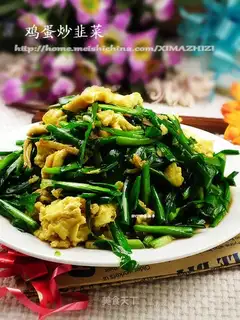 chives scrambled eggs
 Golden garlic
 ♪ Little onion egg tofu ♪